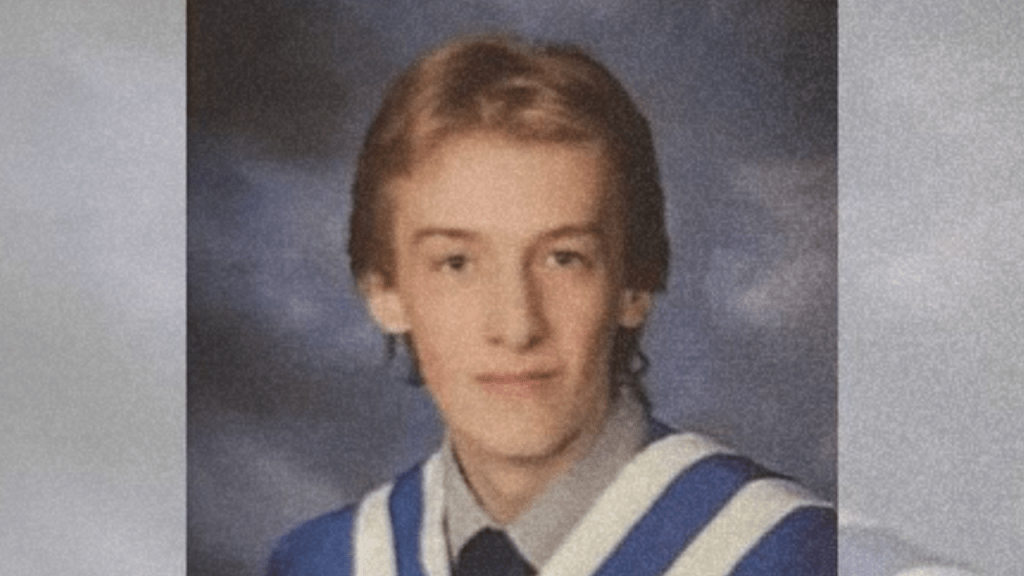
Seth Hatfield’s misogyny was real. Turning it into a terrorism story also strengthened the institutions claiming the power to protect us from it.
Three days after Seth Hatfield opened fire in Côte-des-Neiges, about 100 people gathered at Montreal’s memorial to the women murdered at École Polytechnique.
The demonstration was organized in response to Hatfield’s misogyny and the incel politics running through his manifesto. The anger was justified. Hatfield wrote obsessively about women, sexual rejection, feminism and male entitlement. There was no need to invent his hatred of women. He documented it himself.
But the protest also pushed the shooting toward a more consequential political category. Demonstrators called for misogyny to be recognized as a terrorist threat. One organizer argued that misogyny itself needed to be named as terrorism.
That demand did not land in an institutional vacuum.
On the same day, the RCMP confirmed that its national-security enforcement teams were investigating whether the Montreal shooting constituted ideologically motivated violent extremism. Public Safety Minister Gary Anandasangaree said Ottawa could consider further action targeting incel violence and pointed to a wider government agenda that included anti-hate legislation, tougher bail rules and expanded lawful-access powers for police.
The demonstrators did not need to ask for more police. They did not need to endorse surveillance. They did not need to support CSIS or the RCMP.
Once misogynistic violence was translated into the language of terrorism, those institutions were already standing there waiting to answer.
Hatfield’s misogyny does not need to be minimized
Any serious criticism of the response to the shooting has to begin by refusing the easiest escape route.
Hatfield’s misogyny was not a media invention.
His 104-page manifesto repeatedly returned to women’s sexual autonomy, male loneliness, feminism and what he understood as the humiliation of men who could not obtain sex or relationships. He embraced language associated with incel culture and treated women’s choices as evidence of a social order stacked against men like himself.
The document also contained anti-capitalist rhetoric, attacks on wealthy elites, hostility toward corporate executives, complaints about pornography and a jumble of political grievances that did not fit neatly into one ideology.
That incoherence does not make the misogyny less important. It makes attempts to reduce the entire document to a single political motive more questionable.
Hatfield can be a misogynist without every violent act he committed being adequately explained by misogyny. He can hate women without every institution invoking that hatred becoming politically neutral. He can shoot police without his manifesto becoming primarily an anti-police political program.
These distinctions matter because the state has its own interests in how violence is classified.
Calling something terrorism gives the state a job
“Terrorism” is often used as a moral intensifier. It tells the public that an act was not merely violent but politically significant, organized around an ideology and threatening to society as a whole.
For police and intelligence agencies, however, terrorism is not simply a stronger word for violence.
It is an institutional category.
CSIS already places violent misogyny, including incel violence, within its framework for ideologically motivated violent extremism. Canada’s national-security apparatus has spent years developing legal categories, intelligence practices and specialized police units around that framework.
The RCMP’s Integrated National Security Enforcement Teams exist specifically to investigate terrorism and threats to national security. When the RCMP announced on June 25 that those units were examining the Hatfield shooting, the institutional significance of the terrorism frame was no longer theoretical.
The anti-incel protest did not trigger that investigation. The investigation was already happening.
That is precisely the point.
A feminist protest and the national-security apparatus were arriving at the same political vocabulary from very different directions. One came from justified anger at misogynistic violence. The other came from institutions whose mandate is to identify threats, collect intelligence, investigate extremism and expand the state’s capacity to intervene.
Those actors did not need to coordinate. They did not need the same motives.
The language itself created the bridge.
A protest against misogyny can still strengthen police
The June 25 march began at Place du 6-Décembre-1989, the memorial to the 14 women murdered at Polytechnique.
The symbolism was obvious. Marc Lépine explicitly targeted women and feminists. His massacre remains one of the clearest examples of antifeminist mass violence in Canadian history.
Placing Hatfield beside that history made emotional and political sense. His manifesto was deeply misogynistic, and the incel movement has produced acts of lethal violence against women elsewhere in Canada.
But the comparison also did something else. It helped move a still-unresolved shooting into a familiar narrative category before investigators had established why Hatfield chose that location, what his intended target was or how his different political obsessions related to the attack.
One organizer said the shooting could have been another Polytechnique.
It could have been. That is not the same as establishing that it was.
The distinction becomes especially important when the political answer proposed is terrorism.
The protest did not have to contain a single sign saying “more cops” for its framing to strengthen a police-centred response. Once incel violence is presented primarily as a national-security threat, the practical institutions empowered to respond are not feminist organizations, shelters, unions, schools, community organizations or movements confronting misogyny at its social roots.
They are police, intelligence agencies, prosecutors and legislators.
This is how carceral politics can advance without carceral intent.
A movement identifies a real form of oppression. It demands that society take the danger more seriously. The state agrees, translates the danger into a security category and offers its own coercive institutions as the solution.
The original demand may have been feminist. The institutional answer can still be police power.
The police were not neutral observers of the shooting
There is another problem with allowing police to disappear into the role of protector.
Police were participants in the event.
Hatfield shot and killed SPVM Const. Mohamed Lamine Benredouane and seriously wounded another officer. Police returned fire and killed Hatfield.
A civilian, 68-year-old Michel Moshe Mizrahi, was also killed during the confrontation.
In the immediate aftermath, footage and eyewitness discussion raised the possibility that Mizrahi had been struck by police gunfire. Quebec Public Security Minister Ian Lafrenière acknowledged that those reports existed but said they had not been confirmed.
The Bureau des enquêtes indépendantes opened an investigation into the civilian death during the police intervention. By June 26, it had not publicly established whether the fatal shot came from Hatfield or police.
That uncertainty should have made the protector narrative more difficult to sustain.
Instead, much of the political discussion moved quickly toward police as victims of an extremist threat and incel ideology as a security problem.
Benredouane was unquestionably a victim. Acknowledging that does not turn the institution he served into a neutral narrator of everything that happened around him.
If police gunfire killed Mizrahi, that would fundamentally complicate the story of officers arriving simply to protect civilians from Hatfield. If Hatfield killed him, the investigation can establish that.
What a serious political analysis cannot do is erase the unresolved death because it makes the preferred narrative less tidy.
SPVM badly needed a different story about itself
The shooting also arrived at an unusually convenient moment for an institution in crisis.
Just ten days earlier, SPVM Chief Fady Dagher dismantled a Station 39 patrol team in Montréal-Nord amid allegations of racist and discriminatory conduct.
Two officers were suspended. Fourteen others were removed from public-facing patrol work. Prosecutors were reviewing whether criminal charges were warranted. Quebec appointed an independent observer. Civil-rights organizations demanded a public inquiry. Complaints were filed with the police ethics commissioner and the Quebec Human Rights and Youth Rights Commission.
The controversy was serious enough that Montreal postponed a public review of the SPVM annual report.
On the morning of June 22, Dagher was scheduled to meet city officials behind closed doors over the racism scandal.
Hours later, a police officer was dead.
Nothing about that sequence proves that SPVM manipulated the shooting, engineered public reaction or manufactured Hatfield’s politics. There is no evidence for such a claim.
But institutions do not need to manufacture events to benefit politically from them.
An organization facing demands for accountability over racist policing was suddenly recast as the target of extremist violence. Politicians who had been discussing police misconduct now had a murdered officer to mourn. National-security agencies were warning about ideological threats. Calls to treat misogynistic violence as terrorism reinforced a political environment in which police appeared not as an institution requiring scrutiny but as the institution society required for protection.
That change in political position is real whether anyone planned it or not.
The security state does not arrive empty-handed
Public Safety Minister Gary Anandasangaree’s June 25 comments showed how quickly concern about incel violence could be folded into a broader law-and-order program.
Asked about the shooting, he said the federal government would look at whether further action concerning incels was necessary. He then pointed to measures Ottawa had already pursued on hate, bail, victims’ rights and lawful access for law enforcement.
This matters because governments rarely respond to a newly recognized security threat by reducing the powers of security institutions.
The threat becomes another argument for resources, investigative authorities, intelligence collection, information sharing and criminal-law expansion.
None of this means misogynistic violence should be ignored because the police may exploit it. Nor does it mean every use of the word terrorism automatically produces a new police law.
It means the left should understand what happens when it adopts the security state’s categories as its own.
The state is very good at absorbing legitimate demands for protection. Women demand protection from male violence. Racialized communities demand protection from hate crimes. Religious minorities demand protection from fascists. Workers demand protection from harassment and intimidation.
The state can recognize each danger and still answer by enlarging institutions that themselves surveil, criminalize and brutalize marginalized people.
Recognition is not liberation if the only remedy on offer is another police file.
Misogyny is real. Police neutrality is not.
The political mistake is imagining that recognizing one form of violence requires suspending scrutiny of another institution capable of violence.
Hatfield’s hatred of women was real. The danger of incel ideology is real. Women should not have to downplay either fact to maintain an anti-police politics.
But neither fact establishes that police are neutral protectors, that Hatfield’s shooting was adequately explained as terrorism, that his primary political target has been established or that national-security institutions offer a liberatory answer to misogyny.
The June 25 protest exposed the contradiction clearly.
A feminist mobilization formed in response to a genuine misogynistic danger and demanded that the danger be taken more seriously. At virtually the same moment, police and national-security institutions were absorbing that danger into categories that justify their own authority.
No conspiracy was necessary.
That is how institutions work.
A left politics worthy of the name should be capable of confronting misogyny without outsourcing protection to the security state. It should be capable of mourning a murdered police officer without turning police into neutral arbiters. It should be capable of demanding answers about a civilian death without inventing those answers before the evidence exists.
And it should be deeply suspicious whenever righteous anger is translated into a political language whose most immediate beneficiary is an institution already asking for more power.
Sources
Global News, June 23–24, 2026, Hatfield manifesto, misogynistic and incel themes, anti-capitalist grievances and ideological incoherence.
CityNews Montreal, June 22–23, 2026, shooting chronology and contemporaneous uncertainty surrounding Michel Moshe Mizrahi’s death.
Bureau des enquêtes indépendantes, June 22, 2026, independent investigation into the civilian death during the SPVM intervention.
Associated Press, June 23, 2026, police-agency warnings and early extremist-threat framing following discovery of Hatfield’s manifesto.
The Canadian Press / CityNews, June 25, 2026, organization of the Montreal anti-incel demonstration, Polytechnique memorial framing and RCMP national-security investigation.
TVA Nouvelles, June 25, 2026, demonstration attendance, march and calls to recognize misogyny and hatred of women as terrorism.
Global News, June 25, 2026, Public Safety Minister Gary Anandasangaree on incel violence and the federal government’s wider public-safety agenda.
Canadian Security Intelligence Service, violent misogyny and the incel movement within Canada’s ideologically motivated violent-extremism framework.
CityNews Montreal, June 12–15, 2026, Station 39 suspensions, reassignments and allegations of racist and discriminatory conduct.
Global News, June 15, 2026, appointment of an independent observer overseeing the Station 39 investigations.
The Canadian Press / CityNews, June 22, 2026, SPVM Chief Fady Dagher’s scheduled meeting with municipal officials and the status of the racism controversy on the morning of the shooting.