Thunder Bay police broken trust returned when Darcy Fleury publicly rebuked First Nations leaders during a missing-persons crisis.
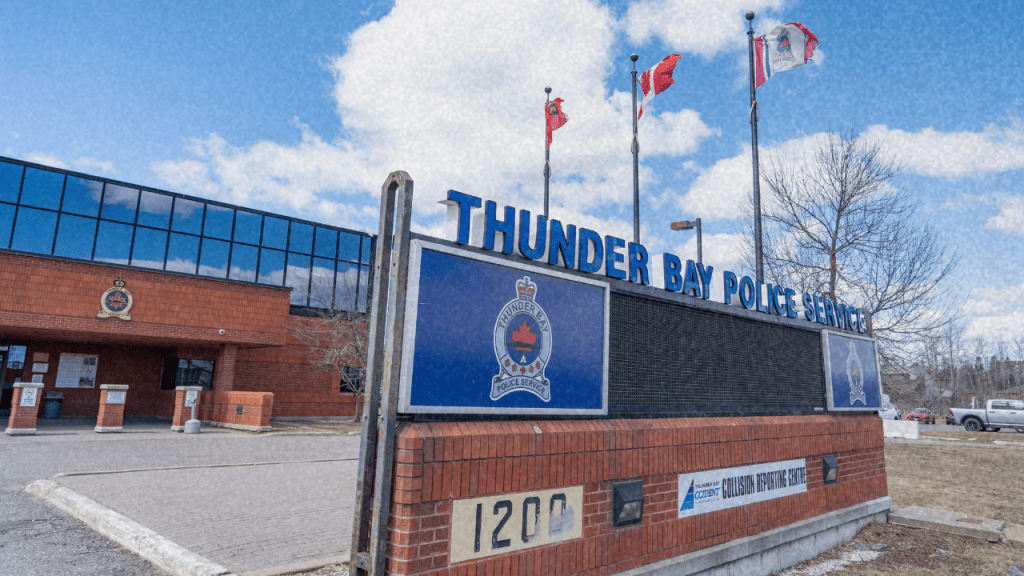
On May 28, 2026, Thunder Bay Police Chief Darcy Fleury issued a statement that began with sympathy for families facing missing-person investigations. Fleury’s statement acknowledged Indigenous searchers, volunteers, Elders, community members, and partner organizations. Then it shifted. Fleury said Nishnawbe Aski Nation Grand Chief Alvin Fiddler did not accurately reflect the service’s efforts, and he said Kiiwetinoong MPP Sol Mamakwa was “misled.”
That naming was the event. Thunder Bay police did not answer public concern with a neutral promise to review communication, search coordination, or family notification. The chief publicly challenged the credibility of two Indigenous leaders while families were grieving, searchers were questioning police conduct, and the city was again confronting the deaths of people who had gone missing.
The statement landed in a city where police relations with Indigenous communities have already been formally described as broken. Thunder Bay police are not facing a public-relations misunderstanding. They are operating inside a long record of sudden deaths, missing-person investigations, failed oversight, systemic-racism findings, and families who have been given every reason to distrust official reassurance.
Fleury’s statement tried to defend institutional trust. It showed how little of that trust has been rebuilt.
Five deaths reopened the crisis
Ricochet reported that the bodies of five missing people were found in Thunder Bay over roughly a month. Ontario Provincial Police recovered the body of Kelsey Anderson, a 36-year-old Webequie First Nation member, from the Neebing-McIntyre Floodway. Anderson had been in Thunder Bay for job training and had last been seen on May 9.
While search-and-rescue volunteers were looking for Anderson, they found the body of Richard Graham, who had been reported missing in July 2024. Days earlier, 25-year-old Nodin Skunk and 23-year-old Ashlynn Bottle of Mishkeegogamang First Nation were found in abandoned grain elevators on the city’s south side. Sixty-two-year-old Daniella Nekuliak, who was not Indigenous, had been found dead near a lake in late April.
The sequence revived an old question in Thunder Bay. When Indigenous people disappear or die in the city, can families trust the institutions responsible for search, communication, investigation, and public explanation?
Fleury’s answer was institutional. Thunder Bay police, he said, remain committed to locating missing people and providing answers. Investigators had been in regular communication with families, including daily updates where appropriate. Families could decide whether NAN was included in those discussions.
Fiddler’s criticism was not that police had failed to express sympathy. It was that communication and coordination had broken down when families needed clarity most.
What Fiddler said failed
Fiddler alleged that one family had been wrongly told their loved one had been found. Anderson’s family, he said, was horrified when police posted a final update before notifying them. Search leaders had asked for regular meetings with police, and according to Fiddler, those requests were ignored.
Those are not small procedural complaints. In a missing-person case, information controls grief. It tells families where to look, whether to keep searching, whether hope remains, and whether the institutions involved are treating them as partners or obstacles.
The most serious allegation concerned Bottle and Skunk. Fiddler said Thunder Bay police announced on May 11 that a search of the derelict grain elevator had been unsuccessful. The family and community did not accept that. A kokum insisted the two missing youths were still there. Indigenous searchers found their remains three days later.
The operational meaning is severe. If Indigenous searchers believe they succeeded where police failed, and if families believe their knowledge was dismissed, the crisis is no longer only about missing-person communication. It is about whose knowledge counts when official systems decide where to search and when to stop.
Fiddler framed that knowledge culturally as well as operationally. Indigenous searchers, he said, are guided by spirits, relationships, community knowledge, and methods that police do not respect. The claim was not decorative. It was a challenge to the authority of a police system that has repeatedly treated Indigenous families as sources of emotion rather than sources of knowledge.
Fleury named the leaders
Fleury’s statement made three moves. It defended TBPS members as diligent. It separated families from NAN by emphasizing that families decide whether NAN is included in discussions. It warned that inaccurate or incomplete information can undermine trust and affect whether people come forward with information.
In a neutral institution, that warning might sound routine. In Thunder Bay, it carries a heavier meaning. Trust was not created by police and endangered by criticism. Trust had already been shattered by years of death investigations, oversight failures, and official findings of systemic racism.
Fleury then moved to Mamakwa. The Kiiwetinoong MPP had raised the missing-persons crisis at Queen’s Park and said Thunder Bay had reached a tipping point. Fleury replied that Mamakwa’s statement was “misled,” then identified the “true crisis” as shortages of housing, social supports, addictions services, mental-health care, and prevention initiatives.
Those shortages are real. They shape who is made vulnerable in Thunder Bay, who has to leave home for services, who is exposed to danger, and who is left searching when systems fail. But naming social conditions cannot remove policing from the frame. Families were asking why police communication, search coordination, and respect for Indigenous searchers had failed them again.
Fleury’s reframing moved the centre of gravity away from police accountability. The statement recognized vulnerability while sidestepping the specific allegations about notification, coordination, search decisions, and the treatment of Indigenous families.
Seven youths had already died
Thunder Bay police do not enter this moment with a blank record. Between 2000 and 2011, seven First Nations youth from NAN territory died in Thunder Bay while attending school. NAN identifies them as Jethro Anderson, Curran Strang, Paul Panacheese, Robyn Harper, Reggie Bushie, Kyle Morrisseau, and Jordan Wabasse.
The students had to leave their home communities because Canada and Ontario did not make secondary education available to them at home. Thunder Bay became the city where they were sent to study, live away from family, and depend on institutions that were not built around their safety.
The Seven Youth Inquest jury heard from 146 witnesses, received 185 exhibits, and delivered 145 recommendations on June 28, 2016. Those recommendations addressed accountability, safety, education, and the conditions facing NAN students who had to leave home for high school.
The current deaths reopened that history because the geography and institutional pattern remain familiar. Northern First Nations members come to Thunder Bay for school, work, training, health care, and services. Some go missing. Some are found dead. Families then have to fight for answers from institutions they already distrust.
Broken Trust named the structure
In December 2018, the Office of the Independent Police Review Director released Broken Trust. The report did not treat mistrust as a communications problem. It found systemic racism inside Thunder Bay policing at an institutional level.
The review traced concerns back to the early 1990s, when Indigenous communities around Thunder Bay raised questions about police investigations into Indigenous deaths. A grassroots committee had identified more than 30 suspicious deaths where there were allegations that TBPS had not conducted thorough investigations. In 1993, the committee circulated a 3,000-signature petition calling for a federal inquiry.
Broken Trust examined 37 TBPS investigations involving sudden deaths going back to 2009. The review found that investigations into Indigenous deaths were too often handled differently because the deceased person was Indigenous. It also found inadequate supervision and quality control to prevent racial prejudice from affecting investigations.
The recommendations were direct. TBPS leadership should publicly and formally acknowledge that racism exists at all levels within the police service. The police board should publicly acknowledge racism within TBPS and take a leadership role in repairing the relationship with Indigenous communities.
One recommendation is now impossible to read casually. TBPS leadership was told to create a permanent advisory group involving the police chief and Indigenous leadership, with a defined mandate, regular meetings, and crisis-driven meetings to address racism and other issues. In 2026, during another missing-persons crisis, the police chief publicly rebuked Indigenous leadership by name.
The board failed too
The crisis was not limited to officers or individual investigations. Murray Sinclair’s investigation into the Thunder Bay Police Services Board found that the board failed to recognize and address the pattern of violence and systemic racism against Indigenous people in Thunder Bay.
Sinclair’s report said Indigenous communities had lost confidence in the ability and, in many cases, the commitment of TBPS to protect them. It described the relationship between Indigenous communities and police as characterized by suspicion and distrust.
The governance problem continued after those reports. The Ontario Civilian Police Commission later placed the Thunder Bay Police Services Board under administration. Its 2024 final summary report described how the service investigated the conduct of Georjann Morriseau, then the board chair, before the OPP took over and found no basis to lay charges.
That sequence matters because police governance is supposed to create public accountability. In Thunder Bay, oversight itself became part of the legitimacy crisis. The institution asked families to trust a system whose own board had repeatedly failed to provide credible accountability.
Ontario’s institutional reflex
Thunder Bay is distinct, but the institutional reflex is familiar. Police services often answer structural criticism by defending legitimacy first. In Montreal, Patrice Vilcéus resigned after describing racism inside the SPVM, while Quebec officials still rejected systemic police racism. In Windsor, a recent police killing quickly entered the familiar sequence of force, SIU review, and administrative waiting. In Sudbury, police-board politics showed how civilian oversight can protect continuity when public accountability is demanded.
Those examples do not replace Thunder Bay’s story. They clarify the institutional grammar around it. When police face criticism that threatens the structure, the first response is often to narrow the issue, defend process, and treat public anger as a risk to trust. Fleury’s statement fits that pattern in a sharper setting: missing Indigenous people, documented systemic racism, and a police service already told that repair required structured engagement with Indigenous leadership.
Search is not just procedure
Missing-person searches are not only technical operations. They are struggles over authority. Police bring procedure, equipment, databases, dispatch systems, public alerts, and investigative control. Families bring relationships, memory, community knowledge, spiritual knowledge, intuition, and the urgency of love.
When those forms of knowledge collide, the institution usually decides which one counts. In Thunder Bay, Fiddler’s account of Bottle and Skunk reverses the usual hierarchy. A grandmother’s insistence, a community’s refusal to accept the official search result, and Indigenous searchers’ knowledge led to the discovery police had not made.
Procedure still has value. It cannot be the only recognized authority when the institution applying it has a documented record of failing Indigenous families. The demand is not for police to abandon investigation. It is for police to stop treating Indigenous searchers and families as peripheral to it.
Fleury’s statement acknowledged Indigenous searchers at the beginning, then challenged the leaders defending their role. Recognition without shared authority is ceremonial. Families were not asking for gratitude. They were asking to be heard before another search failed.
The social crisis is not an excuse
Thunder Bay’s social crisis is real. Housing shortages, poverty, addictions, mental-health gaps, colonial displacement, and the forced movement of northern First Nations people into urban service centres all shape vulnerability. Fleury was not wrong to name those conditions.
The problem is the function of that naming. When a police chief identifies social supports as the “true crisis” while answering allegations about police communication and search failures, social context becomes a way to move accountability elsewhere. It turns the structural conditions around missing people into an argument for why police conduct should be secondary.
The crises are not separate. Social abandonment makes people vulnerable. Policing determines what happens when vulnerable people disappear, die, or need protection. Families need housing, health care, prevention, and services. They also need police who notify them before public updates, meet with search leaders, respect Indigenous knowledge, and do not treat public criticism as the cause of mistrust.
Fiddler and Mamakwa were not reducing Thunder Bay’s crisis to policing alone. Fleury’s response reduced police accountability by shifting the frame to everything else.
Public rebuke is not repair
A police service with Thunder Bay’s record cannot rebuild trust by publicly rebuking Indigenous leaders during a missing-persons crisis. It cannot treat criticism as the source of mistrust when mistrust has been produced by decades of institutional failure. It cannot invoke partnership while suggesting that the political representatives of grieving communities are misleading the public.
Fleury’s statement may have been intended to defend officers and reassure the public. It exposed the unresolved relationship underneath the official language. The chief did not only disagree with Fiddler and Mamakwa. He did so by name, after a cluster of deaths, in a city where official reports have already said the relationship between police and Indigenous communities is marked by suspicion and distrust.
In Thunder Bay, the crisis is not only that vulnerable people disappear and die. It is that Indigenous families have to navigate those disappearances and deaths through institutions whose failures are already documented. A public rebuff does not repair broken trust. It shows how much of the break remains.
Sources
- Ricochet report by Jon Thompson on five missing people found dead in Thunder Bay, First Nations leaders’ criticism, and police communication concerns, May 28, 2026.
- Thunder Bay Police Service statement from Chief Darcy Fleury responding to Alvin Fiddler and Sol Mamakwa, May 28, 2026.
- NetNewsLedger publication of Nishnawbe Aski Nation Grand Chief Alvin Fiddler’s comments on Indigenous searchers and recent missing-person cases, May 27, 2026.
- Nishnawbe Aski Nation resource on the Seven Youth Inquest jury recommendations, including the 145 recommendations delivered on June 28, 2016.
- Office of the Independent Police Review Director report, Broken Trust: Indigenous People and the Thunder Bay Police Service, December 2018.
- Senator Murray Sinclair, Thunder Bay Police Services Board Investigation Final Report, Ontario Civilian Police Commission, December 2018.
- Ontario Civilian Police Commission administrator’s final summary report on the Thunder Bay Police Services Board, April 22, 2024.