
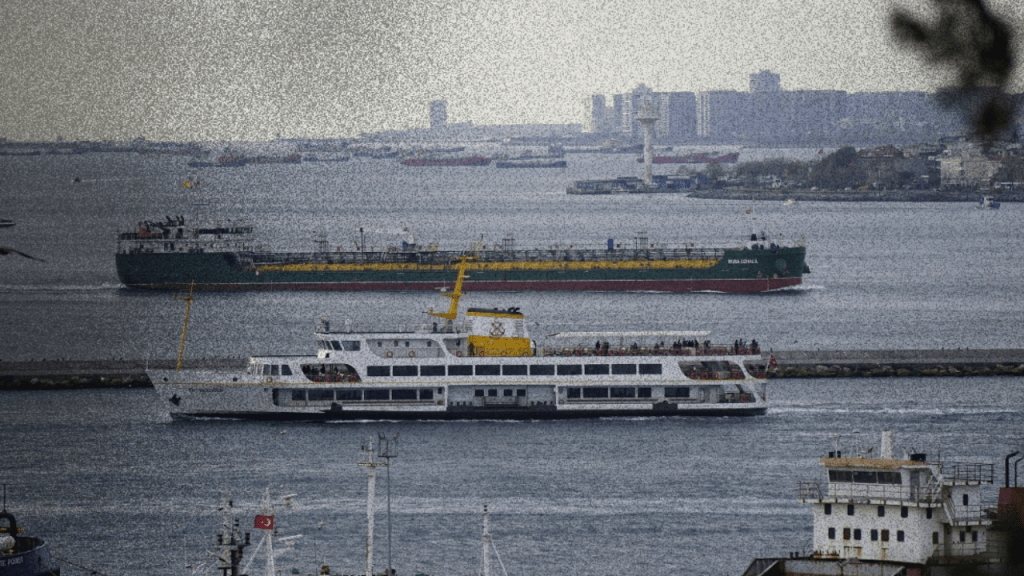
Hormuz coalition failure: the United States launched strikes on Iran without allied consultation, then demanded its partners absorb the consequences — and every country asked said no.
The sequencing is the whole argument. The United States struck Iran without consulting NATO allies, without briefing Japan or South Korea, without securing any prior multilateral mandate. Then, as the Strait of Hormuz came under threat and shipping disruption became a live possibility, the Trump administration turned outward and demanded that its partners send warships into a strait now contested by an adversary those partners had played no role in provoking.
German Chancellor Merz captured the structural problem directly in an address to the Bundestag: “Washington did not consult us and did not say European assistance was necessary.”
Had Germany been consulted, he added, it would have advised against the operation. The demand for collective defense arrived after the decision for unilateral offense had already been taken. That sequence is not a diplomatic misstep. It is the architecture of the problem.
Trump’s request went wide. NATO allies were asked to contribute. So were Japan and South Korea. So was China — one of the largest beneficiaries of uninterrupted oil flows through the strait. The argument the administration offered was coherent on its face: the Strait of Hormuz carries roughly a fifth of the world’s oil and liquefied natural gas, disruption damages every economy that depends on that flow, and therefore the burden of keeping it open should be shared. As a statement of economic geography, none of that is wrong. As a basis for military coalition-building, it collapsed immediately — because it treated shared economic interest as equivalent to shared political responsibility for a conflict the United States had generated. Those are not the same thing, and every government being asked understood the difference.
The Diplomatic Hedging Was Not Ambiguity — It Was the Answer
No country committed naval forces. That is the fact. But the specific forms the refusal took are worth reading carefully, because the diplomatic hedging reveals exactly the same structural logic operating in every capital. Japan cited domestic legal constraints on overseas military deployments and suggested Hormuz operations might not pass legal muster. Germany’s defense minister said plainly: “This is not our war.” France’s Macron stated: “We are not party to the conflict.” Australia ruled out sending ships without even being formally asked. EU foreign policy chief Kaja Kallas said: “Nobody is ready to put their people in harm’s way in the Strait of Hormuz.” Each of these responses uses different language to register the same calculation. Countries found the minimum available diplomatic surface — acknowledging a stake in open shipping — while refusing any military exposure. The variation in the language was cover. The unanimity of the outcome was not.
This is the pattern that the phrase “all declined” captures, even where the fact-checkers reach for nuance. South Korea did not say yes. Japan did not say yes. China did not say yes. The joint statement issued by seven allies produced no ships. The surface variation in diplomatic language is noise. The structural signal is clear: responses from several countries ranged from skepticism to, as sources familiar with the diplomatic talks put it, “hell no.”
Shared Interest and Shared Risk Are Not the Same Condition
The core analytical distinction the Hormuz episode makes visible is between states that share an economic interest in a stable outcome and states that share political responsibility for the conditions that produced the instability. These are not the same, and conflating them is how the administration’s demand for coalition support was framed — and why it failed. A South Korean military analyst noted that roughly 70 percent of South Korea’s oil imports pass through the Strait of Hormuz, making freedom of navigation a core national interest. Seoul acknowledged that. Seoul still refused to commit forces. China’s dependence on Gulf oil flows is direct and structural — and China still rejected the coalition request, calling for de-escalation and noting it was not a party to the conflict. The economic stake was never in dispute. What was in dispute was whether that stake imposed an obligation to absorb military risk on behalf of a conflict the United States initiated.
Iranian anti-ship missiles and drone capacity make any naval deployment into the strait under active conflict conditions a genuine exposure. The risk is real and the calculation is rational. But the risk alone does not explain the refusal — because states routinely accept military risk when they accept the political legitimacy of the mission. The question is never purely about danger. It is about whether the alliance has agreed on the problem being solved. In this case, allies did not agree that the problem was Iranian aggression. They identified the problem as U.S. escalation. That identification, once made, forecloses the coalition. You cannot recruit partners to manage the consequences of a crisis they attribute to you.
No Consultation Before Strikes Made Solidarity Impossible
The legitimacy deficit is not a soft variable. It is the mechanism that converted risk-aversion into outright refusal. An NPR White House correspondent stated it directly: Trump “hadn’t really fostered these relationships, nor did he consult them leading up to these strikes, which actually surprised them a lot and put them on the defensive. Now, weeks later, he’s asking for their help after the fact.” The political logic here is airtight. If the United States had consulted allied governments before striking Iran, those governments would have had a stake in the outcome — both the risk of the conflict and the shared ownership of its premise. By acting unilaterally and then demanding multilateral cleanup, the administration preserved its freedom of action at the cost of its coalition leverage. Those two things trade off against each other. The administration chose one and then demanded both.
This is where the management of war narrative intersects with material alliance mechanics. The administration’s framing — that Hormuz security is a global responsibility — is technically accurate in the narrowest sense. But framing does not substitute for process. States that were excluded from the decision to create the crisis were not going to accept rhetorical responsibility for resolving it. Merz made the structural point precisely: “Regarding Iran, there has never been a joint decision on whether to engage. Therefore, the question of how Germany will contribute militarily does not arise.” The sequence produced the outcome. The outcome was not reversible by making the economic case louder.
Article 5 Was Always Conditional — Hormuz Made It Visible
The gap between alliance rhetoric and operational reality is not new. It has been papered over by decades of Cold War institutional memory and the post-9/11 period in which Article 5 was actually invoked — for a conflict where allied governments accepted the premise of the threat. NATO’s collective defense clause activates when an ally is attacked. It does not activate when an ally attacks, generates a crisis, and then requests assistance managing it. This is not a loophole or a technicality. It is the architecture of the treaty. Trump acknowledged the test had revealed something real: “I’ve long said that I wonder whether or not NATO would ever be there for us. So this was a great test.” What the test demonstrated is that automatic alignment is a fiction. Alignment is conditional on political agreement about the nature of the threat — and that agreement did not exist.
The same condition applies beyond NATO. Japan’s security relationship with the United States is extensive and institutionalized. South Korea hosts U.S. forces on its territory. China’s relationship with the U.S. is adversarial but economically entangled in ways that generate shared interests in system stability. None of these relationships — alliance, partnership, or structured rivalry — produced military commitment. Strategic alignment, it turns out, does not override political contestation of the conflict’s origins. The institutional architecture of U.S. global power is real. The assumption that it translates into automatic coalition formation under any conditions the United States chooses to create is not.
The Coalition Capital Is Gone — and That Is the Durable Shift
The structural conclusion the Hormuz episode produces is this: U.S.-led coalitions are no longer an automatic feature of the international system. They are a political product that requires consultation, legitimacy, and the perception of shared purpose — and the current administration has systematically depleted every input required to produce that product. A year of tariffs against allies, explicit threats to Canadian and European sovereignty, public contempt for multilateral institutions, and a pattern of unilateral military action without allied briefing has consumed the political capital that coalition formation requires. Axios noted the contradiction plainly: “Trump has fueled tensions with many of the same allies he’s now calling upon over a year of tariffs, insults and threats.” You cannot treat allies as adversaries in one register and expect military solidarity in another. The two postures are not compartmentalized. They compound.
The United States retains the largest military on earth and the global reserve currency. What it has lost is the political infrastructure that converts raw power into coordinated international action. The Strait of Hormuz remains under heightened tension and the more durable shift is not about shipping lanes. The episode confirmed that the era of assumed alignment is over. Every future request for coalition support will now be evaluated by potential partners against the memory of Hormuz: a war started without consultation, a bill presented after the fact, and a demand for multilateral solidarity in defense of a unilateral decision. The answer to that structure will keep being no — not because allies are indifferent to how wars are framed, but because they are no longer willing to subsidize an American foreign policy they did not authorize and did not start.
Sources
- NPR — NATO allies, China so far rebuff Trump’s demand to police Hormuz, March 2026
- Al Jazeera — Trump says Hormuz help “on the way” as allies reject military action, March 2026
- Al Jazeera — US East Asian allies in legal quandary as Trump seeks help in the Middle East, March 2026
- Axios — Most NATO members reject U.S.-led Hormuz Strait coalition, March 2026
- Xinhua — German chancellor urges swift end to war against Iran, March 2026
- Council on Foreign Relations — Coalitions of the Willing and the Strait of Hormuz, March 2026





 Spark Solidarity