
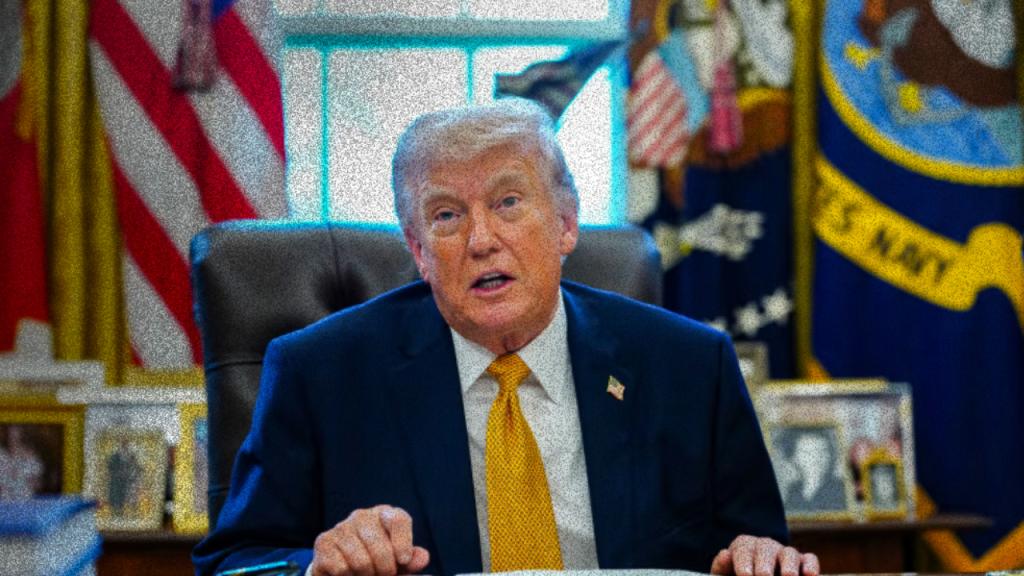
Trump China summit delay — a six-week postponement that signals war, not strategy, is now setting the tempo of U.S. foreign policy toward its most significant rival.
War Wrote the Calendar, and Trump Said So Out Loud
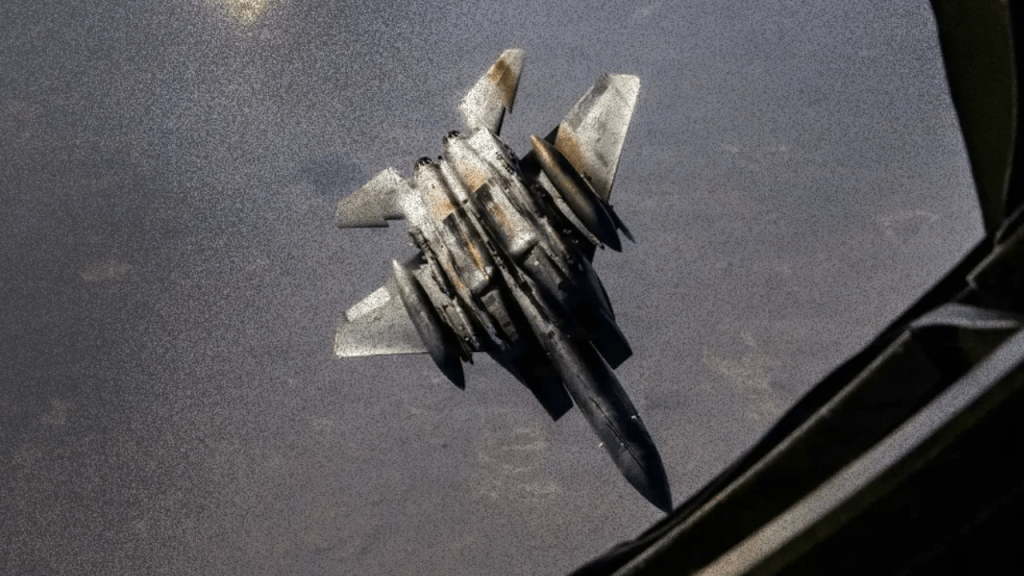
The China summit was pushed back roughly six weeks. Trump’s stated reason was direct: “I think it’s important that I be here.” He told reporters he would delay the trip “five or six weeks,” and White House Press Secretary Karoline Leavitt reinforced the framing, stating that Trump’s “utmost responsibility right now as commander in chief is to ensure the continued success of Operation Epic Fury.” The original March 31–April 2 visit — which would have been the first U.S. presidential trip to China in nearly a decade — was rescheduled to May 14–15. Whatever analytical window-dressing surrounds the announcement, the administration handed the scheduling authority for its most consequential bilateral relationship to the operational demands of an active military campaign. That is the statement. The question the rest of this article answers is what that statement means structurally — because “the war made us delay” is not a logistical footnote. It is a confession about how U.S. foreign policy is now organized.
The Delay Landed on Ground Already Eroding
The summit was not being postponed from a position of momentum. The U.S.-China trade truce, signed after a Trump-Xi meeting in South Korea in October, had already stalled. Trade negotiators were wrapping up two days of intensive Paris talks when Trump announced the delay — and as Brookings analysts assessed, “not enough working-level engagement had happened to really set up the logistics or concrete deliverables” for the summit even before the postponement. Brookings further noted that the Iran war placed Washington on a weaker negotiating footing with Beijing and pulled U.S. strategic attention away from the Indo-Pacific. That is the baseline the postponement interrupted — not a relationship building toward a deal, but one already grinding against its own structural contradictions.
Six weeks of lost high-level contact does not pause a negotiation in progress. It accelerates the drift in one that was already losing coherence. U.S. policy toward China has repeatedly misread the cost of its own escalatory moves against Beijing — manufacturing pretexts for confrontation while underestimating what each confrontation costs in leverage. The summit delay is that pattern operating in real time: Washington disrupts its own diplomatic calendar and then presents the disruption as neutral logistics.
China’s Hormuz Refusal Is the Subtext the White House Won’t Name
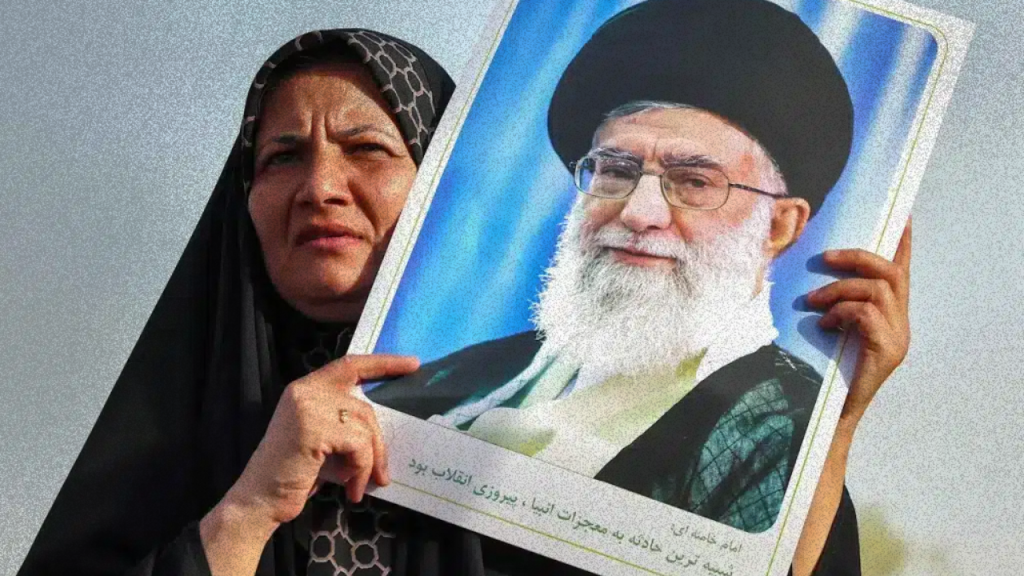
Beneath the logistical explanation for the delay sits a harder reality. The U.S. had called on China to participate in securing the Strait of Hormuz. Beijing declined. As PBS and AP reported, Ali Wyne of the International Crisis Group stated that the summit delay “underscores how significantly he underestimated the fallout from Operation Epic Fury.” The Chinese Foreign Ministry repeated its call for parties to stop military operations while making clear it was not a party to the conflict and would not be drawn into U.S. coalition-building. Cornell analyst Allen Carlson noted Trump’s request for China to help reopen the Strait had “fallen on deaf ears in Beijing.”
That refusal reveals something the trade détente had obscured: economic interdependence and strategic alignment are not the same thing, and China is under no obligation to treat them as such. Despite both economies depending on Gulf energy flows, Washington and Beijing do not agree on the war’s necessity or its resolution. The summit delay is happening inside a relationship that is already pulling in opposite directions on the most consequential security question of the moment. The scheduling disruption is not the source of that tension. It is where the tension became visible.
Military Timelines Eat Diplomatic Timelines
Military escalation operates on short, urgent, non-negotiable timelines. Diplomatic processes require preparation, continuity, and the sustained allocation of senior political attention. When the two compete directly for the same resource — the president’s presence, the cabinet’s bandwidth, the bureaucracy’s priority stack — the short timeline wins. Every time. This is not a Trump-specific failure. It is a structural feature of how war reorganizes state capacity. What the China postponement illustrates is that U.S. foreign policy is now reactive by default: engagement happens when the war allows space for it, not as a primary driver of strategic outcomes.
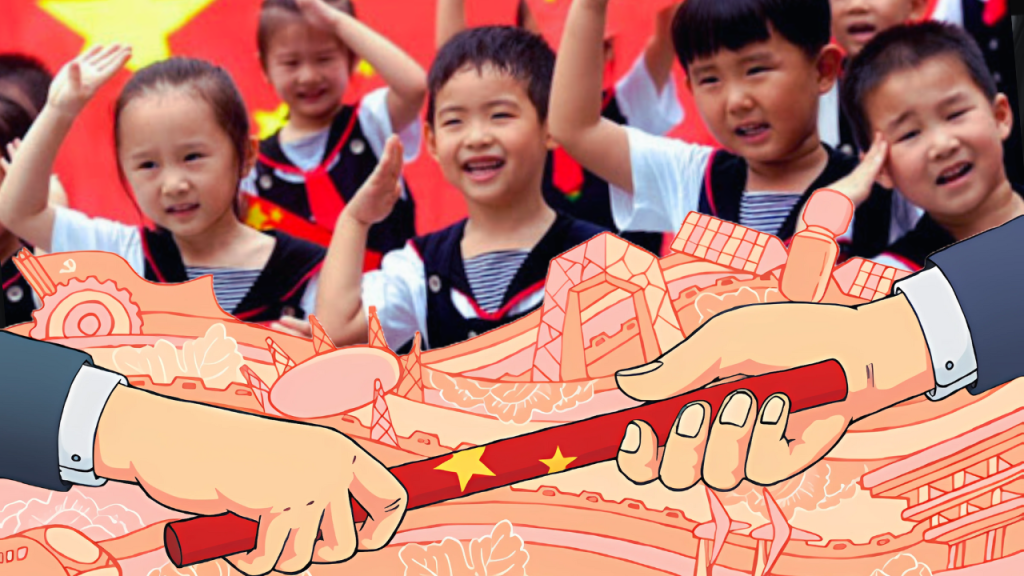
The Brookings framing — that the war weakens Washington’s negotiating position with Beijing — understates the problem. It is not just that the U.S. negotiates from weakness during the war. It is that the habit of deferral becomes the architecture. Temporary delays become extended pauses. Extended pauses become the new normal. And the window for managing strategic competition through sustained diplomacy — the kind that requires years of consistent engagement — narrows. Beijing is operating on a long planning horizon, with a detailed developmental roadmap running to 2050 and the institutional capacity to execute it. Washington is operating on the next news cycle. That asymmetry compounds every time war takes the wheel.
Deferral Is Not Neutral — Washington Is Losing Ground It Cannot Easily Recover
The summit was not canceled. The official framing treats it as a scheduling adjustment — a temporary inconvenience in an otherwise functional relationship. Treasury Secretary Bessent went out of his way to walk back any suggestion the postponement was a pressure tactic on Beijing, insisting it was “purely logistics.” That framing does the work of managing what the event signals — it normalizes what is in fact a structural reordering of U.S. foreign policy priorities. The war has moved to the center of decision-making, and everything else — including the management of the most consequential bilateral relationship on the planet — is being handled at the margins.
China, meanwhile, is not deferring its own strategic calendar. It is deepening BRI commitments, consolidating BRICS financial architecture, and operating its state-directed development model on a timeline that does not wait for Washington to finish its wars. Every six weeks of missed high-level contact is six weeks of compounding asymmetry. The postponement of the Trump-Xi summit is a small decision that reveals a large structural reality: the United States has allowed war to become the organizing logic of its foreign policy, and the balance of global leverage is shifting as a result — not dramatically, not all at once, but steadily, in the direction of states that are still doing the patient, strategic work that Washington has outsourced to the Pentagon.
Sources
- NBC News — Trump delays China trip amid Iran war, March 2026
- CNBC — Bessent: Trump-Xi summit delay is logistics, not Hormuz pressure, March 2026
- PBS NewsHour / AP — China dismisses U.S. Hormuz request as Beijing trip delayed, March 2026
- Brookings Institution — The delayed Trump-Xi summit, Iran, and the U.S.-China relationship, March 2026
- ABC News — Trump-Xi summit rescheduled for mid-May, March 2026


 Spark Solidarity