
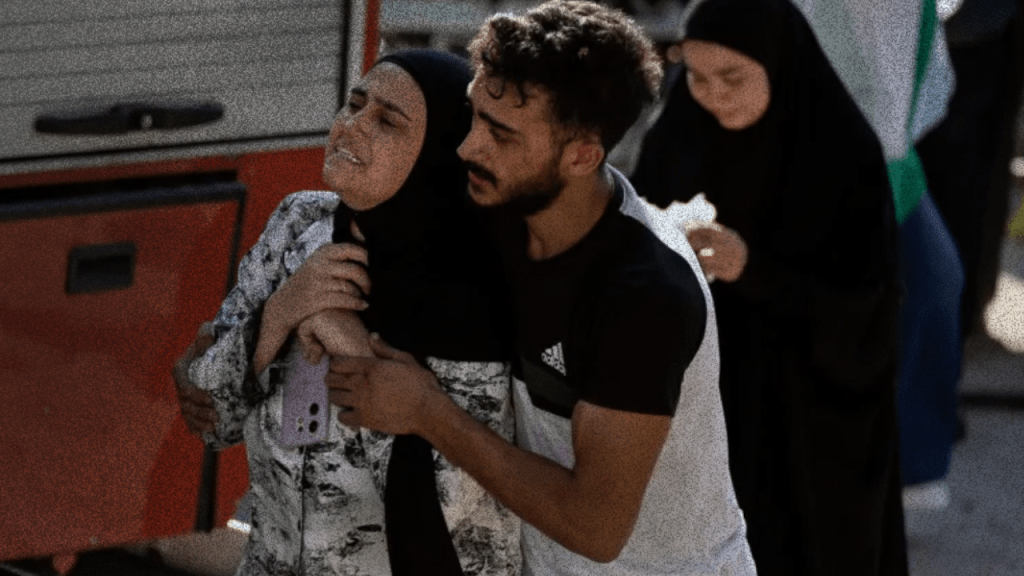
Israel war Lebanon civilians: the ceasefire was never a pause — it was the war at lower intensity, resumed in March 2026.
The November 27, 2024 ceasefire was described by President Biden as “designed to be a permanent cessation of hostilities.” Within hours, Israeli forces were firing on Lebanese civilians returning to their homes. Within days, airstrikes were resuming across southern Lebanon. By the time the ceasefire’s first deadline passed on January 26, 2025 — the date by which Israel was required to withdraw — Israeli troops had not left, were shooting at residents trying to approach border villages, and had razed several communities to the ground. UNIFIL documented more than 10,000 Israeli ceasefire violations — 7,500 airspace violations and 2,500 ground violations — before hostilities formally resumed. Over 500 people were killed in Lebanon during the supposed ceasefire period, including at least 127 civilians. The ceasefire was not a pause in the campaign. It was the campaign at lower intensity, with a different diplomatic label attached to it.
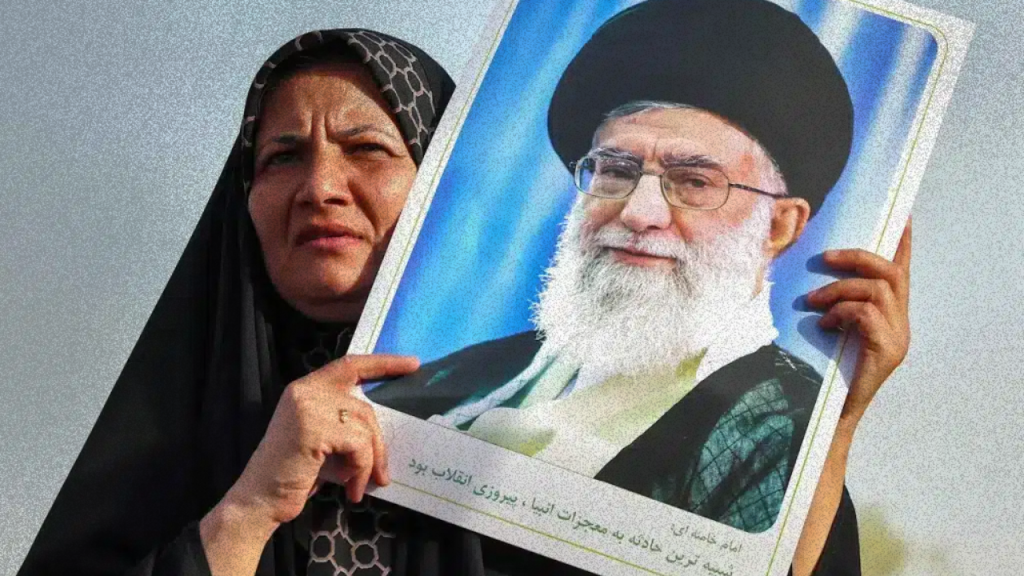
On March 2, 2026, Hezbollah fired six rockets into northern Israel in response to the U.S.-Israeli assassination of Iranian Supreme Leader Ali Khamenei. Israel responded by immediately escalating across Lebanon — strikes on Dahiyeh, evacuation orders for over 50 villages, ground operations beginning March 16. As Al Jazeera reported from Beirut that morning, residents of Burj al-Barajneh were woken at 2:30 a.m. by bombing, loaded families into cars in bumper-to-bumper traffic, and joined a displacement wave that would reach 1.2 million people within weeks. U.S. officials told Lebanese media they considered the ceasefire over and would not intervene to stop Israeli attacks. The war never ended. What ended was the pretense that it had.
Evacuation Orders and Bombed Bridges Are the Same Policy
Israel issues evacuation orders and destroys the infrastructure evacuation requires. This pattern ran through the 2024 active war phase and has run again in March 2026 in identical form. Israel destroyed the Zrarieh Bridge over the Litani River on March 14 — citing Hezbollah use of the crossing to move between north and south, without evidence — while simultaneously issuing mass evacuation orders for villages throughout southern Lebanon. Defence Minister Israel Katz made the architecture explicit: the Lebanese government would face “increasing costs through damage to infrastructure and loss of territory” for as long as Hezbollah remained armed. It was the first time Israel openly acknowledged striking civilian infrastructure in the current offensive. Katz promised more. The leaflets dropped over Beirut that same week invoked Gaza directly: “In light of the great success in Gaza, the newspaper of the new reality arrives to Lebanon.”
These are not contradictory impulses in tension with each other. They are the same operation. Civilians are instructed to leave. The roads and bridges they would use to leave are destroyed. The displacement is mandated and the escape is denied simultaneously. By late March 2026, roughly one in seven of Lebanon’s population had been forced from their homes — over 1.2 million people displaced in less than four weeks of resumed full-scale operations. The UN’s UNFPA representative in Lebanon told Al Jazeera: “The mass evacuation orders are new. The scale of displacement is new. The fact that civilian infrastructure was targeted is new.” She was comparing 2026 to 2024. What is not new is the mechanism. The mechanism was visible in October 2024, documented through 16 months of ceasefire violations, and now running again at full scale. Understanding why it faces no legal or diplomatic check requires looking at what the targeting logic is actually designed to do.
The Label “Hezbollah-Linked” Was Designed to Have No Ceiling
The justification for striking civilian infrastructure rests on a single elastic phrase: the target is “Hezbollah-linked.” That label is not a legal threshold — it is a political instrument, and it was always going to be infinitely expandable. Hezbollah is not only a paramilitary force. Al Jazeera documents that it operates hospitals, schools, and welfare organisations across some of the most deprived areas of Lebanon — constituting civilian society for populations the Lebanese state had abandoned. That history is the direct product of decades of state failure and sectarian clientelism. It is also the mechanism that makes the targeting logic self-sealing: every school it built, every clinic it staffed, every welfare payment it issued becomes, retroactively, a military asset eligible for destruction. The label does not limit the campaign’s scope. It expands it without limit.
The double standard is visible the moment the framework is applied consistently. No Western legal commentator would accept the argument that a hospital receives a targeting license because it is funded by an organization also engaged in armed conflict. The Geneva Conventions require distinction between civilian and military objects, and require that even military targets pass a proportionality test measuring civilian harm against concrete military advantage. Neither test is being applied to Lebanon. The reason is not legal — the international humanitarian law framework is explicit. The reason is political: Israeli strikes receive a presumption of legality from Western governments that is not extended to any military action taken against Western-aligned states. The “Hezbollah-linked” justification works not because it meets a legal standard but because the political architecture surrounding the conflict has decided in advance that it does. That architecture holds precisely because Lebanon has no functioning sovereign institution left to challenge it — which is the structural condition that makes everything else possible.
State Collapse Is Not Background — It Is the Precondition
Lebanon’s government issued statements. It appealed to international institutions. It condemned violations. It outlawed Hezbollah military activity and ordered arrests. None of this changed conditions on the ground, and this was not a leadership failure — it was the culmination of decades of deliberate institutional decay. President Joseph Aoun took office in January 2025 and declared a new era. A new government under Prime Minister Nawaf Salam began reconstituting itself. What it inherited was a state whose institutional skeleton had been systematically hollowed out: not by the war alone, but by generations of sectarian clientelism in which political elites — including Hezbollah — diverted state capacity into parallel patronage networks that served their own constituencies and secured their own power. The state did not fail. It was captured.
A government capable of declaring a new era is not yet a government capable of contesting Israeli strike justifications in real time, coordinating civilian relief at the scale the displacement crisis demands, or exercising sovereign authority over Hezbollah’s military decision-making. CNN confirmed that Lebanon’s President Aoun condemned Israel’s advance as showing “no respect for the laws of war, nor for international laws” while simultaneously accusing Hezbollah of betraying the country. Both condemnations are accurate. Neither produces any change in what is happening on the ground. The Lebanese Interior Minister told reporters the scale of displacement had “overwhelmed the state.” That is not a description of a government failing to respond adequately. It is a description of a state that does not have the institutional infrastructure to respond at all. Without a functioning sovereign, the elastic targeting logic meets no institutional resistance anywhere — no legal challenges to strike justifications, no diplomatic negotiation over ceasefires that is not mediated entirely by Washington, no coordinated civilian protection that forces the attacking power to reckon with consequences.
The Lebanese Population Who Could Stop This War Has No Voice
Lebanese public opinion does not map onto the narrative that external coverage produces. Gallup polling shows nearly four in five Lebanese — 79 percent — believe only the Lebanese Army should be permitted to maintain weapons. Arab Barometer and Washington Institute polling confirm that large portions of the population simultaneously oppose Israeli strikes and oppose Hezbollah’s unilateral military decision-making. These are not contradictory positions. They reflect a population that understands that Hezbollah emerged as a response to occupation and continues to frame itself as resistance, while also recognizing that its decisions drag the entire country into wars that were never put to national consensus. Hezbollah commands overwhelming support among Lebanese Shia — and deep mistrust elsewhere, with 55 percent of Lebanese overall reporting no trust in the organization. The country holds multiple simultaneous political positions, none of which is adequately described by “pro-Hezbollah” or “pro-Israel.”
External reporting flattens this into a single narrative because a flattened narrative is easier to manage politically. If Lebanese civilians are understood as a unified bloc either supporting Hezbollah or victimized by it, the question of their own political agency disappears. As diaspora communities are instrumentalized to produce particular narratives about targeted populations, the actual complexity of opinion inside Lebanon gets replaced with whichever version is most useful to the political project at hand. The Lebanese population that opposes this war on every side — Israeli bombardment, Hezbollah’s autonomous military command, and the state’s complete abdication — has no institutional vehicle through which to express that position domestically, no military force that represents it, and no coverage that grants it standing internationally. The political subject who might interrupt the war’s logic is structurally denied a place in the conversation at every level simultaneously.
Destroying Lebanon Is What Ensures the War Continues
Military escalation produces humanitarian collapse. Humanitarian collapse produces anger and desperation. That anger reinforces the political logic of resistance. The logic of resistance justifies further escalation. Each step generates the conditions for the next, and the mechanism that is supposed to terminate the cycle — degrading Hezbollah’s capacity — is precisely the mechanism that strengthens Hezbollah’s political argument. Hezbollah exists as a mass political force in Lebanon because it did what the state refused to do. Every hospital Israel strikes as “Hezbollah-linked” infrastructure is a hospital that Hezbollah built because the Lebanese state left that population without one. The strike does not eliminate Hezbollah’s argument. It confirms it in real time, in rubble, for every family that loses access to care they had no other source for.
The ceasefire that ran from November 2024 to March 2026 did not break this cycle. It demonstrated the cycle’s durability. Israel violated it more than 10,000 times. Hezbollah rebuilt. The moment a political trigger presented itself — the assassination of Khamenei — the resumption was immediate, the escalation was rapid, and the civilian infrastructure targeting was open and declared. The narrative management of this conflict insists on treating each escalation as a new event requiring fresh analysis. It is not. It is the same event, running on the same logic, producing the same outcomes, in a country that is not driving this conflict but absorbing its costs. As the management of adversary narratives consistently does: the mechanism is invisible when it is ours and criminal when it is theirs. Lebanon is not permitted to be the center of what concerns it most. It is permitted only to be the ground on which other powers work out their strategic competition — absorbing the costs, generating the rubble, and producing the next generation of conditions that will make the cycle begin again. That is the structure. Until the structure changes, the front lines will shift and the intensity will fluctuate, but the logic will hold.
Sources
- Al Jazeera — Israel’s unending attacks push Lebanon’s population to the brink, March 2026
- Al Jazeera — Israel destroys bridge in Lebanon and threatens Gaza-scale devastation, March 2026
- Al Jazeera — Lebanon’s Aoun calls Israel strikes on bridges prelude to ground invasion, March 2026
- Al Jazeera — Israel intensifies war on Lebanon after Hezbollah attack, March 2026
- Al Jazeera — Israel’s continued attacks on Lebanon could derail Hezbollah disarmament, January 2026
- CNN — The war that never ended: Israel seizes moment to finish fight against Hezbollah, March 2026
- Al Jazeera — How does Hezbollah function and what arsenal does it have?, October 2024



 Spark Solidarity