
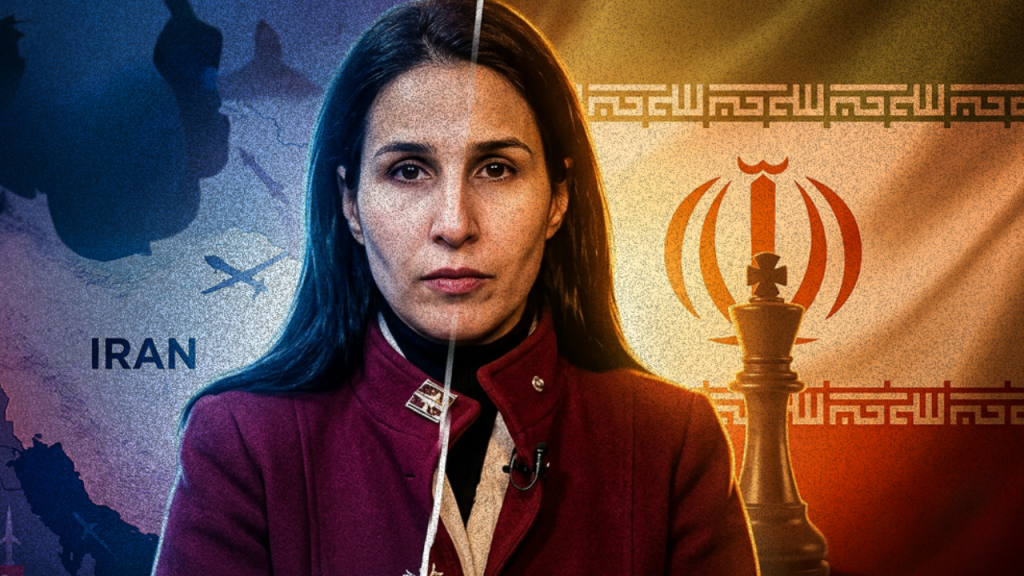
Resistance media Iran war coverage contains genuine strategic insight. Extracting it requires separating material analysis from ideological scaffolding.
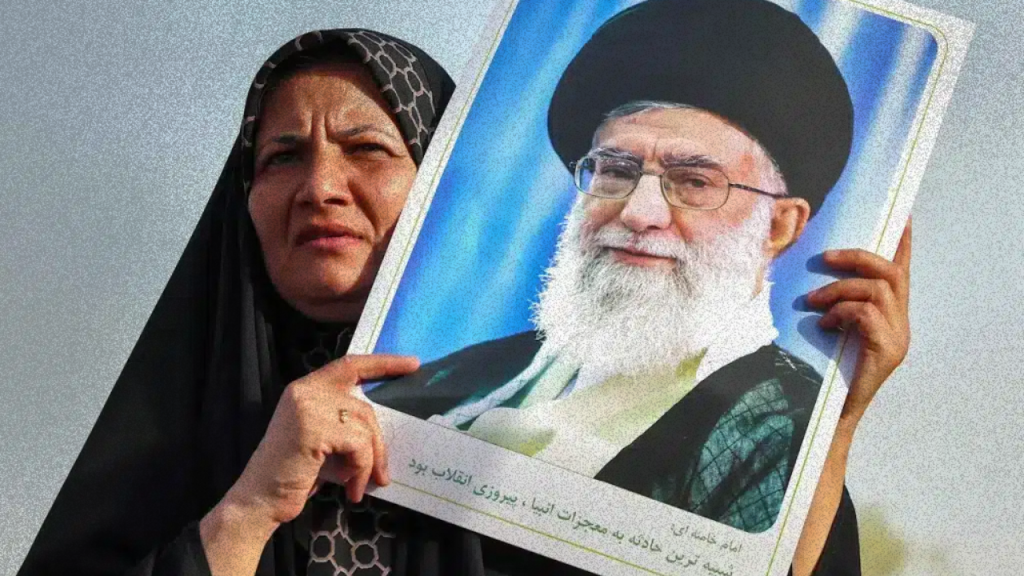
Operation Epic Fury opened on February 28 with US and Israeli airstrikes killing Khamenei and hitting nuclear infrastructure across Tehran, Isfahan, and Qom. Every Western outlet ran security-framing wall-to-wall. Press TV’s Beirut bureau had an analyst calmly describing the conflict as a chapter in a longer contest over who controls the region’s political and economic order. For a left viewer conditioned to distrust Western broadcast framing, that kind of analysis produces immediate recognition — the sense that someone is finally naming the system. The instinct is correct. The analysis is worth taking seriously on its merits.
What the Analyst Was Actually Saying
The analyst laid out a coherent theory of asymmetric endurance. Survive the initial shock: advanced militaries dominate opening phases through firepower, but the objective is not to match that firepower — it is to absorb it and remain organizationally intact. Impose time costs: wars are politically and economically demanding, Western governments face accountability and fatigue that resistance networks do not share in the same form, and if the conflict persists, domestic pressure in attacking countries accumulates faster than in defending ones. Target economic infrastructure: shipping lanes, energy supply chains, and trade routes are force multipliers for actors who cannot compete conventionally. The Houthi campaign against Red Sea shipping illustrated the point — a small military force imposed massive rerouting costs on global trade.
She described Lebanese civilians remaining in damaged communities as evidence of a depth of political commitment that wealthier societies struggle to replicate. She pointed at elite leverage networks — the Epstein example — as a way of explaining why major geopolitical decisions do not track their stated rationales. The logic holds. The question is how precisely to name the mechanism.
Why the Analysis Lands
Resistance media and left anti-imperialism share a vocabulary because they are responding to the same material facts. The United States maintains hundreds of military bases across the Middle East. Western economic systems extract value from the Global South through sanctions, debt, and control of energy markets. These arrangements are enforced by violence when challenged. When the analyst describes Operation Epic Fury as a geopolitical contest over regional control rather than a security response to nuclear threat, she is accurately characterizing what Western media will not say. The asymmetric warfare logic she outlines is not propaganda — it is documented in the historical record of Vietnam, Afghanistan, and Iraq.
The forces resisting US-Israeli regional hegemony — Iran, Hezbollah, Hamas, the Houthis — are not identical in politics or program. What they share is a refusal to accept the regional order Washington has underwritten by force for decades. That refusal is real, the resistance is real, and the strategic logic the analyst describes is grounded in the actual track record of asymmetric conflict. None of that requires adjudication based on the ideological credentials of the outlet delivering it.
On the Epstein Observation
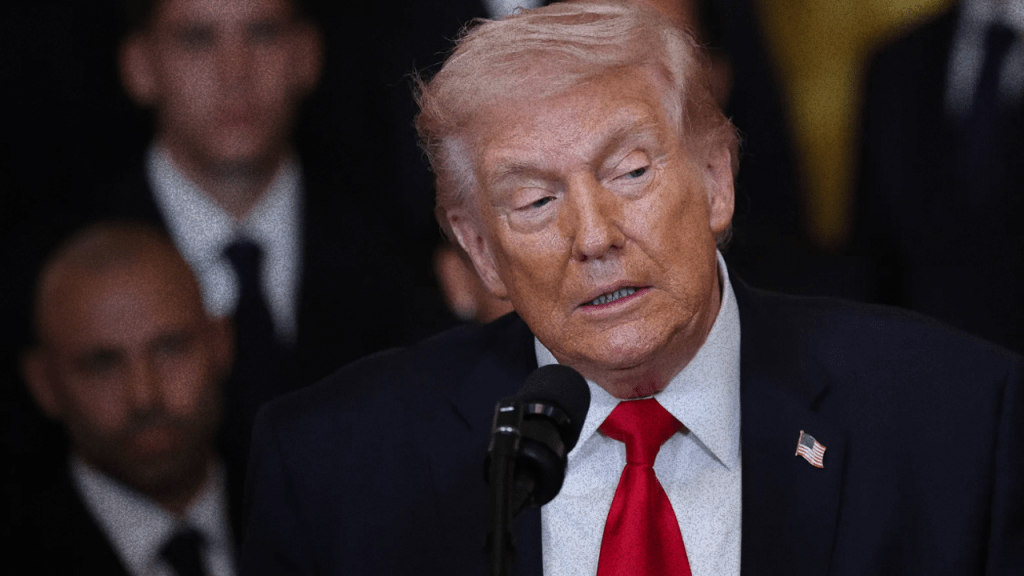
The elite leverage argument deserves to be taken seriously and named precisely. The analyst is correct that major geopolitical decisions are shaped by informal power networks as much as by stated policy — that the decision to join Israel in Operation Epic Fury was not made by Congress but through an executive apparatus operating through relationships largely invisible to the publics bearing the costs. That is not a conspiracy theory. It is how power operates.
The fuller materialist account names the structural dimension alongside the personal one: the war reflects the interests of specific fractions of capital, military-industrial networks, and an Israeli state project whose escalatory logic had been building since the 2024 Beirut strikes began restructuring the regional balance of force. Individual leverage and structural interest are not competing explanations — they operate together. The analyst pointing at Epstein and the analyst pointing at arms contracts are describing the same system from different angles.
Watch It, Use It
Resistance media is worth watching, and the left should watch it without apology. It provides analysis that Western outlets structurally cannot: that asymmetric warfare has a track record, that the costs of this war will accumulate in ways its architects are not publicly accounting for, that the conflict is about regional control and not nuclear nonproliferation. These are real contributions to understanding what is happening — and the fact that a Western outlet would not air them is not a mark against the analysis. It is a mark against Western outlets.
The standard for evaluating what the analyst says is whether it is accurate, not where it comes from. On the strategic logic of asymmetric endurance, on the economic vulnerabilities the war exposes, on the gap between the stated rationale and the actual stakes — she is right. That is the thing that matters.



 Spark Solidarity