
The anti-imperialist debate around Iran has shifted. More than 1,300 civilians killed in ten days means opposing this war has become the principal contradiction for people living in the imperial core.
For years, critics on the left have correctly pushed back against campism. Campism reduces global politics to two permanent blocs and demands unconditional support for any state opposing Western power. It erases the internal struggles of the populations living inside those states. It turns governments into symbols of liberation they often are not. It replaces analysis with loyalty tests.
That criticism remains valid. Iranian feminists, labor organizers, and democratic activists are real political actors whose struggles cannot be erased simply because Iran stands in conflict with the United States.
At the same time, acknowledging those internal contradictions does not mean ignoring the concrete conditions of the present moment.
Since February 28, the United States and Israel have launched a large-scale military campaign against Iran that struck hundreds of targets in its opening phase and rapidly expanded into thousands of attacks across the country. The operation has killed more than 1,300 Iranian civilians within ten days and destroyed critical infrastructure in multiple regions.
Civilian casualties have mounted steadily. A girls’ elementary school in Minab was struck in the early days of the bombing campaign, killing children and teachers along with other civilians caught in the attack.
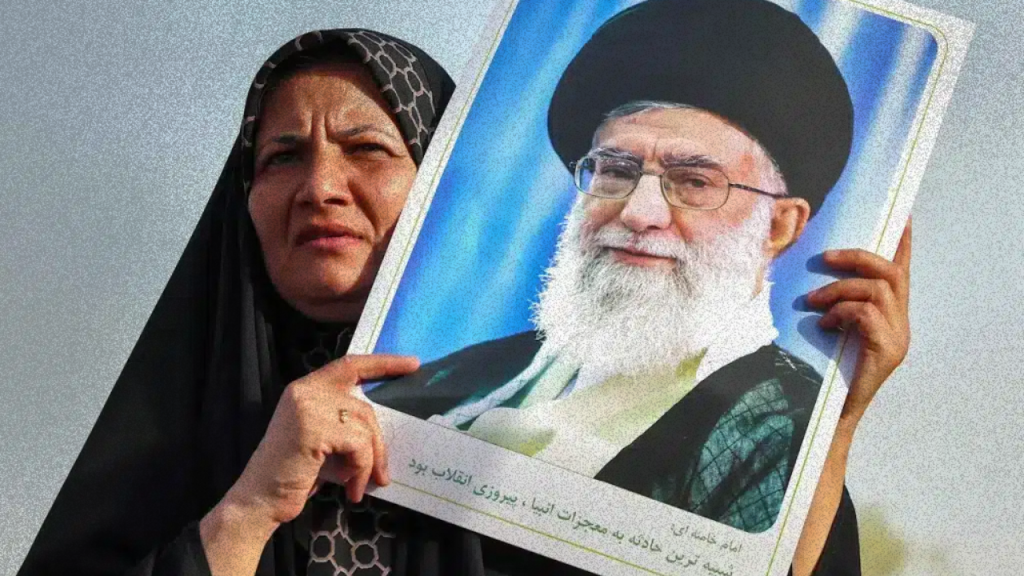
The opening phase of the operation also included the targeted strike that killed Iran’s Supreme Leader Ali Khamenei, dramatically escalating the conflict and signaling that the objective of the campaign extended far beyond limited military deterrence.
This development changes the political calculation. The analytical framework does not change, but the hierarchy of contradictions does.
What principal contradictions actually means
The concept of principal contradictions, developed within Maoist political theory and widely used across the Marxist tradition, holds that multiple contradictions can coexist within a political situation, but one tends to become dominant at a particular historical moment.
Identifying the principal contradiction does not mean denying the existence of other struggles. It means recognizing which contradiction must be addressed first in order for the others to be meaningfully engaged.
This hierarchy is not permanent. Principal contradictions shift as conditions change. What appears primary in one moment can become secondary in the next.
In the present moment, several contradictions clearly exist. Iranian civil society continues to experience tensions between state authority and movements seeking expanded political rights, economic justice, and gender equality.
At the same time, the United States and Israel are conducting an active war against Iran without a UN Security Council mandate and without a declaration of war by the US Congress. The campaign openly pursues regime change while killing civilians and destroying infrastructure across the country.
The question is not which contradiction exists. They all do. The question is which contradiction defines the political responsibility of people living in the countries carrying out the war.
In the imperial core, the war is the principal contradiction
People living in the United States, Canada, the United Kingdom, and allied states are not the primary actors in Iranian domestic politics. They did not create the Islamic Republic, they cannot vote in Iranian elections, and they cannot organize within Iranian civil society.
What they can do is oppose the actions carried out in their names, with their taxes, and by their governments.
The bombing of Iran is happening now. More than 1,300 civilians have been killed. Thousands of targets have been struck across the country. Western leaders have openly described the objective of the campaign as regime change. Norway’s foreign minister has noted that the strikes are not consistent with international law, while Iran’s ambassador to the United Nations has accused the United States and Israel of war crimes and crimes against humanity.
In this context, foregrounding criticism of the Iranian government’s repression of dissidents is not wrong in principle. However, it becomes wrong in political priority during an active bombing campaign.
The issue is not whether repression inside Iran exists. The issue is how repeating that criticism in the middle of a war functions politically. It reproduces the same moral narrative Western governments use to justify military aggression.
The phrase “but Iran is a theocracy” does not appear in a neutral context. It appears within the very rhetorical framework being used to rationalize killing Iranian civilians.
The rhetorical function of moral qualification
This pattern is not new and is not unique to Iran. In discussions of Israel and Palestine, it appears as: Israel’s actions are wrong, but Hamas are terrorists. In discussions of Venezuela, it appears as: sanctions are harmful, but Maduro is a dictator. In discussions of Syria, it appeared as: bombing is wrong, but Assad is a war criminal.
The structure in each case is identical. The “but” clause does not strengthen opposition to violence. Instead, it absorbs that opposition.
The conversation shifts away from the immediate act of aggression and toward the moral condition of the people being attacked. Once that shift occurs, the aggressor no longer carries the full weight of condemnation. The debate becomes about whether the target deserves what is happening to them.
This observation does not mean authoritarian governments should be exempt from criticism. It means the timing and political function of criticism matter.
Criticism of Iran’s treatment of Kurdish communities, its repression of political dissent, and its handling of feminist organizing are legitimate political issues. However, those debates do not belong at the center of the political response to an illegal war happening right now. The civilians being bombed did not choose their government’s policies.
Iran’s revolutionary legacy and resistance role
Understanding Iran’s position in the current conflict requires recognizing the historical origins of the Islamic Republic. The modern Iranian state emerged from the 1979 Iranian Revolution, which overthrew the US-backed Shah and dismantled one of the most entrenched imperial client regimes in the Middle East.
The revolution fundamentally altered Iran’s relationship to global power. Since that rupture, Iran has faced decades of sanctions, economic warfare, covert sabotage, and military threats. Despite those pressures, it has maintained a level of strategic independence that most states in the region do not possess.
Iran’s support for movements resisting Israeli military dominance, including Hezbollah and Palestinian resistance organizations, reflects this broader geopolitical orientation. That support has played a material role in shaping the regional balance of power.
Recognizing Iran’s revolutionary origins and its role in supporting regional resistance does not mean we must romanticize the state in its current form, nor should we overlook its internal contradictions.
It requires understanding that Iran’s very existence, since its inception, has been tied to its refusal to integrate into the Western capitalist framework.
This refusal to conform is what makes Iran revolutionary, even in its current flawed state. That refusal is precisely why Iran has faced decades of sustained pressure and hostility from Western powers.
The weaponization of diaspora politics and the Reza Pahlavi project make clear that forces are attempting to reshape Iran’s political future through external pressure rather than internal democratic transformation.
Regime change and the Pahlavi project
The current war is not simply a military confrontation. It is openly framed as a regime change project.
Western political discourse has increasingly elevated figures associated with the former monarchy, particularly Reza Pahlavi, as potential transitional leadership for a post-Islamic Republic Iran.
The political implications of this project are clear. Replacing the Islamic Republic through foreign military intervention would not deliver the democratic reforms demanded by Iranian workers, feminists, and minority communities. It would produce a government aligned with the same Western security architecture the Iranian Revolution originally rejected.
Holding contradictions in the correct order
None of this requires abandoning the internal struggles of Iranian society. Feminist organizers, labor movements, and democratic activists inside Iran remain essential political forces.
However, foreign intervention historically weakens those movements rather than empowering them. Military regime change replaces internal political transformation with external control.
The political future of Iran must ultimately be determined by Iranian society itself. That future cannot develop freely under foreign bombs.
The correct analytical position is not permanent campism. It is recognizing that contradictions exist in an order determined by concrete historical conditions.
Right now, the defining condition is an active war that has killed more than a thousand civilians and threatens to escalate into a broader regional conflict.
Opposition to that war must therefore be stated plainly.
Stop the bombing. End the war.
The other contradictions remain and can be engaged honestly once the principal one has been addressed.
Sources
- Iran war day eight — Al Jazeera
- 2026 Iran Conflict — Britannica
- Operation Epic Fury nuclear — CSIS
- Operation Epic Fury launched — The Hilltop
- On Contradiction — Mao Zedong
- Weaponized diaspora explainer — Spark Solidarity

 Spark Solidarity