
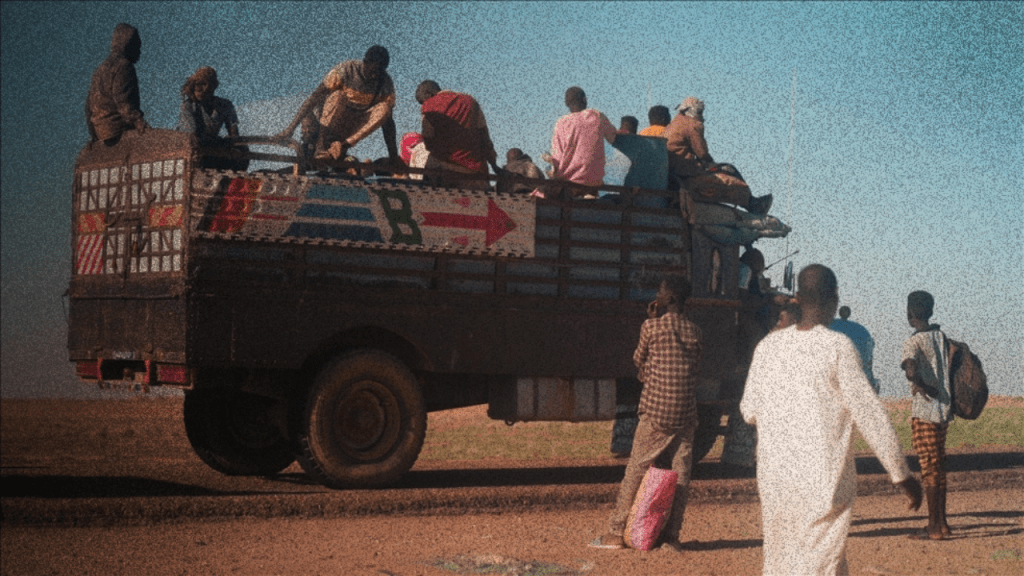
Sudan RSF Bara logistics: the SAF’s March 5 recapture reveals that this war turns on highway control, not territorial gains.
The Same Town Has Changed Hands Three Times — That Is the Whole Story
On March 5, 2026, the Sudanese Armed Forces and their allied Joint Forces retook Bara in North Kordofan after the Rapid Support Forces had held it since October 2025. Sudan Tribune confirmed the recapture following fierce battles — destroyed vehicles, heavy RSF casualties, the army advancing from Al-Dankouj north of El Obeid. SAF commander Abdel Fattah al-Burhan flew to Bara to mark the occasion in person. That presidential visit signals better than any press release what the army actually thinks it has recovered: not a town, but a node in a network it cannot operate without. Understanding the significance of the recapture requires understanding why Bara has changed hands three times in six months. The RSF held it from the war’s opening until September 2025, when the SAF took it. The RSF counterattacked and retook it in October. The SAF took it back in March. None of these exchanges were decisive. All of them were fought with maximum urgency. The reason is not the town. It is the road the town sits on.
Bara Is Not a Town — It Is a Chokepoint on the SAF’s Only Viable Supply Corridor
Bara sits on the Sadarat Highway — also known as the Al-Inqaz Al-Qarbi Highway — approximately 55 kilometers north of El Obeid, the North Kordofan state capital, linking the greater Khartoum–Omdurman conurbation to the country’s interior. This road is the SAF’s primary overland artery for moving troops, armour, fuel, and supplies from its capital base westward. Without it, any SAF offensive into Kordofan operates on extended, exposed alternative routes that are slower, less secure, and structurally inadequate for sustaining a large-scale push. The SAF currently relies on the longer Khartoum–Kosti–El Obeid route precisely because the RSF still holds Jabra al-Sheikh, the locality north of Bara along the direct corridor. The recapture of Bara does not open the highway — it reopens the southern segment only. Control of Jabra al-Sheikh would give the SAF direct supply movement between Khartoum and El Obeid. The army does not yet have it. That is the distinction between a military gain and a logistical solution — and the gap between the two is where the war lives.
No Front Line Exists Because the War Was Never About Territory
Bara’s rapid reversals are not exceptional. They are the war’s default state. ACLED’s analysis of the Sudan conflict documents a pattern in which towns and cities change hands within days or weeks, with neither side capable of consolidating contiguous territorial holding. The east-west partition that has solidified — SAF controlling central Sudan east of Kordofan, RSF dominant in Darfur — makes Kordofan itself the contested buffer where neither side can entrench. This is not a stalemate. It is a structural feature of how the war is being fought. When territory cannot be held, what matters is not the map as it looks today but the network of roads and cities that determines what either side can do tomorrow.
The SAF’s problem is not that it keeps losing and retaking Bara. The problem is that Bara keeps being contested at all — which means the highway it sits on has never been secure long enough to function as a reliable supply artery. Three exchanges in six months is not momentum. It is evidence that the corridor is permanently contested and that neither side has the capacity to hold it decisively. Every time one side takes Bara, the other side’s operational picture deteriorates enough that counterattack becomes a necessity rather than a choice. The town does not determine the war. The town reveals what the war is.
The RSF Is Building a Contiguous Base by Controlling the Kordofan Land Bridge
North Kordofan is geographically sandwiched between the capital region to the east and Darfur to the west, where the RSF has already consolidated dominant control. ACLED identifies the RSF’s strategic logic clearly: hold the corridors through Kordofan and the two halves of its operational base — Darfur and the areas it contests west of Khartoum — become a single connected theatre. For the SAF, breaking RSF corridor control in Kordofan is the prerequisite for isolating RSF forces in Darfur and preventing that eastern consolidation. Bara sits precisely at the junction where that contest is most acute — which is why its capture by either side does not end the contest. It intensifies it. Sudan Tribune noted that full control of the Omdurman-Bara corridor would allow the SAF to link El Obeid with Omdurman — but only if RSF elements are also cleared north of Bara, including Jabra al-Sheikh, where they remain deployed. The strategic prize is the corridor. Bara is a segment. The segment keeps changing hands because neither side can secure the whole.
Logistics Are Destiny: Control the Roads or Lose the War
Infrastructure control is not a secondary consideration in Sudan’s war — it is the primary one. African Security Analysis states the operational stakes precisely: if the SAF reopens the Omdurman highway and pushes fresh armoured columns north, it has a springboard for a drive on Darfur; if the RSF cuts that road again, momentum swings decisively the other way. The SAF’s supply lines are long, fuel shortages are documented, and its ability to sustain prolonged operations in contested terrain is constrained. The RSF, by contrast, is operating increasingly close to its own bases in Darfur with tighter logistics. The army’s Khartoum recapture changed the political optics of the war. It did not change the structural arithmetic.
Controlling a capital means nothing if the roads that connect it to the rest of the country run through enemy hands. The SAF took Bara on March 5. Burhan visited. The army announced it was securing El Obeid. And yet, as of March 6, the highway to Omdurman remains partially secured from the south only — the RSF still holds the northern segment through Jabra al-Sheikh. The road the SAF needs to supply its western campaign passes through territory its enemy still controls. That is not a transition in progress. It is the war’s governing condition stated in logistics. Whether the SAF can clear the full corridor — and hold it long enough to matter — will determine whether its eastern consolidation translates into any real capacity to project force westward. What is not in question is the principle: in Sudan, the side that controls the roads controls what is possible. The rest is noise.
Sources
- Al Jazeera — Sudanese army retakes Bara, secures El Obeid in North Kordofan, March 2026
- Sudan Tribune — Sudanese army retakes strategic town of Bara from RSF, March 2026
- Sudans Post — Sudanese military and allied forces retake strategic town of Bara from RSF, March 2026
- Sudans Post — Overview of territorial control in Sudan conflict, March 6, 2026
- ACLED — Fighting moves to Kordofan as Sudan’s east-west divide solidifies
- African Security Analysis — Sudan: Kordofan at a Crossroads



 Spark Solidarity