
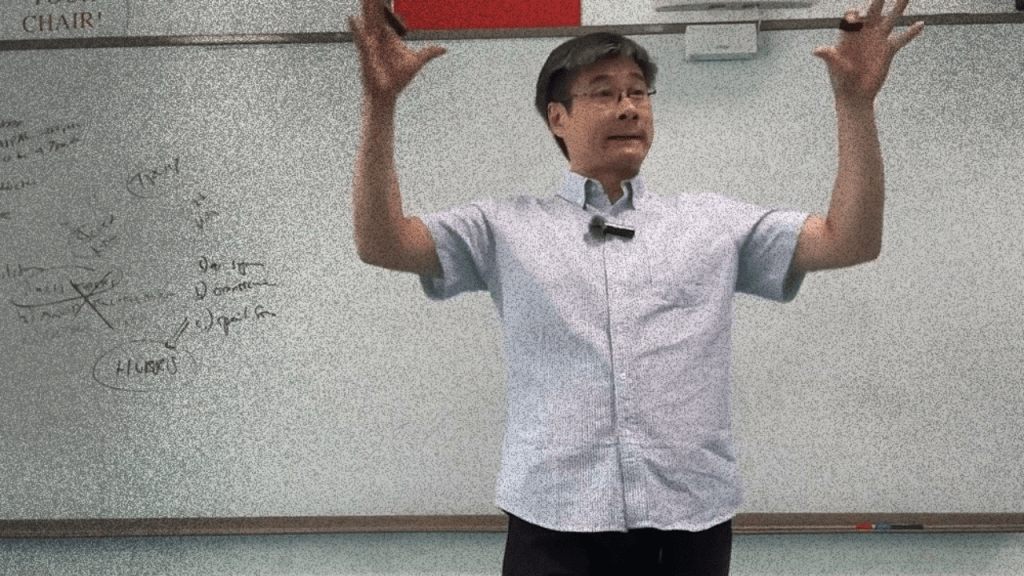
In May 2024, Jiang Xueqin predicted Trump, war with Iran, and U.S. defeat. Two of three confirmed. Here’s what his structural analysis actually gets right—and where it falls short.
In May 2024, when Joe Biden was still president and Donald Trump had not yet survived two assassination attempts, a Chinese-Canadian educator named Jiang Xueqin recorded a lecture for his YouTube channel “Predictive History.” The lecture, titled Geo-Strategy #8: The Iran Trap, made three structural predictions: Trump would win the 2024 election; a second Trump administration would go to war with Iran; and the United States would lose that war, accelerating a shift toward multipolarity.
The video accumulated a handful of views and sat largely unwatched for a year. By late June 2025, as U.S. and Israeli forces struck Iranian nuclear facilities during the twelve-day war, it had surpassed 800,000 views and Jiang’s channel had gained over 100,000 subscribers in three days. Now, with Operation Epic Fury underway and the region in full escalation, it is going viral again.
The temptation is to treat this as prophecy — a geopolitical Nostradamus whose oracle is vindicated. That reading obscures what is actually valuable and what is actually wrong about Jiang’s analysis. Both matter.
What He Got Right and What He Didn’t
Jiang’s first two predictions are confirmed. Trump won. The United States is at war with Iran. His structural reasoning for both — that the Israel lobby, Saudi interests, and American hegemonic financial dependency created irresistible pressure toward confrontation — holds as an account of the forces in play.
His specific scenario for how the war would unfold, however, was significantly off. Jiang predicted what he called “Operation Iranian Freedom” — a joint ground invasion by the U.S., Israel, Saudi Arabia, the UK, and UAE. He estimated the U.S. would need at least 3 to 4 million soldiers to control Iran’s territory and supply lines, argued that boots on the ground would become “hostages, not soldiers” in mountainous terrain, and predicted this would produce the American empire’s Sicilian catastrophe. What has actually happened is an air and missile campaign — strikes on nuclear facilities, IRGC command structures, and military infrastructure — combined with Iranian retaliation across the Gulf. No ground invasion. No occupation. No supply line collapse in the Zagros Mountains.
This distinction is worth making because the viral framing — “he predicted everything” — flattens Jiang’s genuine structural contribution into fortune-telling. He correctly identified the pressures that would produce a war. He incorrectly specified its form. Wikipedia’s entry on Jiang notes that critics have pointed to “selective historical analogies, speculative game-theoretic reasoning, and untestable assumptions” — and those criticisms apply most sharply to the ground invasion scenario. As one Reddit commenter noted, even a broken clock is right twice a day, and the number of self-styled geopolitical forecasters online ensures someone will get a scenario partially right.
His third prediction — U.S. defeat and multipolar acceleration — remains, as he himself framed it, unresolved. He gave a timeline of 3–4 years from 2024, meaning 2027–2028 as the critical window. That window is open. What happens in it depends on material conditions, not historical inevitability.
The Peloponnesian War, Correctly Applied
What Jiang got structurally right is more important than the prophecy narrative.
His comparison was to the Athenian expedition against Sicily in 415 BCE, described by Thucydides in the Peloponnesian War. Athens was the dominant naval and economic power of the Greek world. It launched an ambitious campaign against a geographically distant adversary with underestimated logistical requirements, overconfident assumptions about local support, and no clear plan for what victory would look like. The expedition was not defeated on a single battlefield. It was consumed by attrition — its supply lines stretched, its forces divided, its strategic options narrowing with each passing season — until the entire expeditionary force was destroyed.
The relevance is not geographical. Athens did not fall because Sicily was mountainous. It fell because the campaign consumed resources Athens could not replenish faster than the war demanded them, in a theater where it had no exit that did not look like defeat.
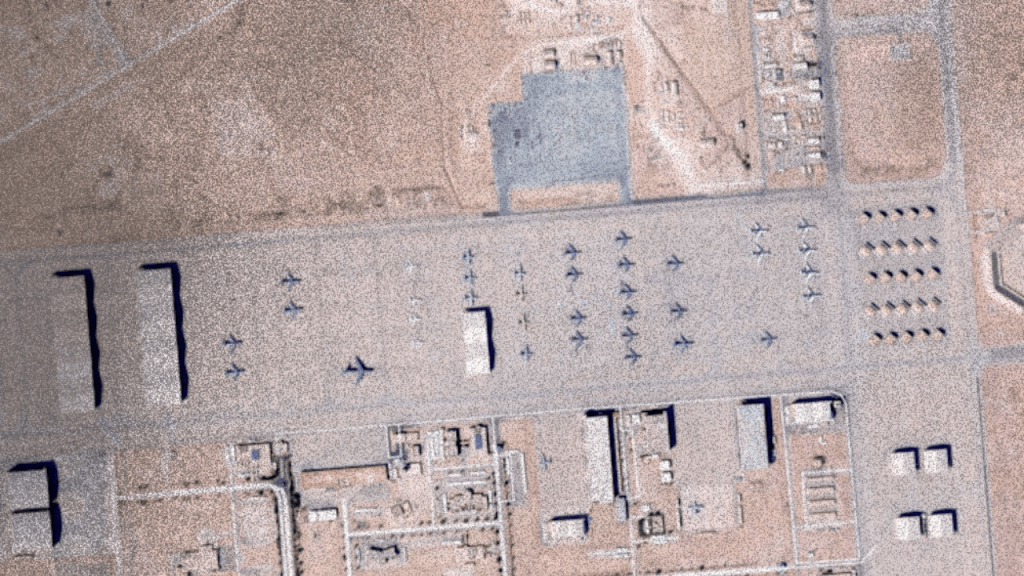
That structural logic is exactly what the current munitions situation is revealing. As we documented in The Missile Math, the United States fired approximately 150 THAAD interceptors — roughly a quarter of its entire stockpile — in twelve days of the June 2025 conflict. At the pre-emergency production rate of 96 interceptors per year, replenishing that expenditure would have taken nearly two years. Analysts at CSIS and JINSA estimate full replenishment could take three to eight years. Now Operation Epic Fury has begun — with Iran already striking Gulf bases — and those stockpiles are described by Fortune and Bloomberg as “most likely dangerously low” going in.
The Athens comparison does not require ground troops in mountain passes. It requires a commitment that consumes faster than it can be replenished, in a theater with no clean exit.
Overextension Is Material, Not Moral
The debate about U.S. “decline” is frequently conducted in moral or cultural terms — hubris, values collapse, leadership failure. Jiang’s framework, whatever its flaws, is materialist. He is asking: what are the production constraints? What does the industrial base actually support? What happens when commitments systematically outpace throughput?
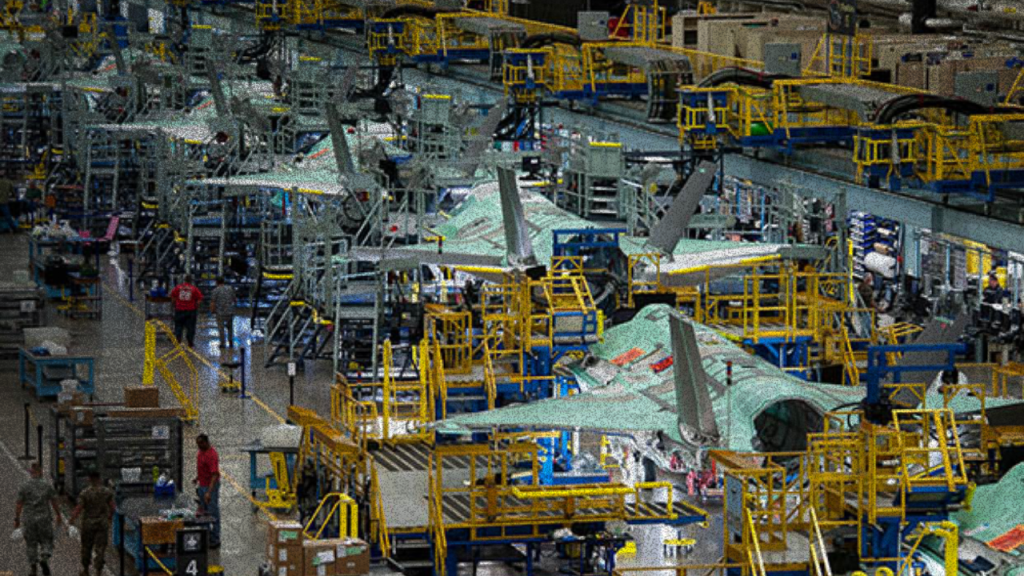
These are the right questions. The United States maintains military commitments across Europe, the Middle East, and the Indo-Pacific simultaneously. Each requires not just deployed forces but the industrial base behind them — stockpiles of interceptors, precision munitions, artillery shells, ship components, drone systems. The CSIS war games that consistently show long-range precision munitions depleted in under a week in a Taiwan contingency are not modeling a force that is weak. They are modeling a force that is strong, and still cannot sustain high-intensity multi-theater warfare at current production rates.
This is the Athenian logic. Athens was not weak when it launched the Sicilian expedition. It was the dominant power of its era. What it was not was inexhaustible. The capacity to project force at a moment is different from the capacity to sustain it indefinitely. Empires are undone not by the first battle but by the arithmetic of the third year.
The structural argument is that this arithmetic is already in motion. Iran does not need to defeat the United States in a conventional engagement. It needs to impose costs — to force expensive defensive responses, to stretch replenishment timelines, to create conditions in which rivals adjust their behavior based on observed limitations. RUSI analyst Sidharth Kaushal told CNN that from a purely military standpoint “the Chinese are absolutely the winners” in the last two years of Middle East operations, because the U.S. has expended capabilities the defense industrial base “will find pretty hard to replace.” That is cost imposition working as a strategy, regardless of what happens on the battlefield.
What Defeat Actually Means
Jiang’s third prediction requires precision. Defeat in hegemonic terms is not occupation or surrender. It is the erosion of deterrence credibility — the point at which rivals conclude that the dominant power cannot dominate all theaters simultaneously and begin acting accordingly.
Multipolarity does not require American collapse. It requires visible limits. And those limits are becoming visible: in the THAAD depletion figures, in the GPS jamming that disrupted 1,100 vessels in the Strait of Hormuz, in the MizarVision satellite documentation of U.S. force movements, in the Emirates shutdown that revealed how quickly global logistics systems fail when the Gulf becomes a conflict zone. None of these are decisive military defeats. All of them are data points that rivals — China most significantly — are accumulating and analyzing.
Whether this produces the multipolar shift Jiang describes depends on a genuinely open question: can the United States rebuild industrial depth fast enough that the structural stress becomes manageable rather than cumulative? The $2 billion THAAD contract, the Patriot production tripling, the $6 billion artillery expansion — these are real investments in real capacity. The lead times are also real: years, not months. Meanwhile, the commitments continue.
The structural analysis does not predict a specific outcome. It describes a trajectory with a direction. Whether that trajectory bends depends on choices — about production, about commitment levels, about which theaters are prioritized — that are political as much as industrial.
Why the Structural Reading Matters More Than the Prophecy
The viral framing around Jiang Xueqin turns a structural analysis into a personality story. It is more satisfying to have a prophet than a mechanism. But the mechanism is what matters.
What Jiang described — empire as a supply chain, overextension as throughput mathematics, defeat as the erosion of the capacity to sustain commitments rather than the loss of a single battle — is not unique to him. It is the standard framework of hegemonic transition theory, applied to observable material conditions. His contribution was timing and specificity, applied before the events he described. His limitation was the same as most structural analysis: the pressures he identified were real, but the specific form they would take was harder to specify correctly.
The question his third prediction leaves open is the right one to be asking as Operation Epic Fury unfolds: not whether the United States will be defeated in any conventional sense, but whether the costs being accumulated now — in interceptor stockpiles, in industrial capacity, in the attention and resources diverted from the Indo-Pacific — are sustainable at the scale of global commitment the American state has assumed.
That is not prophecy. That is production capacity. And production capacity, unlike charisma or resolve, can be measured.
Sources
- Newsweek. “The Professor Who Predicted Trump’s Return and War With Iran.” June 24, 2025. https://www.newsweek.com/jiang-xueqin-trump-iran-viral-video-youtube-2090047
- Wikipedia. “Jiang Xueqin.” https://en.wikipedia.org/wiki/Jiang_Xueqin
- Tyla. “Man Made Eerily Accurate Trump and Iran Prediction One Year Before It Actually Happened.” June 24, 2025. https://www.tyla.com/news/politics/trump-iran-war-prediction-youtube-accurate-944607-20250624
- The Online Citizen. “Jiang Xueqin’s 2024 Lecture Predicting U.S.–Iran War and Trump’s Return Goes Viral Amid Real-Time Conflict.” June 24, 2025. https://www.theonlinecitizen.com/2025/06/24/jiang-xueqins-2024-lecture-predicting-u-s-iran-war-and-trumps-return-goes-viral-amid-real-time-conflict/
- Stars and Stripes. “US Used 14% of Its THAAD Stockpile Against Iran.” July 23, 2025. https://www.stripes.com/theaters/us/2025-07-23/thaad-burn-rate-israel-iran-18524355.html
- Fortune / Bloomberg. “Iran’s Missile Barrage Tests Whether U.S. Has Enough Interceptors.” February 28, 2026. https://fortune.com/2026/02/28/iran-missile-barrage-us-interceptor-stockpile-thaad-patriot/
- CNN. “US Used About 25% of Its THAAD Missile Interceptors During Israel–Iran War.” July 28, 2025. https://www.cnn.com/2025/07/28/middleeast/us-thaad-missile-interceptor-shortage-intl-invs
- Fox Business / CSIS. “US Could Quickly Run Out of Munitions in Conflict with China, Defense Industry Unprepared.” January 2023. https://www.foxbusiness.com/politics/us-could-quickly-run-out-munitions-conflict-with-china-defense-industry-unprepared-report
- FPRI. “America’s Scale Problem.” October 2025. https://www.fpri.org/article/2025/10/americas-scale-problem/
For the structural argument Jiang gestures at but doesn’t fully develop — the industrial base contradiction that makes “defeat” a material question rather than a military one — read American Hegemony’s Throughput Problem: Empire as a Rate.





 Spark Solidarity