
Crisis narratives are instruments of power: how the U.S. military planned staged attacks to manufacture consent—and why that logic persists.
It feels like the perfect moment for a “mysterious” incident in a border city, instantly blamed on Iran-backed proxies supposedly crossing through Mexico. The narrative writes itself. Fear first, question never.
That line is not a prediction. It is pattern recognition.
What it points to is not a secret plan or a hidden conspiracy, but a recurring method of power: when tensions are already high, an ambiguous event can be framed immediately through pre-existing fears, locking in public consent before evidence, timelines, or accountability ever arrive. By the time facts surface — if they do at all — the story has already done its work.
This is not speculative. It has precedent. It has documentation. And in one case, it was written down with bureaucratic calm and presented to the highest levels of the U.S. government.
How Crisis Narratives Are Built
Moments of crisis are narratively efficient. Complexity collapses under emotional pressure. Uncertainty becomes intolerable. The public demands explanation, and whoever provides it first defines the terrain on which all future discussion must take place.
This is why “unexplained” incidents are so useful. A lack of clarity creates a vacuum. That vacuum does not stay empty. It gets filled with whatever stories are already waiting nearby.
In the United States, certain fears are always preloaded: border chaos, foreign enemies, terrorism, infiltration. These are not fringe anxieties. They are deeply cultivated political resources. When invoked together, they reinforce one another, compressing a complex geopolitical reality into a single, emotionally legible threat.
Linking Iran, Mexico, and the border does not require proof to function. It only requires familiarity. The audience already knows how to feel about these symbols. The narrative does not need to be constructed from scratch. It only needs to be activated.
Speed matters more than accuracy. The first frame sets the emotional baseline. Once fear and outrage are triggered, subsequent information is processed defensively, if it is processed at all. Corrections do not land with the same force as the initial shock. They never do.
This is what “fear first, questions never” describes. Not gullibility, but design.
Operation Northwoods: The Document That Makes This Real
On March 13, 1962, a document titled Justification for U.S. Military Intervention in Cuba was presented by the Joint Chiefs of Staff to Secretary of Defense Robert McNamara. It bore the signature of Chairman Lyman Lemnitzer and carried the top-secret classification of the entire U.S. military leadership.
The document proposed a series of actions intended to justify a U.S. invasion of Cuba. These actions included staging terrorist attacks on American soil, fabricating Cuban aggression, manufacturing civilian casualties, and manipulating media coverage to generate public outrage.
The proposals were explicit. They included faking the shoot-down of a civilian airliner and blaming it on the Cuban Air Force. They included staging bombings in Miami and Washington, D.C. They included sinking boats carrying Cuban refugees on the high seas. They included blowing up a U.S. ship at Guantánamo Bay.
As ABC News reported when the document came to wide public attention, the Joint Chiefs wrote plainly: “We could blow up a U.S. ship in Guantanamo Bay and blame Cuba,” and that “casualty lists in U.S. newspapers would cause a helpful wave of national indignation.”
This was not metaphorical language. It was operational language. Death was treated as a communications strategy. Public emotion was calculated in advance. Media coverage was not a concern to be managed but a mechanism to be activated.
The plan was known as Operation Northwoods.
Kennedy rejected it. Lemnitzer was removed as Chairman of the Joint Chiefs of Staff, though he was later reassigned as Supreme Allied Commander of NATO rather than dismissed outright. The document was classified for decades, originally made public on November 18, 1997 by the John F. Kennedy Assassination Records Review Board, and brought to wider public attention by investigative journalist James Bamford in his 2001 book Body of Secrets.
What matters is not simply that the plan was rejected. What matters is that it was written, endorsed at the highest military levels, and presented as a serious option.
Media as Infrastructure
Operation Northwoods did not treat the press as a skeptical adversary. It treated the press as infrastructure.
The document assumes that newspapers would print fabricated casualty lists without investigating their origin. It assumes broadcasters would relay the story as presented. It assumes that outrage, once triggered, would move predictably through the public.
This assumption was not naive. It was based on experience.
In the mid-1970s, the Senate Church Committee documented that the CIA had maintained secret relationships with at least fifty American journalists, using those relationships to shape coverage and suppress unfavorable stories. In 1977, Carl Bernstein went further.
In a 25,000-word investigation published in Rolling Stone on October 20, 1977, Bernstein reported that over a 25-year period, more than 400 U.S. journalists had secretly carried out assignments for the CIA — often with the knowledge and consent of senior editors and publishers at the country’s most powerful news organizations, including CBS, the New York Times, Time magazine, and Newsweek.
The point is not that journalists were briefed on Operation Northwoods. The point is structural. By 1962, U.S. intelligence agencies had demonstrated the ability to manage news coverage at scale. Media cooperation was a rational operational expectation, built on decades of documented practice.
Northwoods planners were not fantasizing about a compliant press. They were working with a proven capability.
This is why modern narratives so often rely on phrases like “officials say” or “according to sources familiar with the matter.” The structure persists even when the methods evolve. Authority is transmitted through proximity to power, not through verification.
For a closer look at how that management operates today — collapsing material analysis into moral performance and keeping power out of frame — read The Politics of Perception Management on Anti-Semitism.
The Interests Beneath the Story
Operation Northwoods is often framed purely as an anti-communist project. That framing is accurate but incomplete.
After the Cuban Revolution, the Castro government nationalized U.S.-owned assets. Oil refineries owned by Texaco, Esso, and Shell were seized. United Fruit Company holdings were expropriated. Utilities, banks, and hundreds of American businesses were brought under state control. Billions of dollars in U.S. capital were removed from private hands.
The Bay of Pigs invasion, which preceded Northwoods by less than a year, was not simply an ideological operation. It was an attempt to restore the conditions under which American capital could operate in Cuba. When it failed, Operation Northwoods was drafted as part of the next mechanism — Operation Mongoose, the broader Cuba destabilization program — for producing a justification to finish the job.
Anti-communism provided the moral language. Material interests provided the motive.
This pattern is not unique to Cuba. Ideological framing consistently functions as cover for economic objectives. The moral story explains why intervention is necessary. The material story explains why it is desired.
Understanding this distinction matters because it clarifies why narratives are often fixed before evidence appears. The narrative is not responding to reality. It is clearing the path for action already deemed necessary.
Rejection Without Reckoning
Kennedy’s rejection of Operation Northwoods is often presented as evidence that the system corrected itself. This interpretation is comforting and incomplete.
The archival record shows that Northwoods did not emerge from a rogue imagination. As the National Security Archive documents, it was produced in response to a request from the Chief of the Cuba Project, Colonel Edward Lansdale, as part of Operation Mongoose — a program that Kennedy’s own administration had authorized. Kennedy rejected the final proposal, but the underlying logic was not repudiated. It resurfaced quickly.
In 1964, the Gulf of Tonkin incident provided the legislative basis for the Vietnam War. According to declassified NSA documents released in 2005, the second reported attack — on August 4 — almost certainly did not occur as described. An internal NSA historical study by historian Robert J. Hanyok concluded that U.S. intelligence had been deliberately “skewed” to make SIGINT fit the claim of an attack that the evidence did not support. The narrative moved faster than the facts. Public outrage was mobilized. Escalation followed.
The pattern continued into the 21st century with the intelligence claims used to justify the invasion of Iraq. Weapons of mass destruction were asserted as fact despite internal doubts and contradictory evidence. The media transmitted the claims. The correction came years later, after the damage was done.
Rejection is not reckoning. A plan can fail without the thinking that produced it being dismantled.
The evolution from staged attacks to deniable technology — how the same doctrinal logic migrated from Northwoods into electronic warfare, acoustic weapons, and regime-change operations — is traced in How Deniable Weapons Replace Visible State Violence.
From Northwoods to the Present
The relevance of Operation Northwoods lies not in its extremity, but in its clarity. It shows the logic in its most naked form.
Manufacture or exploit an incident. Frame it immediately through a pre-existing enemy narrative. Use media transmission to trigger public outrage. Move policy before scrutiny can develop. Let accountability trail indefinitely behind.
Over time, the methods have become less overt. Staged attacks give way to asserted connections. Fabricated incidents give way to selective intelligence. But the structure remains intact.
Today, the language has shifted to “proxies,” “cartels,” “hybrid threats,” and “border security.” The villains are interchangeable. The function is stable.
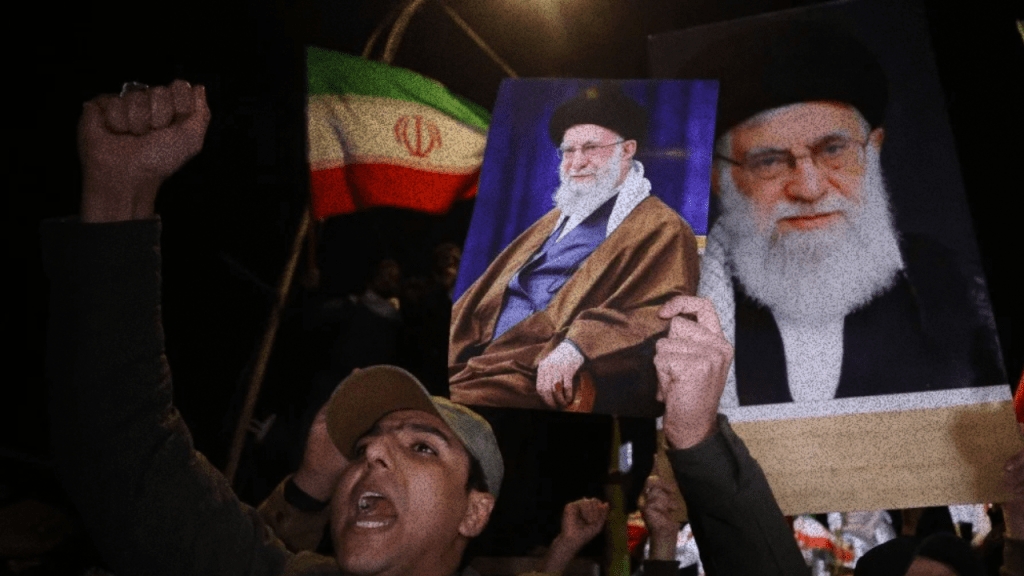
When Iran is invoked alongside the southern border, it is not because evidence demands it. It is because the narrative utility is obvious. Multiple anxieties converge into a single threat that feels urgent, legible, and dangerous. The story does not need to be proven to be effective. It only needs to be repeated.
The deeper geopolitical architecture behind why Iran became a fixed target in American threat narratives — and why the U.S.–Israel war was, in that sense, always coming — is analyzed in Why the U.S.–Israel War on Iran Was Always Coming.
The Archive Remains Open
Operation Northwoods matters because it collapses the distance between suspicion and documentation. It demonstrates that what is often dismissed as paranoia has, in fact, been proposed by institutional power in plain language — with budgets, signatures, and casualty projections attached.
The lesson is not that every crisis is staged. The lesson is that crises are opportunities, and narratives are tools.
Fear moves faster than facts. Emotional shock outruns investigation. And once a frame is set, walking it back becomes nearly impossible, even when it unravels.
The danger was never that a bad plan was written down once. The danger is that the thinking behind it was normalized, professionalized, and carried forward without reckoning.
The archive remains open. The logic persists.
Sources
- National Security Archive. “Chairman, Joint Chiefs of Staff, Memorandum to the Secretary of Defense, ‘Justification for US Military Intervention in Cuba,’ 13 March 1962.” National Security Archive, George Washington University. https://nsarchive.gwu.edu/CMC-60/joint-chiefs-pretexts-to-invade-Cuba-1962
- Ruppe, David. “U.S. Military Wanted to Provoke War With Cuba.” ABC News, May 1, 2001. https://abcnews.com/US/story?id=92662&page=1
- “Operation Northwoods.” Wikipedia. https://en.wikipedia.org/wiki/Operation_Northwoods
- Bamford, James. Body of Secrets: Anatomy of the Ultra-Secret National Security Agency. New York: Doubleday, 2001.
- Bernstein, Carl. “The CIA and the Media.” Rolling Stone, October 20, 1977. https://goodtimesweb.org/industry-govt-agents/rs-bernstein-cia-media-oct-20-1977.html
- “Operation Mockingbird.” Wikipedia. https://en.wikipedia.org/wiki/Operation_Mockingbird
- National Security Archive. “Tonkin Gulf Intelligence ‘Skewed’ According to Official History and Intercepts.” National Security Archive, December 1, 2005. https://nsarchive2.gwu.edu/NSAEBB/NSAEBB132/press20051201.htm
- Melia, Michael T. “The Truth About Tonkin.” Naval History Magazine, Vol. 22, No. 1, February 2008. https://www.usni.org/magazines/naval-history-magazine/2008/february/truth-about-tonkin
- “Gulf of Tonkin Incident.” Wikipedia. https://en.wikipedia.org/wiki/Gulf_of_Tonkin_incident


 Spark Solidarity