
Operation Absolute Resolve extracted Maduro from Caracas. This is what that tells us about multipolarity — and what it doesn’t.
What Happened and What Was Said
Operation Absolute Resolve was the largest US military operation in Latin America since the 1989 invasion of Panama — the last time the United States extracted a sitting head of state from his own capital at gunpoint. More than 150 aircraft struck Venezuelan air defenses across four states. Delta Force breached Maduro’s compound at Fort Tiuna before 1 a.m. His security detail was killed. He and Cilia Flores were taken in their pajamas, flown to the USS Iwo Jima, then transported to New York to face narco-terrorism charges in the Southern District. Trump announced at Mar-a-Lago that the United States would be “running” Venezuela until a transition could take place.
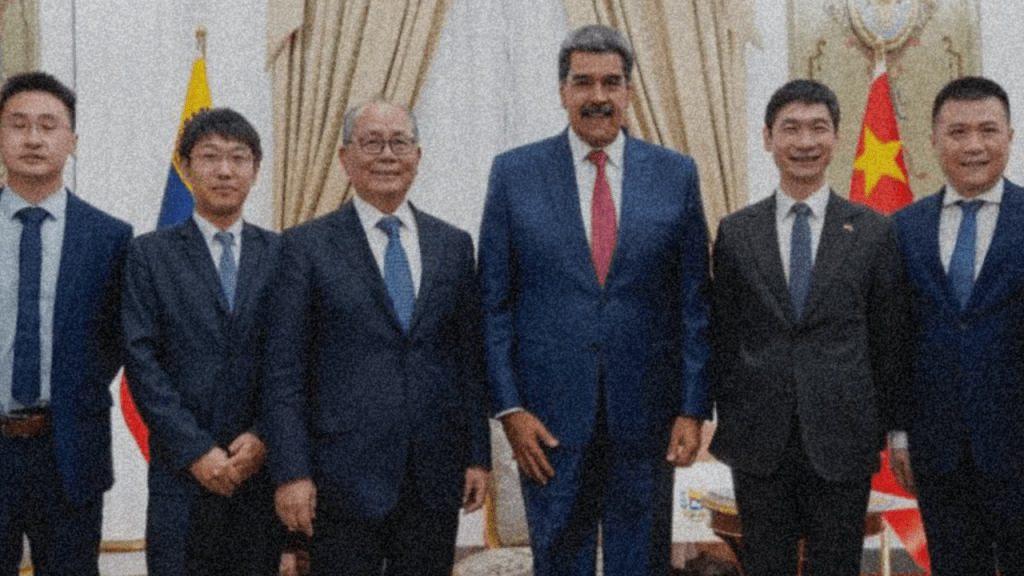
The responses came fast. China’s Foreign Ministry issued two statements in 24 hours — calling the operation “deeply shocking,” a “blatant use of force against a sovereign state,” a “clear violation of international law,” and demanding Maduro’s immediate release. The day before the raid, a Chinese special envoy had met with Maduro in Caracas to reaffirm Beijing’s support. Russia’s Foreign Ministry called it “an act of armed aggression” warranting “condemnation.” At China and Russia’s request, the UN Security Council convened on January 5. The US representative rejected characterizations of the operation as military aggression, describing it as a targeted law enforcement action. No resolution passed. The council issued no binding response.
Brazil, Colombia, Chile, Mexico, and Uruguay issued a joint statement rejecting the operation as a violation of Venezuelan sovereignty. Cuba declared two days of national mourning for the 32 Cuban officers killed in the raid. Tens of thousands gathered outside the US embassy in Havana on January 16. The UN Secretary-General called the operation “a dangerous precedent” that raised serious questions about compliance with international law. Trump replied that nobody deserved the $50 million reward for Maduro’s capture “but us.”
Why China and Russia Did Not Intervene — and What That Actually Means
In the days after the operation, significant energy was directed toward explaining why China and Russia had not done more — and framing that absence as a failure or a betrayal. This framing misidentifies what multipolarity is and what it can do.
China maintains two military bases outside its borders. The United States maintains over 750. China does not have a power projection capability in the Western Hemisphere — not because of a policy choice, but because of the current stage of its military development and its strategic doctrine of non-interference in foreign internal affairs, which reflects both genuine principle and the calculation that extending military commitments globally before having the capacity to sustain them is strategically reckless. The Chinese special envoy who met Maduro hours before the raid was not performing theater. Beijing had been providing diplomatic support, economic partnership, and oil purchasing that gave Venezuela hard currency to function. What it could not do was place forces between US aircraft and Venezuelan air defenses in the Caribbean on 72 hours’ notice.
Russia’s position was more constrained still. The war in Ukraine had consumed Russia’s expeditionary military capacity and its defense industrial budget. Reports from the Wall Street Journal indicated Russia was aware of an impending US operation against Venezuela but declined to notify China — a signal of the limits of the “infinite friendship” under operational pressure. Russia’s response in the days after the raid was an Oreshnik missile strike on a power plant in Lviv — signaling to Washington that Venezuela had costs, but in the theater where Russia still has leverage, not in Latin America where it does not.
These are not failures of will. They are the current material limits of multipolar power. The United States has spent 80 years and tens of trillions of dollars building the military basing network, the power projection capability, the logistics infrastructure, and the intelligence penetration that made Operation Absolute Resolve possible. Multipolarity is a shift in the structural distribution of global power — it is not the instantaneous construction of a counter-force capable of matching US military reach in its own declared sphere of influence.
What the Condemnations Did and Didn’t Do
The framing that China and Russia “only issued statements” treats diplomatic and legal contestation as inherently insufficient — as though the only meaningful response to US military action is counter-military action. This framework accepts US military dominance as the only currency of power that counts, which is itself a concession to the US strategic worldview.
What the condemnations actually produced: a UN Security Council session convened at China and Russia’s request that put the legal basis of the operation on the international record as contested; a joint statement from five Latin American governments, including Brazil and Colombia — states with significant economic relationships with the United States — formally rejecting the operation as a sovereignty violation; international legal analysis documenting that the operation had no basis in the UN Charter, no Security Council mandate, and no viable self-defense justification under international law; and a global record of the precedent that the United States had set. The UK’s House of Commons Library briefing on the operation noted that legal scholars across multiple jurisdictions raised serious questions about its lawfulness — questions that will structure the international legal terrain for the next state that attempts a similar operation and faces different conditions.
None of this freed Maduro. That is the honest accounting. Diplomatic contestation within a system whose enforcement mechanisms are controlled by the state committing the violation does not produce immediate reversal. That is a real limit of the current world order — one that the multipolar project is in the process of addressing, not one that it has already resolved.
The Monroe Doctrine Is Still Operational
The Venezuela operation is not an anomaly. It is the Monroe Doctrine — the 200-year-old US claim to hegemonic authority over the Western Hemisphere — executed with 21st century precision. The 1989 Panama operation captured Manuel Noriega on drug charges. The 1954 CIA-backed coup removed Jacobo Árbenz in Guatemala. The 1973 coup killed Salvador Allende in Chile. The 1961 Bay of Pigs attempt failed; the 1962 missile crisis forced Soviet weapons out of Cuba at gunpoint. The pattern is unbroken: the United States has treated Latin America as a zone of exclusive dominance in which no government hostile to US capital interests will be permitted to consolidate, and it has enforced that claim with whatever level of force the situation requires.
What changed on January 3, 2026 is not the doctrine. What changed is the explicit, public announcement of what has always been the operational reality. Trump’s statement that the US would “run” Venezuela until a suitable transition — meaning one acceptable to Washington — removed the pretense of democracy promotion and named the objective as administration. This is Panama 1989 with better branding and worse diplomacy.
Understanding this as continuity rather than rupture matters because it locates the problem correctly. The problem is not that China and Russia failed to respond adequately to a new and unprecedented violation. The problem is that the United States has maintained a 200-year military-enforced sphere of influence in Latin America that the current multipolar transition has not yet had the capacity to contest directly. That is a different analysis — and it points toward different political conclusions.
Multipolarity Is a Process, Not a Rescue
The political error that produces the most frustration in moments like Venezuela is the expectation that multipolarity functions as a rescue system — that when the United States commits a violation of this scale, the multipolar powers will intervene to reverse it. That expectation mistakes what multipolarity currently is for what it is in the process of becoming.
What multipolarity has already changed: the ability of the United States to impose economic sanctions as a unilateral instrument of regime change without alternative. Venezuela has had access to Chinese oil purchasing and Russian diplomatic support that kept the Maduro government functional for a decade after the sanctions regime was designed to collapse it. The oil blockade that eventually enabled the operation required months of escalating seizures and tariff threats precisely because China’s purchasing had given Venezuela hard currency reserves that simple sanctions could not eliminate. The multipolar relationship extended the survival of a targeted state by years. It did not make that state invulnerable to direct military action.
What multipolarity has not yet changed: the US military basing network, its power projection capability in the Western Hemisphere, or the enforcement vacuum in international law that allows the Security Council to name a violation without being able to reverse it. These are the structural conditions that Operation Absolute Resolve exploited. They are real. They are also the specific conditions that the long arc of multipolar development — Chinese military modernization, BRICS institutional expansion, the gradual de-dollarization of international trade, the growth of non-Western multilateral institutions — is in the process of addressing. That process is measured in decades, not in the time between a president’s approval of a strike and its execution.
The correct analysis of Venezuela is not “multipolarity failed.” It is: the United States executed a 200-year-old doctrine in its declared sphere of influence against a state whose multipolar relationships had delayed but could not prevent that execution given the current balance of military force. The lesson for states that want to develop outside US-dominated frameworks is not that multipolar relationships are useless — it is that the construction of a world order in which such operations become structurally impossible requires the full arc of the multipolar project to be completed, not just its current early stage.
The Work That Venezuela Demands
Rep. Mario Díaz-Balart announced at a press conference on January 3 that Cuba and Nicaragua were next — that neither would survive the Trump administration. Trump himself stated that Venezuela’s oil revenue would be used to reimburse the United States for “stolen” nationalized assets. Marco Rubio noted that nobody would receive the $50 million reward for Maduro’s capture. “Nobody deserves it but us,” Trump confirmed.
This is not a government that is concealing its objectives. The target list for this phase of US hemispheric enforcement is being announced publicly. The operational logic — narco-terrorism charges as the legal pretext, regime change as the objective, oil revenue as the prize — has been used before and will be used again. Cuba is already under its most severe energy blockade in decades, as documented in the analysis of Cuba’s energy crisis as a siege. Nicaragua is under sustained US pressure. Venezuela’s Delcy Rodríguez government is being told to sever ties with China as a condition of US tolerance.
The political work this moment demands is not the performance of outrage at the absence of immediate multipolar rescue. It is clarity about what is being done, to whom, and why — building the political conditions in which US military operations in Latin America become more costly, more contested, and eventually structurally impossible. That work is being done by the governments of Brazil, Colombia, and Chile who issued the joint condemnation. It is being done by the international legal community documenting the precedent. It is being done by the Cuban people who gathered in Havana in tens of thousands on January 16. It is being done by every government that votes in the UN General Assembly to reject the doctrine that the United States can “run” a country whose resources it wants.
None of that work produces immediate results. The timeline for building a world order in which Operation Absolute Resolve is not possible is not measured in weeks. It is measured in the same decades it took to build the military infrastructure that made it possible. The question is not whether to wait for multipolarity to act. The question is whether to participate in building the conditions under which it can.
For the structural analysis of China’s role in the multipolar transition, read Is China Imperialist? A Materialist Analysis. For the parallel siege logic in Cuba, read Cuba’s Energy Crisis Is a Siege, Not System Collapse.
Sources
- Al Jazeera. “China Urges US to ‘Stop Toppling’ Venezuelan Government, Release Maduro.” January 4, 2026. aljazeera.com
- Time. “How the World Is Reacting to the U.S. Capture of Nicolas Maduro.” January 3, 2026. time.com
- Wikipedia. “2026 United States Intervention in Venezuela.” wikipedia.org
- Wikipedia. “International Reactions to the 2026 United States Intervention in Venezuela.” wikipedia.org
- House of Commons Library. “The US Capture of Nicolás Maduro.” Updated March 2026. commonslibrary.parliament.uk
- CSIS. “The Geopolitics of Maduro’s Capture: What Does Operation Absolute Resolve Mean for Russia?” January 20, 2026. csis.org
- NBC News. “How the U.S. Captured Maduro in Venezuela: A CIA Team, Steel Doors and a Fateful Phone Call.” January 3, 2026. nbcnews.com
- Spark Solidarity. “Cuba’s Energy Crisis Is a Siege, Not System Collapse.” sparksolidarity.ca
- Spark Solidarity. “Is China Imperialist? A Materialist Analysis.” sparksolidarity.ca



 Spark Solidarity