ADL apartheid surveillance exposed in 1993: police raids uncovered a spy network feeding information on American activists to the South African government.
The Anti-Defamation League was founded in 1913 in the immediate aftermath of the lynching of Leo Frank, a Jewish man falsely convicted of murder in Georgia. For decades the organization fought antisemitism and racial discrimination, working alongside the NAACP to expose far-right organizations during the civil rights era. That record is real. So is what came after.
The transformation began after 1967. As Israel’s occupation of Palestinian territory drew growing criticism from the left, the ADL increasingly oriented itself around suppressing that criticism. Liberation movements — Black, Palestinian, anti-colonial — came to be viewed not as allies in a common struggle against racism, but as threats to be monitored and countered. The ADL’s director of fact-finding, Irwin Suall, described the perceived threat plainly: the real danger to Jews came from “a coalition of leftists, Blacks, and Arabs.” That assessment shaped the organization’s intelligence priorities for decades.
The Campaign Against the ANC
During the 1980s, as a global solidarity movement built pressure against South African apartheid and demanded the release of Nelson Mandela, the ADL took an active role on the other side. ADL National Director Nathan Perlmutter co-authored an article characterizing the African National Congress as “totalitarian, anti-humane, anti-democratic, anti-Israel, and anti-American.” The organization lobbied within the National Community Relations Advisory Council — an umbrella body of major American Jewish organizations — against the anti-apartheid divestment movement, arguing that sanctions would hurt South African Jews, place American Jews on the wrong side of the Cold War, and damage Israel, which had developed deep military and commercial ties with the apartheid regime.
The logic was straightforward: the ANC had an armed wing, maintained relationships with the Soviet Union and Cuba, and expressed solidarity with the Palestinian liberation movement. Mandela himself had declared that South African freedom was incomplete without Palestinian freedom. In the Cold War framework, this placed the ANC squarely within the network of movements that Western institutions read as threats. As Pulitzer Prize-winning journalist Glenn Frankel later summarized it: the ADL “participated in a blatant propaganda campaign against Nelson Mandela and the ANC in the mid-1980s and employed an alleged ‘fact-finder’ named Roy Bullock to spy on the anti-apartheid campaign in the United States — a service he was simultaneously performing for the South African government.”
Roy Bullock and the Spy Network
Roy Bullock had worked for the ADL as an undercover operative since 1960, when the organization recruited him out of a career as an FBI informant. His original mandate was to infiltrate far-right groups — neo-Nazis, white supremacists, the John Birch Society. Over time, the scope expanded dramatically. By the 1980s, Bullock was attending activist meetings under false names, compiling dossiers on Arab-American organizations, anti-apartheid coalitions, labor unions, civil rights groups, and critics of Israeli policy.
His key institutional contact was Tom Gerard, an inspector in the San Francisco Police Department’s intelligence unit. Gerard fed Bullock confidential police records — driver’s license numbers, criminal arrest records, vehicle registrations, fingerprint cards — in apparent violation of the law. Through this pipeline, Bullock assembled a database that drew on law enforcement information from agencies across the country. A source close to the district attorney’s investigation later told the Los Angeles Times: “The ADL is running this all over the country.” Another law enforcement official said the San Francisco operation was “the tip of the iceberg.”
Bullock and Gerard also sold intelligence to the South African government. The price was $16,000. The files they provided included detailed information on American activists involved in anti-apartheid campaigns. Ten days before he was assassinated in South Africa, ANC leader Chris Hani — widely expected to succeed Mandela — was trailed by Bullock during a trip through California. Bullock filed a report on the visit to the South African government.
The 1993 Raids and What Was Found
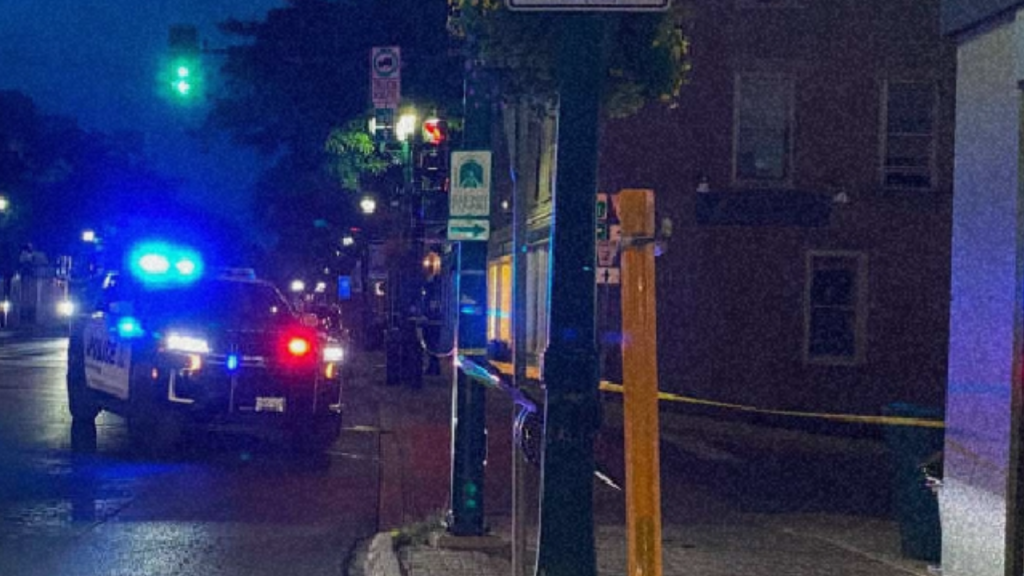
The network unraveled when the FBI began investigating Gerard for the illegal sale of confidential police documents. The trail led to Bullock, and from Bullock to the ADL. In April 1993, police raided ADL offices in San Francisco and Los Angeles, carting out ten full boxes of files. The San Francisco District Attorney released a 400-page affidavit accusing the ADL of “misuse of confidential government information and the invasion of privacy of over 1,000 persons.” A police inspector stated that ADL employees had been “less than truthful with regard to the employment of Bullock and other matters.”
The database seized by authorities contained approximately 9,876 individual files. The organizations monitored were not primarily extremist groups. Among those with files: the NAACP, Greenpeace, the ACLU, the National Lawyers Guild, ACT UP, the United Farm Workers, Irish Northern Aid, the Asian Law Caucus, the International Indian Treaty Council, the San Francisco Bay Guardian, the board of directors of public television station KQED, and numerous Democratic politicians including Representative Ron Dellums — a Black congressman from Oakland who chaired the House Armed Services Committee. Roughly one quarter of the individual names in the database were Arab Americans.
Gerard fled to the Philippines when the investigation began. He eventually returned, was arrested, and received a single misdemeanor charge — 45 days of community service and three years’ probation for the illegal transfer of confidential information on thousands of Americans to a foreign intelligence service. The FBI refused to share evidence with the district attorney’s prosecution, and the criminal case against Gerard effectively collapsed. Bullock was allowed to keep his job at the ADL. The ADL petitioned to have Bullock legally classified as a “journalist,” which would have protected most of the surveillance documents from discovery in civil litigation.
The Settlement and What It Erased
The ADL eventually settled a federal class-action lawsuit in 1999. It paid $75,000 toward hate crime fighting, agreed to review and destroy categories of illegally gathered information, and committed to restrictions on some investigative practices. It admitted no wrongdoing. The political establishment’s appetite for accountability had been limited from the start. Israeli officials reportedly lobbied the Justice Department and Congress to shut down the San Francisco probe, arguing that the ADL’s surveillance was in the national interest and that the ADL was simply doing the job that law enforcement agencies should have been doing.
The scandal received remarkably little national media coverage. The organizations whose members had been surveilled — Arab-American groups, labor unions, civil rights coalitions, anti-apartheid campaigns — did not have the institutional power to force a sustained reckoning. The ADL’s national profile, its relationships with law enforcement, and its political connections insulated it from consequences that would have destroyed a less connected organization.
The Pattern That Persists
After his release from prison in February 1990, Mandela met with American Jewish leaders in Geneva, including ADL director Abe Foxman. Foxman emerged to call him “a great hero of freedom.” The narrative had changed. The ANC was no longer totalitarian and anti-democratic; it was the vehicle for a democratic transition. The Cold War framework that had shaped the ADL’s earlier position had collapsed, and the organization adapted its public stance accordingly.
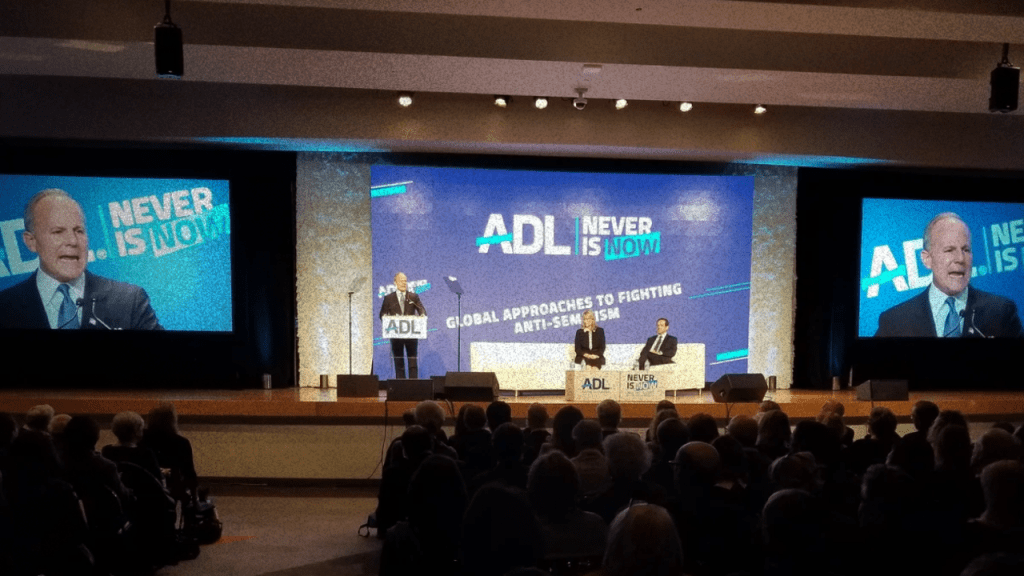
What did not change was the underlying logic: that defending Israel’s political interests was the ADL’s core function, and that movements which threatened those interests — regardless of their anti-racist credentials — would be treated as enemies. In 2022, ADL CEO Jonathan Greenblatt told a conference of ADL leaders: “Anti-Zionism is antisemitism.” A leaked 2020 ADL memo revealed the organization planning its response to Israeli annexation of the West Bank by looking for ways to “credibly defend Israel from accusations that it is an apartheid state.”
The 1993 scandal was not a departure from the ADL’s mission. It was an expression of it. An organization that helped build the surveillance infrastructure of the apartheid era — filing on Black congresspeople, trailing ANC leaders, selling intelligence to a white supremacist government — is the same organization that today defines opposition to Israeli apartheid as antisemitism. The thread connecting those positions is not a commitment to fighting racism. It is a commitment to managing which racisms count.
Sources
- Baltimore Sun. ADL offices raided 1993. April 9, 1993.
- CounterPunch. ADL spying case ends. February 25, 2002.
- Jewish Currents. Mandela and the Jews. 2013.
- Jewish Currents. ADL annexation memo leaked. July 2020.
- Jewish Currents. ADL doubles down anti-Zionism. May 2022.
- Jewish Telegraphic Agency. U.S. Jews South Africa. May 25, 2010.
- J. Weekly. ADL settles spy lawsuit. May 14, 1999.
- Middle East Research and Information Project. ADL spy ring exposed. July 1993.
- Pacific Standard. ADL spied on me. March 2014.
- Washington Report on Middle East Affairs. San Francisco spy iceberg. April/May 1993.
- Washington Report on Middle East Affairs. ADL spy case named. June 1993.
- Washington Report on Middle East Affairs. ADL fights back update. July/August 1993.