

US media renders Mexico as a narco-state and China as a threat. Neither image is accurate. Both images are useful.
There is a visual shorthand in American filmmaking: when a scene is set in Mexico, the colour grade goes sepia, yellowed, dusty — as if the country exists in a state of permanent decay. The same logic operates in US political and media discourse, applied not just to Mexico but to any country that sits outside the American sphere of approval. The filter is ideological. It flattens complex societies into legible threats, and it does this service for a reason: simplified images justify simplified policies.
Mexico: What the Frame Leaves Out
The standard American media frame presents a country defined by cartel violence, corruption, and failed governance — a place that is, implicitly, a problem to be managed from the north. What that frame consistently omits is the documented record of what Mexican social policy has actually accomplished under the Cuarta Transformación. Under AMLO’s six-year term, 13.4 million Mexicans were lifted out of poverty — a 26% reduction — achieved not through GDP growth but through redistribution: a minimum wage that nearly tripled, direct cash transfers to seniors and young workers, and an outsourcing ban that returned workers to formal employment with their actual employers. The wealth gap between Mexico’s richest and poorest households, which stood at a 35-to-1 ratio under Felipe Calderón, fell to 14-to-1 by 2024. Claudia Sheinbaum has continued this trajectory, constitutionally entrenching minimum wage floors and building public infrastructure across the country’s historically neglected south.
These achievements exist alongside real and unresolved contradictions: access to health services collapsed during the AMLO years even as income poverty fell, 54% of Mexican workers remain in the informal economy, and cartel-linked violence continues to extract a severe toll on communities throughout the country. We name these not as concessions but as material facts. The point is not that Mexico is fine. The point is that none of this complexity — the genuine advances, the genuine contradictions — appears in a political discourse that needs Mexico to be a problem.
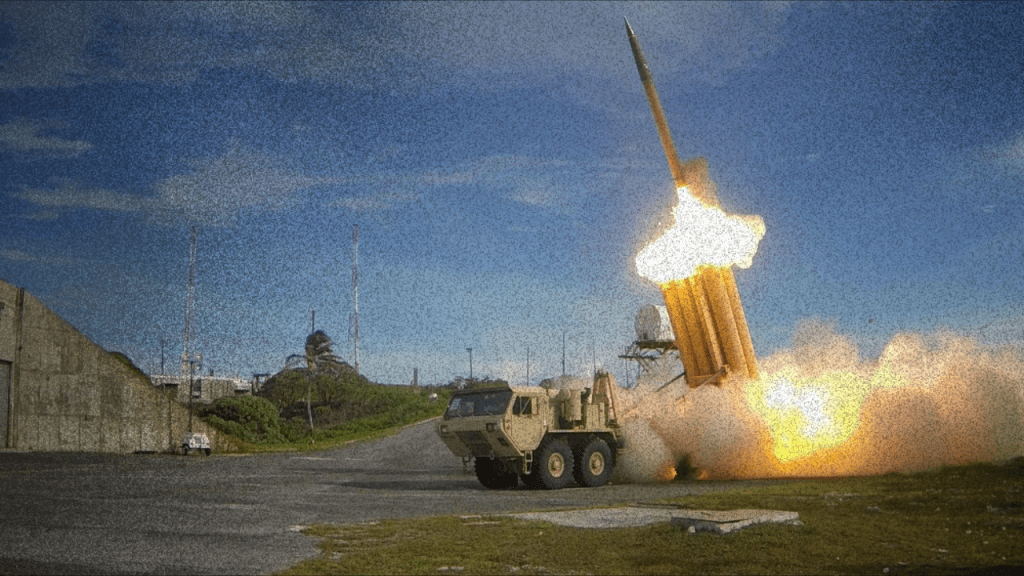
That need has consequences. In January 2025, Trump designated six Mexican cartels as foreign terrorist organizations, placing them in the same legal category as Al-Qaeda and ISIS. The designation is not primarily a law enforcement tool. Its function is to create legal infrastructure for military action — to transform what is a complex criminal economy into a foreign enemy susceptible to drone strikes and special forces operations. When Elon Musk immediately responded to the designation by noting that the cartels were “eligible for drone strikes,” he was reading the policy correctly. Trump has since threatened to bomb fentanyl labs and send Delta Force into Mexican territory — proposals that President Sheinbaum has rejected on the grounds that Mexican sovereignty is not negotiable.
The sepia filter does the preparatory work for this. A sovereign country with documented poverty reduction achievements is not a country you can plausibly threaten to bomb. A dark, chaotic narco-state is. The framing precedes the policy because the framing is the policy’s justification.
The opioid crisis that nominally drives this rhetoric was not created in Sinaloa. It was created in boardrooms. Pharmaceutical companies spent decades running false marketing campaigns that downplayed OxyContin’s addiction risk, driving a prescribing explosion that created the dependency infrastructure fentanyl later colonized. The majority of people with opioid addiction started with prescribed painkillers. The cartels did not create the demand — they filled a market that American corporations built and the FDA failed to regulate. Redirecting that political liability onto Mexico is not a drug policy. It is displacement.
China: The Inverted Filter
The same filter operates on China, though with inverted colours. Where Mexico is rendered in decay, China is rendered in abstraction — either a dystopian surveillance state or a technocratic efficiency machine, depending on which American strategic interest is being served at the moment. Neither rendering engages with China as a society containing 1.4 billion people with their own class contradictions, labour conflicts, regional disparities, and political debates. Both renderings serve the same function: to make China legible as a strategic object rather than intelligible as a country.
What American cultural hegemony requires of China coverage is consistency of threat. When it is useful to emphasize surveillance and repression, the coverage does that. When it is useful to emphasize economic threat, the coverage pivots. The standard that is never applied is the one that should govern all analysis: what would this coverage look like if the same evidentiary framework governed analysis of US allies? Saudi Arabia runs a documented system of torture against women’s rights activists, with confessions obtained under duress admitted in open court, while receiving $110 billion in US arms. Egypt holds an estimated 60,000 political prisoners under conditions that human rights investigators have described as potentially constituting crimes against humanity, while receiving $1.3 billion in annual US military aid. The differential in scrutiny applied to these countries versus China is not a function of the severity of abuses. It is a function of strategic alignment.
The sepia filter is a technology of empire. It does not describe the countries it is applied to. It prepares audiences to accept what will be done to them. Recognizing the filter — naming it, refusing its terms — is the precondition for any analysis that takes seriously what is actually happening in the world.
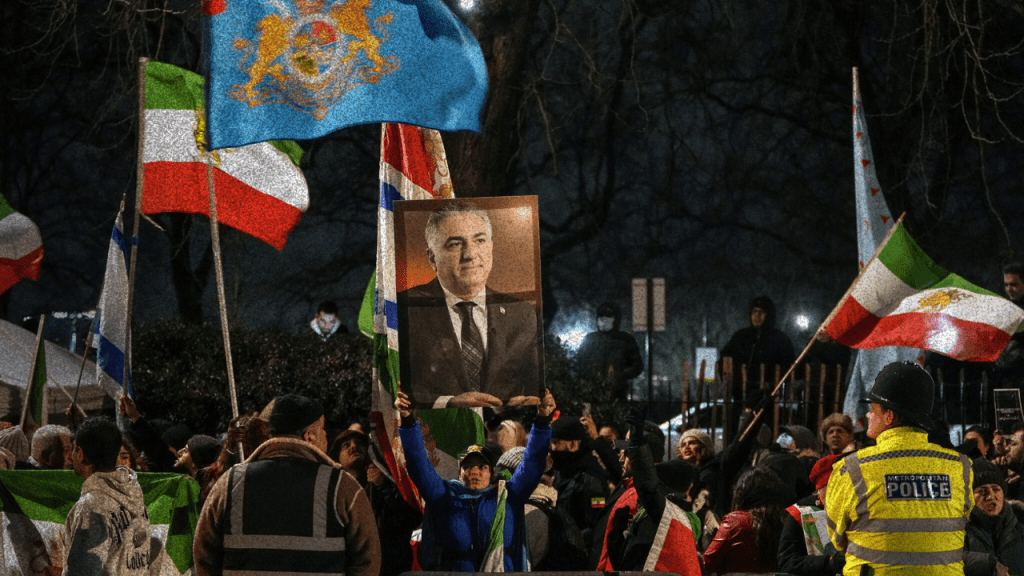
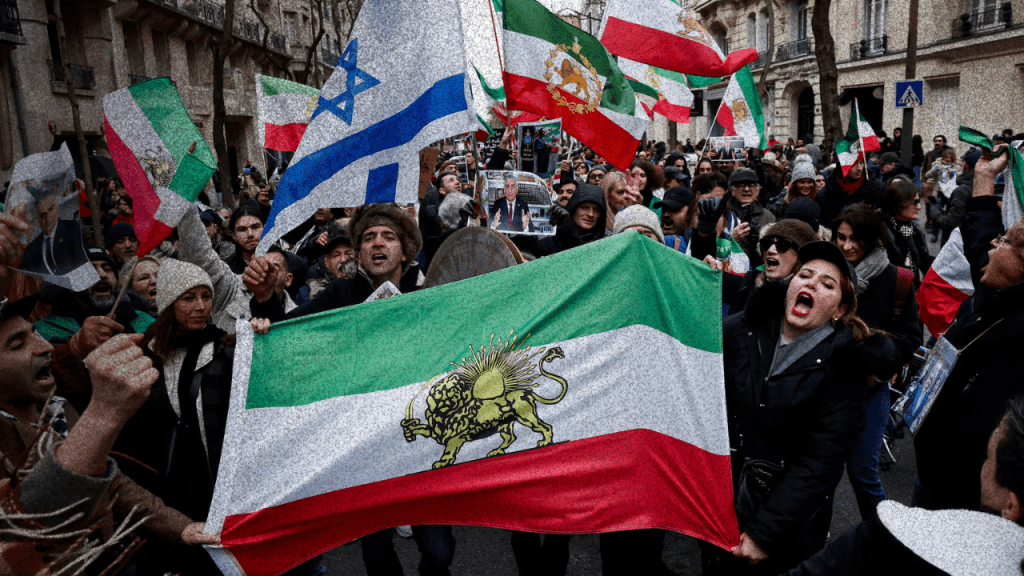
For more on how the human rights framework is selectively deployed against China while identical abuses among US allies go unchallenged, see Exile Networks 2026. On the NED funding infrastructure behind this machinery, see Weaponized Diaspora.
Sources
- People’s Dispatch. “How Mexico Lifted 13.4 Million Out of Poverty in Six Years.” August 26, 2025. https://peoplesdispatch.org/2025/08/26/how-mexico-lifted-13-4-million-out-of-poverty-in-six-years/
- Lopez, Oscar. “‘Historic’: How Mexico’s Welfare Policies Helped 13.4 Million People out of Poverty.” The Guardian / Portside, August 20, 2025. https://portside.org/2025-08-20/historic-how-mexicos-welfare-policies-helped-134-million-people-out-poverty
- Al Jazeera. “Trump Signs Order Authorising Military Action Against Cartels.” August 8, 2025. https://www.aljazeera.com/news/2025/8/8/trump-signs-order-authorising-military-action-against-cartels-reports
- Win Without War Education Fund. “Simulating the Aftermath of a US Attack on Mexican Cartels.” https://www.winwithoutwaredfund.org/policy/simulating-the-aftermath-of-a-us-attack-on-mexican-cartels/
- AMA Journal of Ethics. “How FDA Failures Contributed to the Opioid Crisis.” August 2020. https://journalofethics.ama-assn.org/article/how-fda-failures-contributed-opioid-crisis/2020-08
- NEJM / PMC. “Opioid Addiction and the Origin of Prescribed Painkillers.” https://pmc.ncbi.nlm.nih.gov/articles/PMC7479783/
- Human Rights Watch. “Saudi Arabia: New Details of Alleged Torture Leaked.” July 11, 2021. https://www.hrw.org/news/2021/07/11/saudi-arabia-new-details-alleged-torture-leaked
- Human Rights Watch. “Egypt: Torture Epidemic May Be Crime Against Humanity.” September 6, 2017. https://www.hrw.org/news/2017/09/06/egypt-torture-epidemic-may-be-crime-against-humanity
- Media Theory. “Cultural Imperialism.” https://mediatheory.net/cultural-imperialism/
- Wikipedia. “Mexican Filter.” https://en.wikipedia.org/wiki/Mexican_filter






 Spark Solidarity