
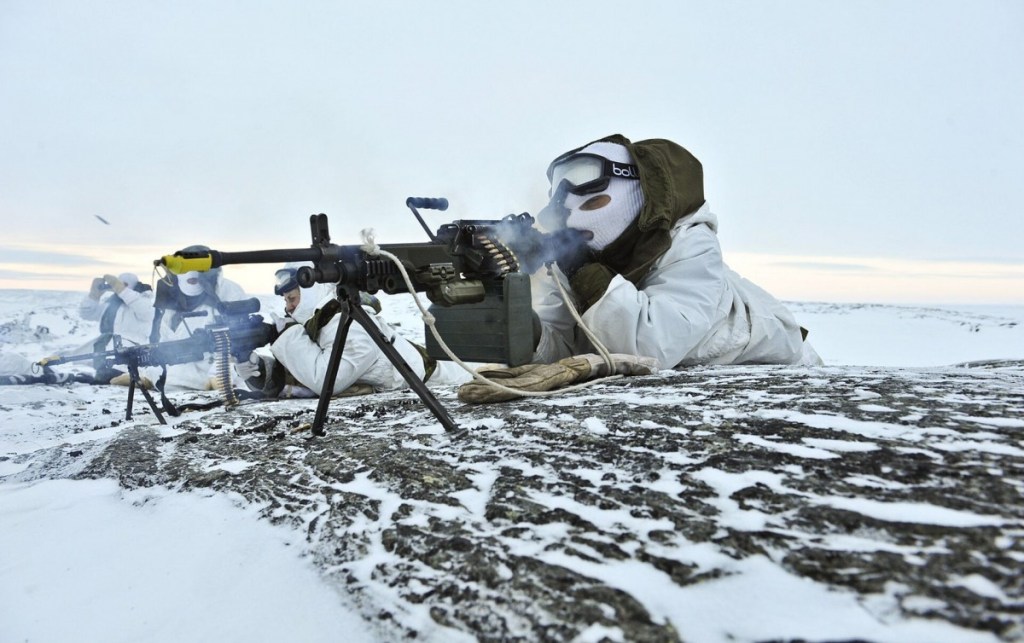
Behind patriotic slogans, Canada’s Arctic buildup secures corporate access to a thawing frontier, prioritizing profits over Indigenous needs and climate action.
From throne speeches to defense white papers, Canadian leaders consistently invoke sovereignty when discussing the Arctic.
The rhetoric is couched in language about safeguarding the North from vague foreign threats, most often Russia or China, and ensuring that Indigenous communities are not left vulnerable. Ottawa’s 2024 defense strategy, for instance, was tellingly titled Our North, Strong and Free; a phrase seemingly lifted from a commercial rather than a serious policy document.
The underlying message is clear: Canada must invest billions into patrol ships, radar stations, and joint NATO exercises to ensure its northern frontier remains under national control.
For a public conditioned by Cold War anxieties, this logic resonates. The specter of hostile bombers flying over the pole still lingers, even though the strategic reality has shifted dramatically.
The Reality: Militarizing Climate Catastrophe
When stripped of patriotic slogans, the real purpose of Canada’s Arctic militarization comes into focus: locking down a thawing, resource-rich frontier for corporate exploitation. As the permafrost melts and sea ice retreats, terrain once thought impassable now offers lucrative opportunities for mining, drilling, and shipping.
The Northwest Passage—once the graveyard of doomed European expeditions—is increasingly marketed as a shortcut for global trade.
Vast reserves of oil, gas, and minerals lie beneath the tundra and Arctic seabed, reserves that have become accessible precisely because of the climate emergency.
For resource corporations and the governments that support them, climate change is not an unfortunate by-product of industrial capitalism. It is the plan.
Every patrol ship, radar installation, and NATO exercise functions less as a deterrent against foreign militaries and more as a guarantee that capital can flow freely into this melting frontier.
The Canadian Armed Forces are not preparing to defend Inuit communities; they are preparing to escort bulk carriers full of ore, to provide logistical support for exploration camps, and to crush any Indigenous or popular resistance that might arise.
The $38 Billion Question: NORAD Modernization
Perhaps the most glaring example of this dynamic is the $38 billion NORAD modernization deal. Officially justified as closing the so-called “Arctic gap” in surveillance, the project includes over-the-horizon radar systems and other advanced monitoring technologies. The parallel to the Cold War’s “missile gap” is unavoidable—a manufactured crisis used to funnel billions into military contracts.
In reality, this “gap” has little to do with intercepting Russian nukes. Instead, it is about providing 24-hour surveillance capacity to reassure insurance firms, mining executives, and maritime shipping giants that their investments will be protected. Just as colonial gunboats once patrolled foreign coasts to guarantee imperial access to resources, Canada’s modernized Arctic fleet will ensure uninterrupted flows of capital across the polar ice caps.
Indigenous Communities: Neglected but Surveilled
The contrast between Ottawa’s military spending and its neglect of northern communities could not be starker. Inuit communities in Nunavut still rely on diesel generators for electricity. Many lack clean drinking water, adequate housing, or reliable infrastructure. These same communities, however, are expected to accept the presence of radar stations, naval refueling hubs, and annual military exercises on their lands.
Take the Nanisivik Naval Facility on Baffin Island. Originally announced more than a decade ago as a refueling hub for Arctic patrol ships, the project has languished in development hell, plagued by delays and cost overruns.
Yet even in its incomplete state, it embodies Canada’s priorities: diesel generators may keep Inuit communities alive, but military installations ensure Ottawa’s connection to NORAD. The federal government cannot fund renewable energy or modern housing, but it will build a radar station.
Operation Nanook: Rehearsing Resource Wars
Canada’s annual Operation Nanook exercises, conducted with NATO allies like France, the UK, and Denmark, are billed as demonstrations of Arctic sovereignty.
In practice, they are rehearsals for resource wars of the near future. These joint operations prepare Western militaries not only for disputes over undersea cables and shipping lanes, but for the protection of gas fields and mineral deposits in contested zones.
Equally important, these exercises condition troops for potential domestic deployment. If Indigenous resistance emerges—whether against pipelines, shipping routes, or extraction sites—Canada’s military is already trained to respond. The emphasis is not on peacekeeping, but on counterinsurgency in the melting tundra.
A Second Fiddle to Washington
Canada’s ambitions must also be understood in relation to its southern neighbor. Ottawa is not positioning itself as an Arctic hegemon but as a loyal junior partner to Washington.
In the likely scenario of a future drone war over the polar regions, Canada hopes to play second fiddle to the U.S., offering territory and infrastructure in exchange for a share of the spoils.
This subservience underscores how little the rhetoric of sovereignty truly means. Canada is not defending its land or people. It is facilitating their occupation on behalf of capital. Sovereignty is reduced to the ability to participate in conquest alongside more powerful allies.
The Logic of Occupation
Ultimately, Canada’s Arctic militarization is not about defending the Arctic at all. It is about occupying it—not for peace, not for people, but for pipelines and profits. Each patrol ship circling future development sites, each radar station tracking shipping lanes, each joint exercise rehearsing for resource wars represents a modernized form of gunboat diplomacy.
The same state that refuses to guarantee clean water for Indigenous children will spend billions to guarantee safe passage for ore carriers. The same government that cannot commit to serious climate action will invest heavily in militarizing the very climate disaster it helped create.
Defending Capital, Not Communities
Canada’s Arctic buildup reveals the harsh truth about the country’s role in the age of climate crisis. Far from acting as a defender of the North, Ottawa is actively softening it up for conquest. The land, people, and ecosystems of the Arctic are expendable; what matters is that capital remains secure.
The rhetoric of sovereignty and security obscures this reality, but the language of government strategies gives the game away. Climate change is treated as an opportunity.
Military buildup is framed as economic development. Indigenous communities are spoken of as beneficiaries, while in reality they are targeted as obstacles.
In this light, Canada’s Arctic militarization is not a patriotic defense of national territory but a clear-eyed plan to militarize the climate apocalypse for profit. The Arctic is not being defended. It is being occupied.




 Spark Solidarity