
King Charles and Mark Carney’s throne speech promised “unprecedented transformation,” but it masked empire’s greenwashed grip on Canada’s economy.
When King Charles read the throne speech for the Carney government, he spoke of an “unprecedented economic transformation.”
At first glance, this sounded like a bold claim. But if you listened closely, nothing new was being announced. It was a pageant of rhetoric, a ceremonial endorsement of policies already underway.
The transformation, such as it is, amounts to a massive public subsidy regime for resource extraction and so-called green projects — a bait and switch that repackages colonial capitalism with a green face.
The throne speech didn’t herald a radical shift toward sustainability. Instead, it signaled Ottawa’s commitment to a greenwashed version of the same old empire.
The Illusion of Transformation
King Charles’s words gave cover to what is essentially a subsidy machine. Across Canada, provinces are being nudged toward digging up lithium and other critical minerals, not to reduce dependence on extraction but to integrate more tightly with the U.S. industrial base.
The plan is simple: raw resources leave Canada, so Ontario and Michigan can manufacture electric vehicles. The crown pretends to be future-facing, while the economy remains structured around feeding empire.
This so-called transformation is better understood as a “green NAFTA.” Public money is funneled into projects designed not for local resilience but for American tariffs, Pentagon procurement contracts, and Wall Street’s appetite for risk-adjusted returns.
Canada becomes a subcontractor in the U.S.-led “green capitalism” project, its sovereignty dressed up in climate-friendly marketing.
The role of the monarchy here is crucial. King Charles’s ceremonial authority provides legitimacy to policies that extend British and American influence. Far from ushering in a post-imperial age, this is the old empire rebranding itself in green.
Quebec’s Different Path
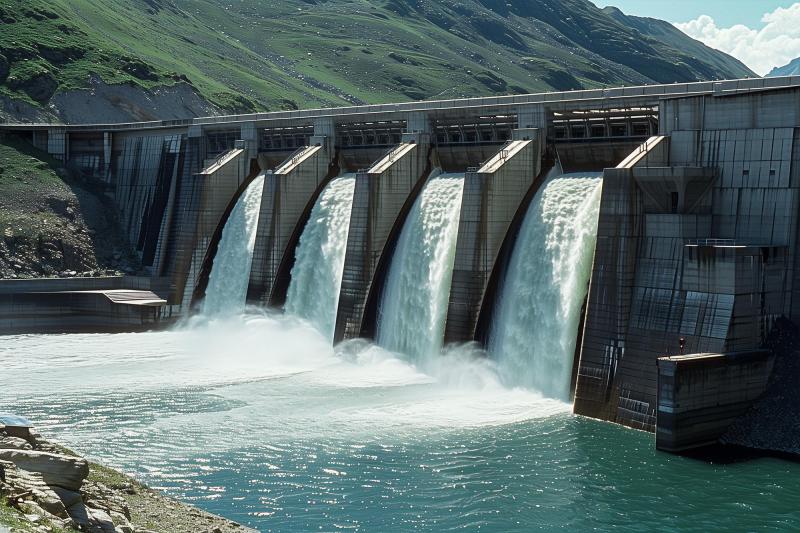
Quebec doesn’t have to play along. The province has unique strengths — world-class hydro power, an aerospace industry, a top-tier tech sector, and a bijudicial legal system that gives it flexibility in international law.
Yet as long as Ottawa holds the purse strings, Quebec is building someone else’s future. Independence, in this context, is not a side quest or a romantic ideal. It is the only way to stop being subcontracted into another empire’s supply chain.
The current model forces Quebec to operate north–south, feeding resources and skills into U.S. industrial plans. A sovereign Quebec could reorient itself east–west, or even south–south, aligning with countries that share its interest in escaping Western monopoly power.
The BRICS Option
Here lies the real alternative: BRICS.
If Mark Carney still worships the International Monetary Fund, Wall Street, and the European Investment Bank, then a sovereign Quebec should look elsewhere. Joining BRICS would mean access to the New Development Bank, a source of green development financing without the austerity strings attached by the IMF.
Membership would also provide Quebec with new trade routes that bypass Washington and Ottawa. Even more importantly, it would grant Quebec a voting seat in a bloc explicitly designed to challenge Western monopoly power.
That is what an “unprecedented economic transition” actually looks like — not another crown speech legitimizing public subsidies for pipelines, but a structural break with the gatekeepers of global finance.
Valuing Resources in the Ground
The green future being sold in Ottawa is still based on extraction. Turbines, electric vehicles, and lithium mines all extend the same logic: dig, export, and profit. But a truly new economic theory would start from a different premise: resources are often more valuable in the ground than in circulation.
For Quebec, that means leveraging hydro, minerals, and other assets not by stripping them out of the land, but by using them to hedge wealth — preserving long-term value without destruction. Indigenous nations, too, could use this approach to generate wealth without sacrificing sovereignty or ecological balance.
This is not just a policy tweak; it is a wholesale rethinking of what wealth means. Instead of being trapped in cycles of extraction and speculation, Quebec could build an economy rooted in stewardship, solidarity, and sovereignty.
Building for the Public Good
A green NAFTA funnels public money into private profits. Ottawa’s “de-risking strategy” is code for using taxpayer funds to guarantee returns for investors. Quebec could flip this logic.
Hydro-Québec’s revenues, for example, could be stacked to build public infrastructure, housing co-ops, and community projects rather than padding corporate dividends. Green dollars could be invested in Indigenous-led wind and solar projects, not foreign-owned lithium mines staffed with temporary workers. Housing retrofits could be public works programs, not opportunities for real estate speculation.
This is what a sovereign green transition would look like: wealth deployed for the public good, not siphoned off by BlackRock or foreign shareholders.
Hard-Coding Rights into the Economy
Another advantage Quebec holds is its legal system. As a bijudicial jurisdiction, it could hard-code rights and protections directly into its economic contracts. Every agreement could be written to require free, prior, and informed consent from Indigenous nations. Union wages could be made non-negotiable, embedded as a structural guarantee rather than left to the bargaining table.
This would prevent the kind of green colonialism Ottawa is currently enabling, where foreign firms pillage unceded Indigenous land under the banner of net zero. A sovereign Quebec could show that decolonization is not an afterthought but a foundation of economic policy.
South–South Solidarity
BRICS membership would also open doors to tri-national projects with countries like Brazil and China. These could pay living wages, respect Indigenous land rights, and pursue climate transition on a cooperative basis rather than a colonial one.
Instead of operating within NATO’s public relations machine, Quebec could participate in genuine south–south solidarity — economic partnerships built on mutual benefit, not hierarchy.
This is the real contrast with Alberta. While Alberta is likely to double down on extractivism and oil patch exceptionalism, Quebec has the resources, skills, and institutional tools to aim higher.
The Bottom Line
The rhetoric of King Charles and Mark Carney is a carefully orchestrated performance. Their talk of “unprecedented economic transformation” masks a continuity of empire. It is colonial capitalism with a green logo, designed to reassure investors and allies that Canada remains a loyal subcontractor.
But Quebec need not follow this script. With independence, it can hedge its resources, codify Indigenous sovereignty, guarantee union wages, and join BRICS to access green financing without Western strings. It can build co-ops and public infrastructure instead of underwriting pipelines and foreign mines.
A real transformation means more than turbines and lithium. It means rejecting permission from the very institutions that created the crisis. It means refusing to be greenwashed into subordination. For Quebec, the path is clear: sovereignty, solidarity, and a place in a world beyond empire.
That would be an economic transition worthy of the word “unprecedented.”




 Spark Solidarity