
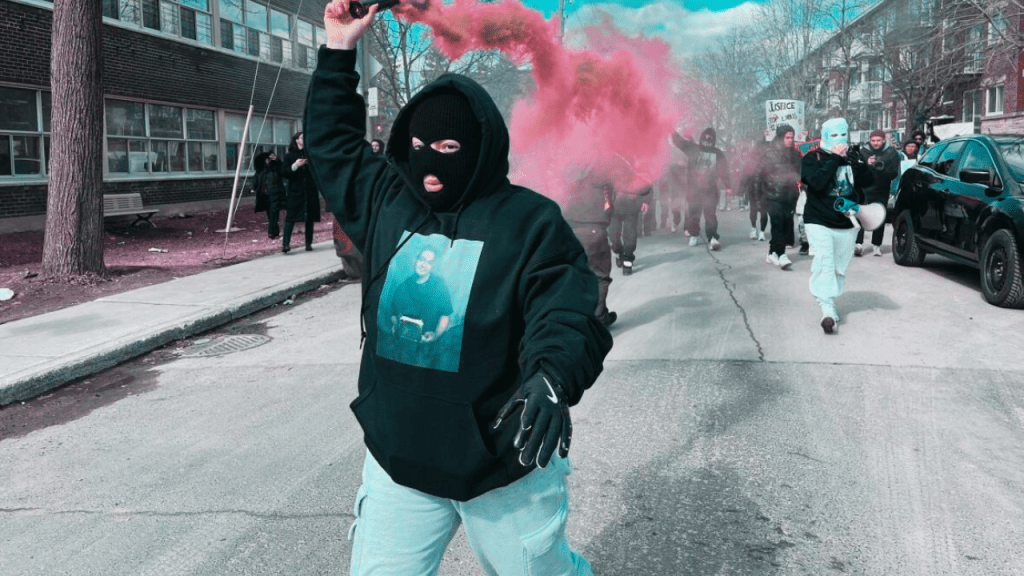
In less than twelve hours, Montreal police killed two men in separate incidents, sparking public outrage, protests, and renewed demands for systemic change.
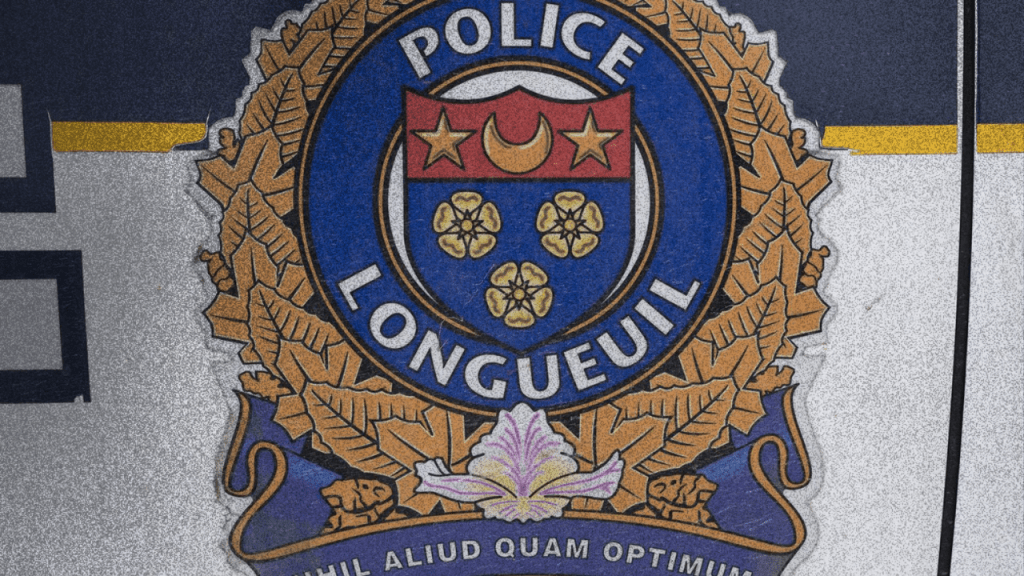
Last week, In less than twelve hours, the Service de police de la Ville de Montréal (SPVM) was involved in two separate incidents that resulted in the deaths of two men.
The killings—one involving a shooting in downtown Montreal, the other following the violent restraint of a man in crisis—have intensified public outrage, prompted street protests, and renewed criticism of a police force already viewed by many as unaccountable and disproportionately violent.
On the evening of March 29, 2025, SPVM officers responded to a 911 call regarding a person allegedly in possession of a firearm in an apartment building in Ville-Marie. Within minutes of their arrival, police made contact with the man and fired their weapons. He was declared dead at the scene. No details have been released explaining the decision to use lethal force or the circumstances leading up to the shooting.
By the next morning, on March 30, another 911 call led officers to the Saint-Michel neighborhood, where 29-year-old Abisay Cruz was reportedly experiencing a mental health crisis.
Cruz, a father of a young child, was restrained by officers during an altercation and went into cardiac arrest. He was taken to the hospital and pronounced dead shortly afterward.
Video footage recorded by a bystander shows Cruz face-down on a balcony, visibly distressed, while two officers hold him down. More officers arrive during the video, with one attempting to force entry into the residence. The footage has been widely circulated and has fueled public demands for accountability.
Both deaths are currently under investigation by Quebec’s Bureau des enquêtes indépendantes (BEI), which is mandated to review all cases involving police-related fatalities or serious injuries. In each case, six investigators have been assigned.
However, the BEI’s track record of investigations has done little to instill confidence among community members. Since its inception in 2016, the agency has launched hundreds of investigations but has resulted in criminal charges in only a handful of cases.
Public trust in the BEI is minimal, with many seeing it as structurally biased and lacking true independence from the police forces it is tasked with overseeing.
The killings and their aftermath have become a flashpoint for broader grievances about policing in Montreal. Public demonstrations followed swiftly, with two major protests taking place one week apart in response to the death of Abisay Cruz.
The first occurred on Monday, March 31, in Saint-Léonard, where several hundred people gathered to mourn Cruz and express collective grief and anger. What began as a vigil quickly escalated into a direct confrontation with police.
Protesters blocked streets using debris and other objects, prompting the SPVM to deploy riot units to defend the 30th precinct.
The scene turned volatile as demonstrators clashed with police, throwing rocks and fireworks. Fires were set in the street, tear gas was deployed, and several officers were forced to retreat. Despite the intensity of the confrontation, the protest received minimal mainstream media coverage.
The second protest took place nearly a week later on Sunday, April 6, and was similarly charged. This time, demonstrators gathered to march in Cruz’s honor and managed to briefly take control of the Boulevard Métropolitain, disrupting traffic on a major highway feeder.
The SPVM responded with multiple rounds of tear gas, and protesters resisted with fireworks and projectiles. The confrontation lasted roughly twenty-five minutes, during which police escalated their use of force with pepper spray and arrests.
Among those targeted were members of Cruz’s grieving community, further intensifying anger toward the SPVM’s handling of both the initial intervention and the public response.
These back-to-back protests—separated by one week but united in purpose—have brought renewed urgency to long-standing calls for police accountability and systemic change in Montreal.
These community responses reflect not just grief but deep-seated frustration with policing in Montreal. Residents in neighborhoods like Saint-Michel have long reported a sense of abandonment by public institutions and a fear of police violence at the hands of SPVM.
Each new incident involving the SPVM is viewed not as an anomaly but as part of a persistent pattern. The aggressive police response to public mourning has only further alienated the affected communities.
Rightful criticism has been directed at the city’s political leadership and media. Montreal’s mayor and city officials have remained largely silent, offering no immediate public response to either death.
Meanwhile, mainstream news outlets have been criticized for relying too heavily on police press releases, contributing to what many see as a lack of independent scrutiny of police actions.
Calls for systemic change are growing. Community organizations and residents are demanding a shift in how the city approaches public safety. There is widespread agreement that the current model—where police are sent to respond to mental health crises, poverty-related issues, and community disputes—is not only ineffective but often deadly.
Advocates are calling for a reduction in police funding and a reinvestment in mental health services, housing, and non-police crisis response programs.
The deaths of these two men are being seen not just as isolated tragedies but as further evidence that the institution of policing in Montreal is fundamentally incompatible with the safety and well-being of many of the city’s residents.
As the BEI investigations continue, public pressure is mounting—not only for answers in these two cases but for a complete rethinking of the role police play in city life.
The current moment is viewed by many as a turning point. Montrealers are organizing not only in opposition to police violence but in pursuit of alternative systems of community safety.
There is growing support for models of mutual aid, neighborhood-based crisis response, and forms of collective care that do not rely on armed enforcement. Many in the city now see the police not as providers of security, but as a threat—especially to those most marginalized by systemic poverty, racism, and mental health stigma.
The SPVM’s continued expansion in both budget and presence is seen as an alarming trend, especially given the growing number of deaths and serious injuries connected to their interventions.
For many residents, the events of the weekend of March 29–30 represent a call to action: to organize, resist, and demand a future in which safety is no longer defined by the presence of armed officers, but by the strength and solidarity of communities themselves.


 Spark Solidarity