

Jean Chrétien’s refusal to join the Iraq War is often celebrated as a bold stand for Canadian values—but behind the scenes, Canada was far from uninvolved.
When Jean Chrétien famously declared in 2003 that Canada would not participate in the U.S.-led invasion of Iraq, it was hailed as a moment of moral clarity. Standing before a Liberal leadership convention, Chrétien reminded Canadians of their country’s supposed commitment to international law, multilateralism, and peace. “We are not the 51st state,” he declared to thunderous applause.
Since 2003, this decision has been mythologized as a defining example of Canadian independence from American imperialism. But this narrative is a convenient fiction.
While Chrétien’s government publicly refused to send combat troops without United Nations authorization, Canada was never truly neutral or uninvolved. Behind the scenes, Canada played a vital supporting role in sustaining the Iraq War. This wasn’t a principled rejection of imperialism—it was a carefully calibrated political maneuver designed to appease domestic anti-war sentiment while quietly backing its most powerful ally.
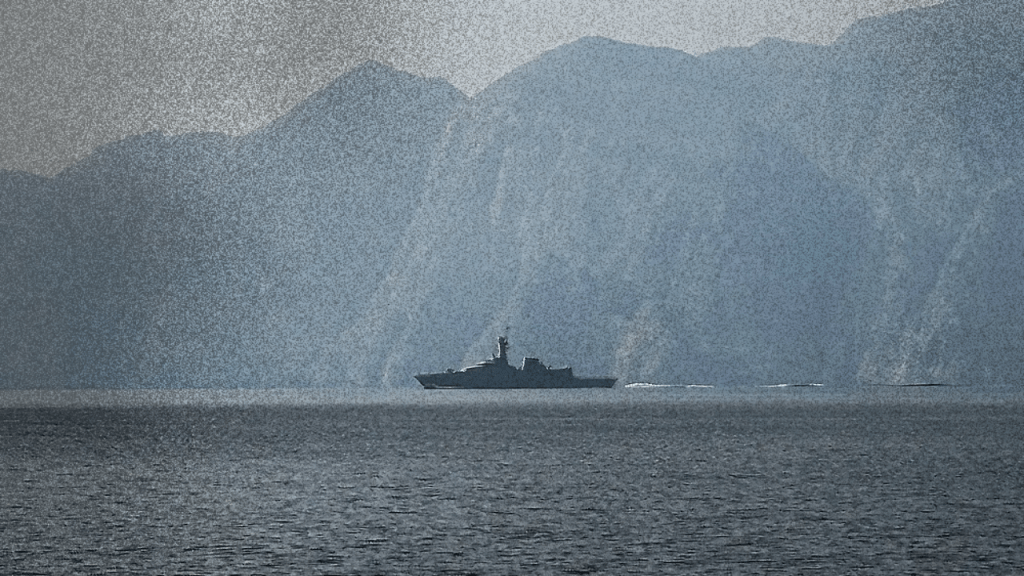
Canadian naval forces remained active in the Persian Gulf as part of Operation Apollo, officially framed as an anti-terrorism mission. In reality, these ships provided logistical support, enforced maritime blockades, and assisted U.S. air operations. Canadian vessels even served as forward bases for U.S. air raids, directly contributing to the war effort without being labeled as part of it.
Canadian military personnel also played an active role under the radar. About 150 troops were embedded with U.S. and British forces through exchange programs. Some of them participated in direct combat, which means Canadian soldiers were on the ground in Iraq—even if not under a Canadian flag. At home, military officials within NORAD helped coordinate airstrikes and facilitated intelligence sharing that enabled the U.S. bombing campaign.
Meanwhile, Canadian pilots flew AWACS surveillance missions, guiding U.S. aircraft toward their targets. These acts weren’t simply indirect involvement—they were core components of a coordinated military operation. Yet the government allowed Canadians to believe that their country was on the sidelines, above the fray.
And while the bombs fell, Canadian corporations cashed in. Canadian Defense contractors profited handsomely by supplying ammunition and equipment to coalition forces. Far from condemning this, the Canadian government facilitated it—another layer of quiet complicity masked by official neutrality.
Chrétien’s decision to stay out of the war in name only was not an act of moral leadership—it was an act of duplicity. Canada maintained warm diplomatic ties with Washington and London, assuring them of behind-the-scenes support. The result was a two-faced policy: public opposition for political cover at home, and covert assistance to maintain Canada’s privileged place in the U.S.-led global order.
To this day, the story of Canada’s non-involvement in Iraq remains a cherished national illusion. But the truth is much uglier. Canada didn’t stand against the war—it simply avoided the political cost of participation while continuing to enable it. This wasn’t a triumph of Canadian values. It was cowardice disguised as conscience.

 Spark Solidarity