
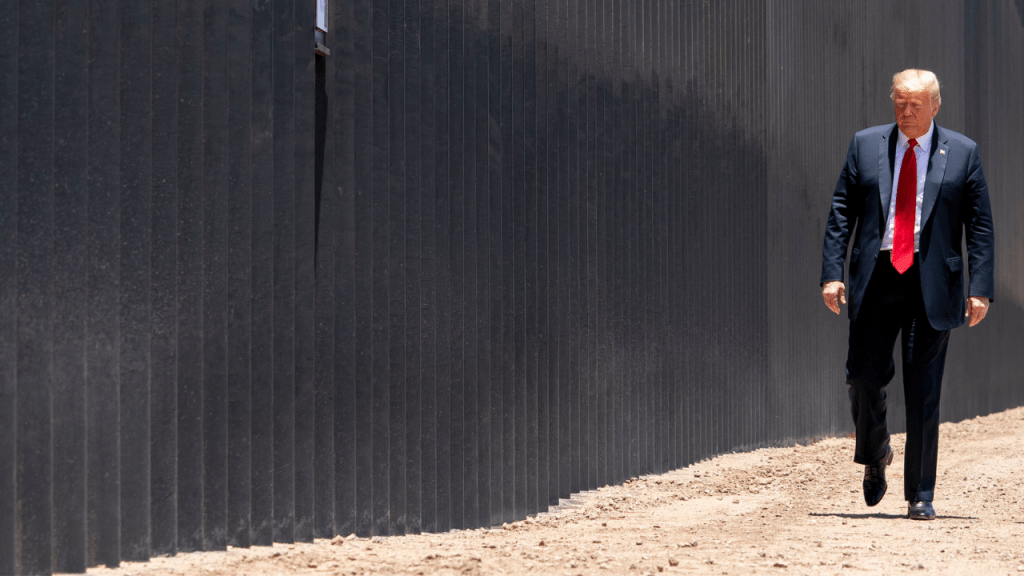
Trump’s national emergency triggers fierce debate, exposing its impact on migrant labor and fueling new concerns about unchecked capitalist exploitation.
President Donald Trump’s declaration of a national emergency at the southern border has sparked intense debate about the impact on migrant communities, labor conditions, and broader economic interests. While Trump publicly insists that his hardline border stance is intended to curb illegal immigration, critics suggest that this approach actually benefits powerful market forces, ensuring a steady supply of vulnerable labor willing to accept precarious work.
Restricting immigration through tight border controls does not eliminate migrant labor; rather, it creates “false scarcity.” When legal paths are blocked, migrants often feel compelled to accept lower wages and hazardous working conditions, lacking the legal protections afforded to citizens. This exploitation is not new. It aligns with a longstanding dynamic in which capitalism relies on a pool of workers unable to demand better pay or rights. By strategically limiting migration, employers can maintain an underclass of laborers who have little bargaining power.
Moreover, this maneuver is part of a larger project to integrate the economies of the United States, Canada, and potentially Mexico. Proponents argue that open borders within North America would benefit businesses through access to a wider workforce. But the unintended (or perhaps intended) consequence is that workers from the Global South become even more exploitable.
By creating avenues for people to enter under restrictive temporary work visas, governments can keep them under close surveillance. These temporary statuses offer no pathway to permanent residence or citizenship, increasing migrants’ vulnerability. Without the ability to assert full legal rights, these individuals are left with few options but to accept substandard wages, harsh conditions, and limited mobility.
Critics also point to the currency implications of closer economic integration. They argue that the border currently props up the U.S. dollar, making it significantly stronger than Canada’s currency. Reducing border barriers could shift this balance, bringing the Canadian dollar closer to parity with the U.S. dollar. While some investors and businesses might see opportunities in a more unified market, labor advocates worry that this shift could encourage more exploitative practices, as Canadian companies might invest in U.S. ventures to capitalize on cheaper, more precarious labor.
The most troubling aspect is how these economic strategies are cloaked in nationalistic or xenophobic rhetoric. Trump’s bombastic style allows him to publicly champion hardline measures that other politicians hesitate to embrace. Yet, the practical outcome is not a solution to the so-called “immigration problem,” but the creation of a heavily policed framework that perpetuates insecurity for migrant workers. In turn, this feeds a cycle in which labor becomes increasingly invisible and disposable, leaving corporate interests to profit from low-cost production and services.
Ultimately, these policies exemplify a form of “soft imperialism,” extending U.S. influence by controlling labor flows rather than resorting to overt military force. By imposing stringent border policies and managing migrant movements through legal loopholes, the U.S. government and allied economic forces maintain a profitable, underpaid workforce. The question remains: will progressive voices, labor organizers, and migrant advocates successfully challenge this system, or will the cycle of exploitation deepen under the guise of “national security?”








 Spark Solidarity