
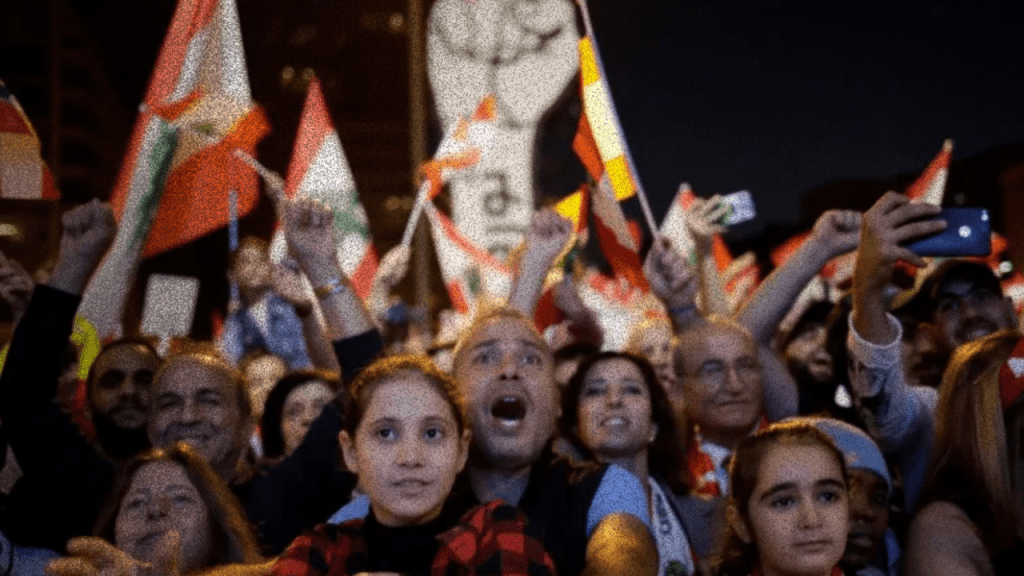
Georgia election fraud: Georgian Dream claimed victory in October 2024 despite rigged results, mass protests, and EU Parliament rejecting the vote.
Georgian Dream Claims a Suspicious Victory
On October 26, 2024, Georgia held parliamentary elections that the ruling Georgian Dream party declared a decisive win — 53.92 percent of the vote, enough to govern without coalition partners. The result immediately generated a political crisis. Every major opposition coalition rejected the outcome. President Salome Zourabichvili, the country’s highest constitutional authority and a figure technically independent of both government and opposition, publicly declared the elections rigged and refused to recognize the new parliament as legitimate.
The crisis had been building for months. Georgian Dream, in power since 2012 and increasingly controlled by billionaire oligarch Bidzina Ivanishvili, had spent 2024 passing legislation that replicated Russian political models. A “transparency of foreign influence” law — widely described as a foreign agents law modelled on Russian legislation used to suppress civil society — had already triggered mass protests and caused the EU to freeze Georgia’s accession process. When the election results appeared, they contradicted exit polls from Edison Research, a firm that had accurately tracked Georgian elections since 2012, which showed Georgian Dream receiving only 41 percent.
The Evidence of Fraud
Multiple independent lines of evidence pointed to large-scale manipulation. The most significant was statistical. Data analysts examining the official results identified what they called the “Russian tail” — a voting anomaly in which turnout and Georgian Dream’s vote share deviate sharply from the bell-curve distribution expected in free elections, particularly in rural precincts. The pattern mirrors anomalies documented in Russian elections and is consistent with organized voter pressure, ballot stuffing, or both. Urban polling stations showed near-normal distributions; rural stations showed systematic deviations concentrated precisely where state pressure on public employees and welfare recipients would be easiest to apply.
Independent analysts published their findings within days of the vote. Mathematical modelling suggested between 90,000 and 245,000 votes were manipulated — sufficient to shift Georgian Dream from below 50 percent to its official result. Without the manipulated votes, the party would still have received more seats than any single opposition bloc, but would have been unable to govern alone. The fraud appears designed to secure a governing majority, not simply to inflate vote totals.
On-the-ground observer reports documented what the statistical models suggested. The OSCE election observation mission noted voter intimidation, vote buying, compromised ballot secrecy, identity document confiscation, and the systematic removal of opposition observers from polling stations. Georgian independent election monitors reported large-scale organized violations. The Central Election Commission, controlled by Georgian Dream-aligned officials, certified the results regardless.
Protests and the Constitutional Crisis
Protests began in Tbilisi on October 28, two days after the vote, and expanded rapidly. Tens of thousands took to the streets to challenge the results. The four main opposition coalitions announced they would boycott the new parliament entirely, refusing to take their seats on the grounds that the institution lacked democratic legitimacy. Zourabichvili declared that by convening without the opposition, Georgian Dream had rendered parliament constitutionally void.
The demonstrations grew in scale through November. Police responded with rubber bullets, tear gas, and water cannons. Hundreds of protesters were arrested. Footage circulated on social media showed systematic violence against both protesters and journalists by law enforcement and Georgian Dream-affiliated groups. The crackdown bore the structural features of an authoritarian consolidation: mass arrest, media interference, and the targeting of civil society organizations.
On November 28, Georgian Dream triggered a further escalation. Prime Minister Irakli Kobakhidze announced that the government was suspending Georgia’s EU accession process until the end of 2028 — a direct reversal of a constitutional provision mandating full integration into European institutions. The announcement, made by a government whose legitimacy was already contested, provoked the largest protests yet. Hundreds of public officials, including diplomats and judges, issued statements condemning the decision as unconstitutional. Dozens of ambassadors resigned. Around 100 schools and universities suspended classes in solidarity with protesters.
The EU Refuses to Recognize the Results
The European Parliament responded with unusual directness. In a resolution adopted on November 28, 2024, MEPs voted 444 to 72 — with 82 abstentions — to declare the Georgian elections fraudulent and refuse recognition of their outcome. The resolution called for new elections under independent international supervision, imposed an implicit political boycott of the Georgian Dream government, and demanded personal sanctions against Ivanishvili, Kobakhidze, and parliamentary speaker Shalva Papuashvili.
The resolution explicitly named the Russian Federation’s role in the campaign: Georgian Dream had run on a platform of “peace” with Russia, using images of destroyed Ukrainian cities as campaign material while top party leaders described the opposition as a “Global War Party” operating under Western direction. The EU Parliament characterized this as Russian disinformation adapted to Georgian conditions. Russian government officials had openly celebrated Georgian Dream’s victory before results were finalized.
Viktor Orbán of Hungary was the only EU head of government to congratulate Georgian Dream before the final results were published — and did so without consulting other EU leaders, in what the European Parliament described as an active violation of common EU foreign policy positions. Orbán’s appearance in Tbilisi underlined the degree to which Georgian Dream’s pivot was aligned with the broader European far-right’s relationship to Moscow.
Georgian Dream Installs Its Own President
With the opposition boycotting parliament, Georgian Dream moved to complete its institutional capture. Under a 2017 constitutional reform that eliminated the direct popular election of the presidency, Georgia’s president is now chosen by a 300-member Electoral College dominated by parliamentary representatives. Georgian Dream, holding the parliamentary majority, nominated Mikheil Kavelashvili — a former football player aligned with the party’s far-right wing — as the new president.
Zourabichvili refused to vacate the presidency, arguing that the parliament which would elect her replacement was itself illegitimate. On December 14, the Electoral College installed Kavelashvili. The European Parliament subsequently refused to recognize either the new parliament or the new president, continuing to treat Zourabichvili as Georgia’s legitimate head of state. The United States, European Union, and multiple member states declined to recognize the outcome of the process.
What Georgian Dream’s Consolidation Represents
The Georgian case is a textbook instance of competitive authoritarianism converting into full authoritarian capture through a manipulated election. Georgian Dream did not simply win unfairly — it used the electoral result to seize state institutions, install loyalist judges, silence independent media, and position itself to constitutionally ban opposition parties. The suspension of EU accession was not a policy pivot but a structural declaration: the government no longer intended to be constrained by the democratic conditionality attached to EU membership.
The role of Russian capital and political influence is structural, not merely ideological. Ivanishvili built his fortune in Russia during the 1990s and retains the financial and political network that comes with that history. Georgian Dream’s legislative program — the foreign agents law, the anti-LGBTQ legislation, the suppression of civil society — tracks Russian domestic political models precisely. The party’s campaign message, framing a pro-European opposition as agents of a Western “war party,” reproduced Kremlin information warfare techniques adapted for Georgian conditions.
Georgian society remained majority pro-EU throughout. Polling consistently showed around 80 percent of Georgians supported EU membership. The protests that erupted after the election and the suspension of accession talks drew hundreds of thousands of people across successive nights in one of the most sustained popular mobilizations in Georgian history. The ruling party’s consolidation was accomplished not through persuasion but through the machinery of a captured state, a rigged count, and systematic violence against those who refused to accept it.




 Spark Solidarity