
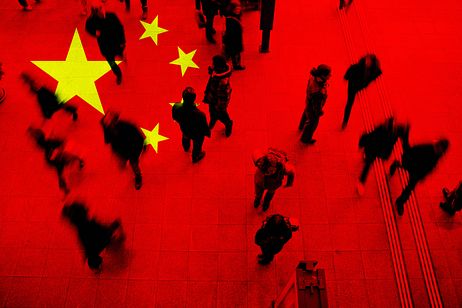
Anti-China propaganda often uses human rights concerns to justify Western geopolitical strategies, similar to past interventions in Libya, Syria, Iraq, Iran, and Afghanistan.
While it is crucial to address human rights concerns worldwide, it’s equally important to scrutinize the motivations and consequences of such criticisms, especially when they are directed towards China regarding Taiwan, Tibet, and the Uyghurs. As people living in the imperial core, we should be keenly aware of how narratives can be manipulated to justify Western policies that often lead to destabilization and conflict, as we’ve seen in places like Libya, Syria, Iraq, Iran, and Afghanistan.
The One China principle is foundational to China’s national identity and sovereignty, recognized by numerous countries and international organizations, including the United Nations. While Taiwan operates with de facto independence, it has never declared independence and is seen by China as an integral part of its territory. Western narratives often frame China’s stance on Taiwan as aggressive, yet these same narratives ignore the historical and geopolitical context. The United States’ strategic ambiguity and military presence in the region exacerbate tensions, positioning Taiwan as a flashpoint for broader geopolitical rivalry rather than a genuine concern for self-determination.
Tibet has been part of China for centuries, and the Chinese government has invested heavily in the region to improve infrastructure, education, and healthcare. Western reports often emphasize cultural and religious suppression, but these narratives frequently come from biased sources with limited access to the region. They overlook significant economic and social progress made in Tibet, such as improved living standards and increased opportunities for local Tibetans. The portrayal of China’s policies in Tibet often serves to paint China as an oppressor, justifying Western criticism and interventionist stances.
The situation in Xinjiang is complex, involving efforts to combat extremism, terrorism, and separatism. Western media reports often focus on alleged mass detentions and human rights abuses, relying on sources with limited on-the-ground verification. China’s measures, including vocational training centers, are part of a broader strategy to promote economic development, social stability, and cultural integration. Criticism of these policies rarely acknowledges China’s perspective on national security and the substantial economic investments made to improve the region’s stability and prosperity.
It’s important to remember that Western powers have a long history of using human rights narratives to justify interventionist policies. In Libya, Syria, Iraq, Iran, and Afghanistan, Western interventions, often justified by human rights concerns, have led to devastating consequences, including widespread instability, loss of life, and long-term regional chaos. These interventions rarely achieve their stated goals and often exacerbate the very issues they claim to address.
Criticism of China must be understood within the broader context of geopolitical competition. The United States and its allies have strategic interests in countering China’s rise, and human rights narratives can be a convenient tool to rally international support and justify aggressive policies. This approach not only undermines genuine human rights advocacy but also risks escalating tensions and conflict.
While human rights are a legitimate concern, it’s crucial to critically evaluate the sources and motivations behind the narratives. The criticisms against China often lack the broader context of historical, social, and economic complexities and serve as tools to justify Western geopolitical strategies. We must remain vigilant against oversimplified judgments and consider the broader implications of our perspectives and actions on the global stage.



 Spark Solidarity