
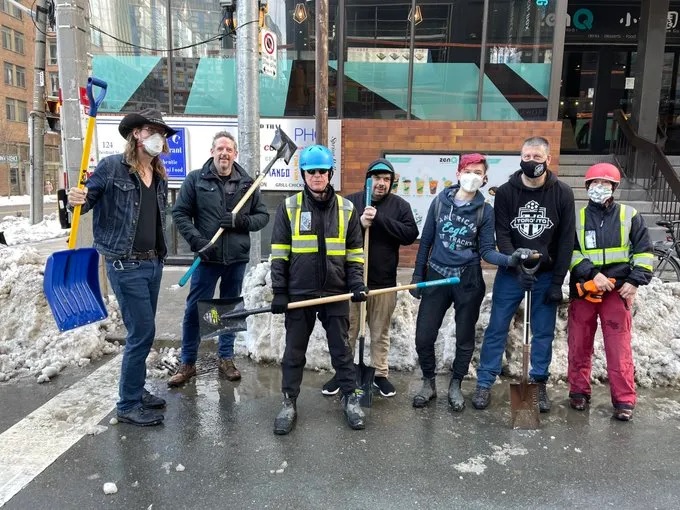
Determined protestors banded together to “Shovel out Toronto,” shining a spotlight on the city’s sad shortcomings in vital public infrastructure upkeep.
A significant snowstorm blanketed Toronto on Friday night, leaving swaths of the city’s downtown core buried under heavy, wet snow. In its wake, a group of volunteers ventured out on Sunday to clear 30 streetcar stops—a task that should have been swiftly managed by the city’s snow removal services. Yet while much of the local media coverage has spun this initiative as a heartwarming “people helping people” tale, it’s far more than just a feel-good story. It’s an indictment of the city’s woeful failure to live up to its public service obligations in Canada’s largest metropolis.
In interviews with CTV News Toronto, volunteers recounted how they organized ahead of the storm precisely because they anticipated a sluggish municipal response. They understood that blocked transit stops and sidewalks create serious accessibility issues, particularly for people with mobility aids. True enough, when Sunday morning rolled around—more than 24 hours after the snow had stopped falling—piles of slush and ice were still obstructing a critical public utility: public transportation.
The City of Toronto, for its part, stated that sidewalk plows would need to make multiple passes across 7,400 kilometres of public sidewalks, attributing any delays to the volume and density of the snow. While clearing that much terrain is no small feat, the larger question remains: if volunteers were able to rally quickly and tackle 30 stops in a single day, why wasn’t the city prepared to do the same, particularly after forecasts predicted a record-breaking snowfall?
Local media outlets, however, appear more inclined to celebrate these altruistic acts than to probe the glaring shortfalls in public service. Profiles of volunteers emphasize how strangers came together for a common good, offering snapshots of people with shovels smiling for the camera. Missing from much of this coverage is a pointed critique: Why was it necessary for a handful of citizens to step in for municipal workers, and why does this scenario keep playing out, storm after storm?
For residents dependent on public transportation, this is not merely a feel-good narrative; it is a harsh reminder of the city’s inability—or unwillingness—to prioritize pedestrians, cyclists, and those who rely on mobility aids. One volunteer, an all-season cyclist, noted that the city has historically cleared roadways for motorists first, leaving corners, sidewalks, and bike lanes in treacherous conditions. Another passerby in a wheelchair stressed how impassable snowbanks push him into open traffic, a safety hazard that simply should not exist in one of the country’s most populous areas.
Of course, the volunteers deserve recognition for their community spirit. But the pervasive framing of their action as an uplifting tale distracts from a more urgent reality. The story we should be telling is about a city that routinely neglects the infrastructure needs of its own residents.
There is a systemic failure at play here, and the temporary heroics of a few good Samaritans do little to remedy that in the long term. If anything, these volunteer efforts should serve as a sharp rebuke of Toronto’s city management—and a call for real, lasting solutions that ensure accessible transit in every season.
Labour As Protest
Labour as Protest harnesses direct, collective action—like wildcat strikes or volunteer-based interventions—to confront systemic neglect and inequalities. By withholding or redirecting labor outside traditional structures, workers highlight the power of community organizing. Check out this indepth article on Labour as Protest for more information.
Special thanks to @Grusomebat and Professor Jun Nogami of “Biking in a Big City”






 Spark Solidarity