
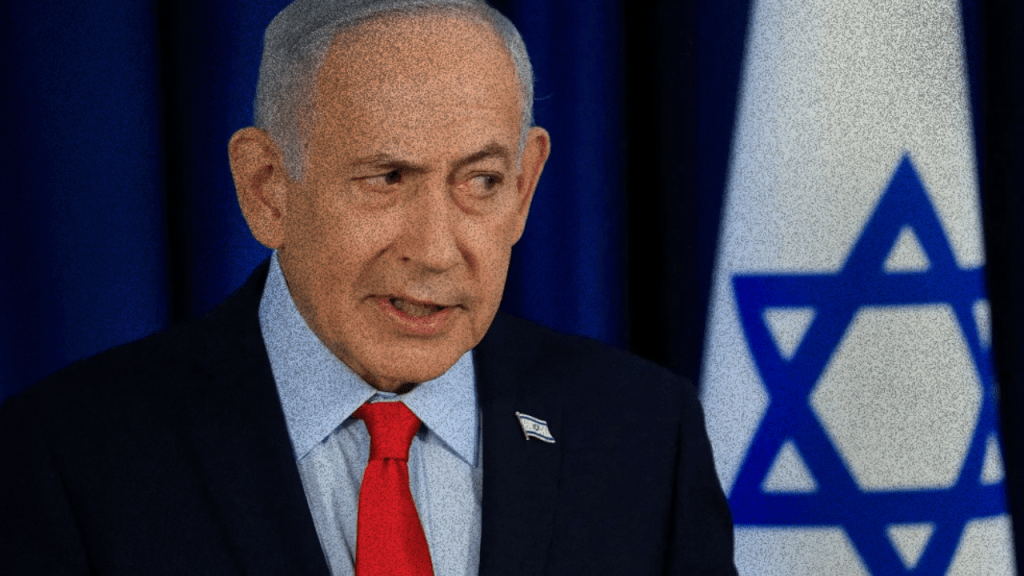
Iran US ceasefire collapse: Netanyahu reversed a Trump commitment with one phone call, exposing that U.S. Middle East policy is not sovereign.
On April 8, after forty days of U.S.-Israeli strikes on Iran and Iranian missile retaliation across the Gulf, Trump announced a two-week ceasefire brokered by Pakistan. The deal was built around Iran’s 10-point proposal. Pakistan’s Prime Minister Shehbaz Sharif announced on X that all parties had agreed to an immediate ceasefire everywhere including Lebanon, effective immediately. Iranian Foreign Minister Abbas Araghchi confirmed it.
A White House confirmed this that Israel had also agreed to the terms Pakistan helped broker.
Lebanon mattered because Israel had been running a parallel war there throughout the Iran campaign — striking Hezbollah targets and residential areas, killing hundreds of Lebanese civilians. Iran had made clear, through Araghchi and its Supreme National Security Council, that a ceasefire excluding Lebanon was not a ceasefire. The 10-point proposal Iran had tabled — and which Trump described as a workable basis for negotiation — explicitly covered all fronts. Pakistan’s mediation was premised on that scope. The deal, as announced, held.
Then Netanyahu called Trump, and the U.S. position shifted.
One Call Rewrote What the U.S. Had Agreed To
Multiple diplomatic sources told CBS News reporting that Trump had agreed the ceasefire applied to the entire Middle East region — including Lebanon. After Netanyahu’s call, Trump went before cameras and said Lebanon was not part of the deal. White House press secretary Karoline Leavitt echoed this from the briefing room podium. JD Vance called the Lebanon exclusion a legitimate misunderstanding and directed blame at Iran.
Trump told NBC he had asked Netanyahu to be a little more low-key in Lebanon — a formulation that treats the bombardment of a neighboring country as a tone problem. None of that changes the sequence. Trump agreed to a Lebanon ceasefire. Netanyahu called. Trump no longer agreed. Pakistan’s prime minister — the mediator the U.S. itself chose — stood by the original terms. Iran’s position hadn’t changed. What changed was the U.S. position, in real time, after one call.
Netanyahu Had Spent His Credibility Before That Call
The capitulation is more damning because the administration already had direct evidence that Netanyahu’s projections were unreliable. According to according to Axios, Vance had confronted Netanyahu in a tense late-March call over the pre-war pitch Netanyahu delivered in the White House Situation Room on February 11 — a pitch that presented regime change as high-probability and Iranian retaliation as manageable.
The war did not produce regime change. The Strait closed. Iranian retaliation struck Gulf states, killed U.S.-allied personnel, and sent oil above $100 a barrel. Netanyahu’s projections had been wrong on every major count. Vance knew this. He confronted Netanyahu directly. And then, weeks later, when Netanyahu called to kill the Lebanon provision, the administration folded anyway. Prior documented deception produced no reduction in Netanyahu’s operational influence. That is the structural condition the phone call reveals.
The Official Leading Peace Talks Became a Target
The same dynamic was operating on Vance simultaneously. U.S. officials privately accused elements within the Israeli government of leaking stories to Israeli media portraying Vance as insufficiently hawkish — with Vance’s own advisers characterizing at least one leak as a possible coordinated foreign influence operation. The day after Vance’s confrontation call with Netanyahu, a right-wing Israeli outlet owned by GOP mega-donor Miriam Adelson published a story claiming Vance had screamed at Netanyahu over West Bank settler violence.
Multiple U.S. and Israeli officials denied it. Vance’s team believed it was planted. The target was the American official most structurally resistant to Netanyahu’s line, placed under political pressure at the precise moment he was serving as the administration’s lead Iran negotiator. Iran was navigating the same neutralization from the other side — Araghchi’s public conditions were dismissed, his Lebanon position erased retroactively. Every voice pushing toward a durable agreement was being structurally neutralized. The mechanism differed. The result was the same.
No Document Meant No Constraint — That Was the Point
CNN confirmed this there is no formal written ceasefire document. What existed was a series of social media posts — from Trump on Truth Social, from Sharif on X, from Araghchi. No signed text. No terms sheet. No enforcement mechanism. No process for adjudicating violations. When Iranian parliament speaker Mohammad Bagher Ghalibaf enumerated three specific breaches of Iran’s 10-point proposal, there was no document to hold anyone to.
A written agreement would have required Netanyahu to formally commit to the Lebanon provision Trump had verbally confirmed. Formalization would have converted the phone-call reversal into a visible, documented breach rather than a legitimate misunderstanding. The ceasefire existed as social media posts because that format is revocable on demand. No text exists, no party is formally in breach, and the the narrative apparatus assigns the collapse to Iranian intransigence rather than Israeli veto.
The Strait Closed Because the Architecture Failed
Iran had stated its condition plainly: halt the attacks in Lebanon or the ceasefire is void. Israel continued striking. The IRGC announced Hormuz traffic had stopped in response. CNBC pipeline reporting, citing Saudi state news agency SPA, that a drone struck a pumping station on Saudi Arabia’s East-West Pipeline — the Abqaiq-to-Yanbu conduit, one of only two bypass routes around the Strait of Hormuz — in the hours immediately following the ceasefire announcement.
European Space Agency satellite imagery confirmed thick black smoke rising from the Abqaiq facility. The Saudi Press Agency confirmed the strike cut pipeline throughput by approximately 700,000 barrels per day. Iran did not just close the Strait. The workaround closed at the same time.
In the days that followed, mysterious drone and missile strikes on Kuwait, UAE, and Saudi Arabia continued — origin unclear, no party claiming responsibility. The IRGC issued a IRGC formal denial, attributing the strikes to Israeli or American operations. The framing apparatus assigns agency to Iran at every endpoint. The sequence is the cause.
Sources
- CBS News — Hegseth Pentagon briefing on Iran ceasefire, April 8, 2026
- Axios — Vance confronted Netanyahu over pre-war pitch, April 8, 2026
- CNN — No written ceasefire document exists, April 8, 2026
- CNBC — Abqaiq pipeline struck on day of ceasefire, April 8, 2026
- WION — IRGC denies Gulf strikes during ceasefire, April 8, 2026
- Middle East Monitor — Netanyahu call reversed Lebanon ceasefire terms, April 2026
- Spark Solidarity — Iran War Narrative Inverts Who Struck First
- Spark Solidarity — Weaponized Diaspora and the Witnesses Empire Needs





 Spark Solidarity