
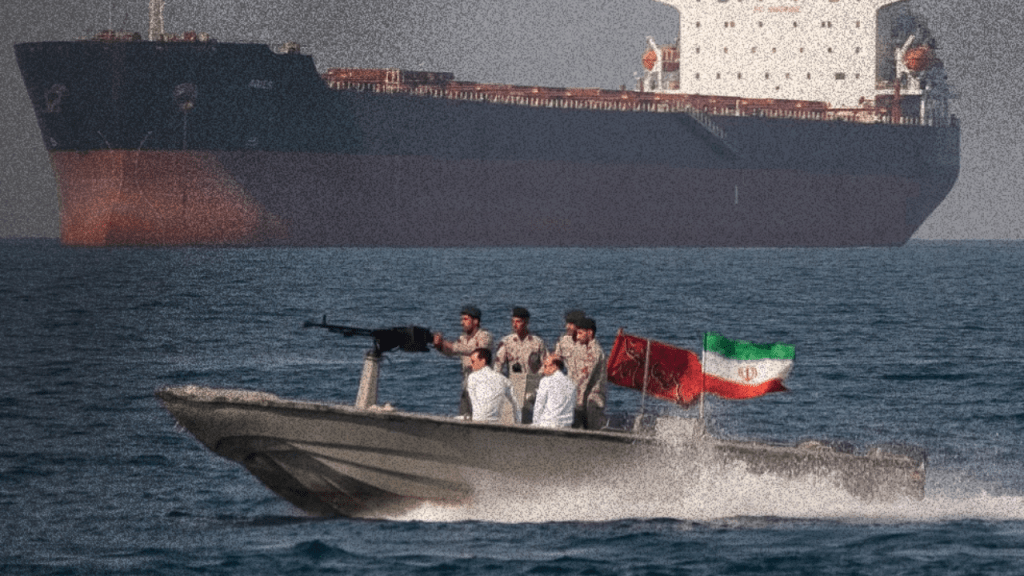
Iran is waging open war against American petrodollar infrastructure — not against civilian populations. Western leftists who can’t see what that does to global capitalism aren’t being principled. They’re being liberal.
Large sections of the Western left have spent this conflict debating whether Iran deserves support — fixating on its internal repression, its governance, its treatment of dissidents — as if the state running the largest aerial bombardment of a civilian population in modern history, and the state that has armed and bankrolled it without condition, haven’t already exhausted every moral framework that could be applied to Iran. The scale isn’t comparable. It isn’t close. Iran is not targeting civilian populations. It is targeting Gulf energy infrastructure — the refineries, terminals, pipelines, and chokepoints that form the physical backbone of the petrodollar system, built and maintained on kafala, one of the most brutal migrant labor regimes on earth, where workers from South Asia and East Africa are stripped of the right to leave their employer, change jobs, or organize. That infrastructure is the story. The modern slave economy that produces it is the story. What dismantling it does to U.S. global dominance is the story. The western left is missing all of it.
This isn’t about picking sides. It isn’t about pretending Iran is anti-capitalist, because it isn’t. Iran is integrated into global capitalism — it exports oil, operates state-linked capital structures, and pursues its foreign policy through the logic of state competition, not socialist transformation. But an astute anti-capitalist, Marxist, or even just a rigorous economist will see that Iran’s actions are creating damaging fractures in global capitalism’s operating system. That disruption aligns materially with anti-capitalist interests regardless of what drives it. Revolutionary effect is determined by consequence, not ideology. The Western left’s inability to see this isn’t principled analysis. It’s chauvinistic Western centrism — the inability to perceive Marxist dialectics as they actually unfold when the actor producing them doesn’t look like what the Western left expects a revolutionary subject to look like.
The System Claims Control. The Flows Disagree.
Western governments announced the ceasefire and declared the situation managed. The shipping industry didn’t agree. Maersk said the ceasefire “may create transit opportunities, but it does not yet provide full maritime certainty” — no changes to services, cautious approach. Hapag-Lloyd told customers six to eight weeks before anything resembling normal shipping resumes. Around 1,000 vessels are sitting in holding patterns in the Persian Gulf. Hapag-Lloyd is losing $55 million a week. War-risk insurance premiums surged from 0.125% to between 0.2% and 0.4% of ship value per transit — a quarter-million-dollar surcharge on a single tanker. The EU Commission stated on April 8: “We should be under no illusion that this crisis that is affecting energy prices will be short-lived. It will not be.”
Then there’s the detail that cuts to the heart of the whole architecture. As a condition of passage through the partially reopened Strait, Iran is charging transit fees in Chinese yuan or cryptocurrency — explicitly not American dollars. One chokepoint. A fifth of global oil. Entry fee in a currency that isn’t the U.S. dollar. The petrodollar system — built on oil moving through dollar-denominated transactions and recycling back into U.S. financial assets — is being contested at the exact physical location where it is most exposed. That’s what this moment is about.
Hormuz Is Not a Flashpoint — It Is a Structural Node
Around 20 million barrels per day moved through the Strait of Hormuz in 2024 — about 20% of global petroleum liquids consumption. Nearly 15 million barrels per day of crude, roughly 34% of global crude trade, went through the same corridor, most of it headed to Asian manufacturing economies. One geographic chokepoint. More than a third of the world’s crude supply. Modern capitalism isn’t primarily a system of production — it’s a system of circulation. Energy has to flow. Logistics chains have to stay predictable. The Strait is where an enormous share of that circulation gets compressed into a passage narrow enough to close.
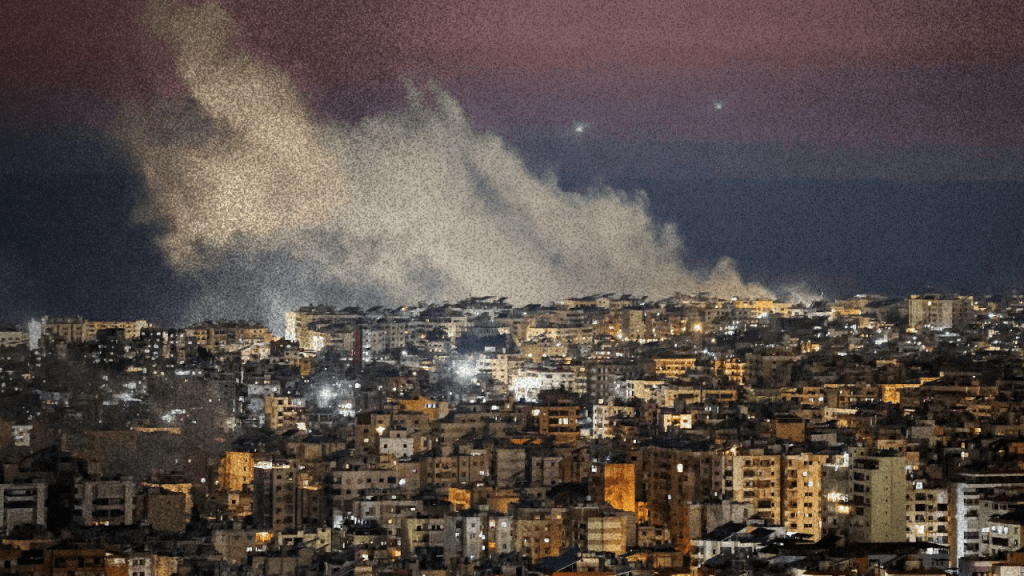
When Iranian forces closed the Strait in early March 2026, they weren’t targeting a regional adversary. They pulled a structural lever in the global economy. The IEA called it the largest supply disruption in the history of the global oil market. EU gas prices up 70%. Oil up 60%. €14 billion added to Europe’s fossil fuel import bill in 30 days. Qatar’s LNG capacity was hit by Iranian strikes, forcing QatarEnergy to declare force majeure. Dutch gas benchmarks nearly doubled. The Philippines declared a national energy emergency. Ireland’s fertilizer supply was running dry by mid-April. The insurance spikes, the stranded vessels, the inflationary pressure across every energy-sensitive supply chain — that’s not collateral damage. That’s the point.
Dollar Hegemony Runs on Oil Flows. They Are Breaking.
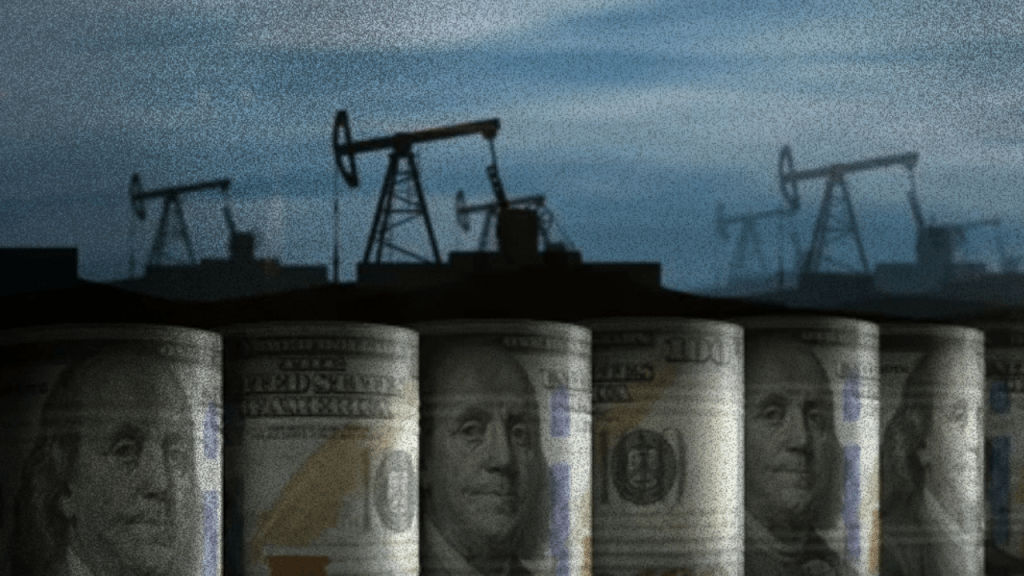
The petrodollar system sits directly on top of those flows. The logic is simple: oil is priced in U.S. dollars, which means every country that needs oil needs U.S. dollars. That creates permanent global demand for USD — not because anyone likes America, but because industrial civilization runs on oil and oil runs on American dollars. Oil exporters accumulate those dollars and recycle them into U.S. Treasury bonds, which finances U.S. government spending and keeps the dollar’s reserve status intact. Oil demand creates dollar demand. Dollar demand sustains U.S. financial power. U.S. financial power enforces the conditions that keep oil dollar-denominated. The loop is self-reinforcing.
This arrangement wasn’t natural or inevitable. It was built — through the 1974 deal with Saudi Arabia that standardized dollar settlement across OPEC after Nixon Shock ended dollar-gold convertibility. It has underwritten American geopolitical power for fifty years. It has two structural requirements: oil must keep flowing, and it must keep being settled in American dollars. The 2026 Hormuz disruption hits both at once. Less flow means fewer dollar transactions. Iran demanding yuan at the gate strikes directly at the settlement layer — the specific mechanism by which physical energy flows generate dollar demand. Physical disruption and financial displacement aren’t two separate events. They’re the same event at different scales, happening simultaneously at the same chokepoint. The Gulf monarchies holding this system together — recycling petrodollar surplus into U.S. Treasuries, running kafala labor systems to produce the energy that feeds the loop — are facing what analysis of the conflict describes as a systemic collapse of the Gulf Cooperation Council economic model. That’s not a side effect. That’s a target.
Revolutionary Effect Is Determined by Consequence
The Western left applies materialist analysis to Western actors without demanding ideological credentials first. No one requires the U.S. to confess its structural motives before the western left will analyze them structurally. The demand for ideological purity only appears when a non-Western actor enters the frame. Iran must be anti-capitalist to produce anti-capitalist effects. The IRGC needs a socialist program before its actions merit structural analysis. That’s not a higher standard. It’s a double standard — and it’s the mechanism by which the Western left consistently misreads or ignores revolutionary material events produced outside the Western revolutionary tradition.
The petrodollar loop doesn’t care whether Hormuz is closed by a socialist state or a theocratic one. The ECB postponing rate cuts, revising inflation forecasts upward, cutting GDP projections — none of that was responding to Iran’s political philosophy. It was responding to the material consequences of a state exploiting a structural vulnerability for its own geopolitical survival. When Iran charges yuan at the chokepoint, the effect on dollar hegemony is real regardless of the motive.
A political left that can’t see that isn’t holding to principle. It’s applying a lower analytical standard to non-Western actors and calling it rigor.
As the mechanics of perception management show, the spectacle of the moral conflict is exactly what obscures the structural one.
The Western left has accepted the spectacle.
This Is Inter-Bloc Competition, Not a Moral Conflict
This conflict is better read as inter-bloc competition — U.S.-aligned financial architecture against a China/BRICS-aligned alternative — than as a moral confrontation between a rules-based order and a rogue state. BRICS now represents roughly 45% of the world’s population and over 35% of global GDP by purchasing power parity. China and Russia conduct most of their bilateral trade in yuan and rubles. Chinese refiners moved back toward Iranian crude as prices dropped after the initial disruption. The non-dollar settlement infrastructure being built around BRICS trade isn’t capitalism being replaced — it’s U.S.-centered capitalism being challenged by a competing configuration. As the analysis of China’s structural position documents, the BRI and yuan internationalization represent state-directed capital under different institutional logic — and that difference has material consequences for who controls the terms of global exchange.
Russia and China’s veto of the UN Security Council resolution on Hormuz shipping — blocking the multilateral off-ramp at the moment of maximum pressure — wasn’t an ideological statement. It was a bloc acting in bloc interest. The confrontation is already multipolar. The framing that calls it a bilateral moral conflict is the ideological cover for one side of it. The U.S. posture toward Chinese infrastructure globally — Panama, the Pacific, everywhere — confirms Washington reads this as systemic competition. Western commentary just won’t say it plainly.
This Goes Back to 1979 — and Shariati
Understanding why the Western left can’t see this moment means understanding what the Islamic Revolution actually was. Not the Western caricature — angry mullahs rejecting modernity. The dialectical event that Ali Shariati spent his life theorizing. Shariati was the ideologue of the Iranian Revolution. Not a cleric. Not a Marxist. A sociologist who studied at the Sorbonne, translated Fanon into Persian, collaborated with the Algerian FLN, and arrived at a conclusion the Western left still hasn’t processed: Shia Islam contains a genuine revolutionary dialectical capacity that Western categories of liberation cannot measure and Western standards of ideological purity cannot evaluate.
Shariati’s central distinction was between Red Shiism and Black Shiism. Red Shiism — Alid Shiism, the Shiism of Imam Hussein and Karbala — is the tradition of standing against unjust power at existential cost. Refusing accommodation with tyranny. Treating the struggle against oppression as a permanent, this-worldly obligation, not a deferred spiritual reward. Black Shiism — Safavid Shiism, the clerical establishment’s version — is the co-opted, quietist tradition that makes peace with power and reduces Islam to mourning and ritual. Shariati’s argument was that Red Shiism isn’t just a theological position. It’s a revolutionary ideology — one capable of generating mass anti-imperial struggle in ways that Western secular Marxism, built on specifically European historical conditions, can’t replicate in the Global South.
That tradition runs from Karbala through Shariati through 1979 through the IRGC’s doctrine of asymmetric resistance through this conflict. It produces revolutionary material effects through its own internal logic — permanent resistance to unjust power, exploitation of every structural vulnerability available, refusal of the terms the dominant order sets for legitimate opposition. The Western left can’t see this because it can’t perceive revolutionary processes that don’t arrive in Western revolutionary form. What Shariati’s contemporary Jalal Al-e Ahmad called gharbzadegi — westoxification — applies to the Western left itself. It has internalized the civilizational hierarchy it claims to oppose, and that internalization is exactly what blinds it to the revolutionary capacity of Shia Islam as it unfolds in real time. Read Shariati. The moment he was theorizing has arrived.
When the Performance Breaks, the Architecture Shows
U.S. global dominance has always depended on making its structural foundations invisible. Markets respond predictably. Trade flows continuously. Disruptions get managed. The system presents itself as the natural order — not as a specific historical arrangement built on physical flows, currency agreements, and geographic chokepoints that can be pressured. That invisibility is part of how the system reproduces itself. It forecloses the question of whether things could be otherwise by insisting this is simply how things are.
2026 broke the performance. The EU acknowledging the energy crisis won’t be short-lived even after a ceasefire. Shipping companies refusing to normalize Gulf traffic under ceasefire conditions. Insurance markets pricing in sustained risk. Iran charging yuan at the chokepoint. These aren’t anomalies. They’re the system showing its actual architecture under stress. That architecture is contingent. It was built. It can be disrupted. It is being disrupted. China’s long-term planning is built on exactly this exposure — that the material foundations of dollar hegemony can be gradually displaced by alternative settlement infrastructure that doesn’t run through U.S.-controlled nodes. Hormuz accelerates that by proving in real time that the physical foundations aren’t secure, and that when they’re stressed, alternative currency arrangements emerge at the chokepoint itself.
The system isn’t ending. Its unquestioned dominance is. Those are different things. The flows are breaking. The yuan is at the gate. The Western left that can’t read this moment isn’t failing a political test. It’s failing an analytical one — at the exact moment when the populations that need coherent left analysis of how American power actually works need it most. The moment is here. It doesn’t look like what they expected. That’s the point.
Sources
- Maersk — Iran–US Ceasefire: Hormuz Shipping Update, April 8, 2026
- Insurance Journal — Resuming Normal Shipping to Take 6-8 Weeks: Hapag-Lloyd, April 8, 2026
- EU Observer — EU: energy crisis ‘will not be short-lived’ despite ceasefire, April 8, 2026
- Maritime Executive — Shipping Waits and Watches Strait of Hormuz, April 8, 2026
- Euronews — Shipping companies seek clarity on Hormuz reopening, April 8, 2026
- OilPrice.com — EU Warns Energy Prices Won’t Fall Even If Iran War Ends Tomorrow, April 2026
- Ship & Bunker — EU Sees Iran Conflict Impact on Energy Markets as Not Short-Lived, April 2026
- Wikipedia — 2026 Iran War Fuel Crisis
- Wikipedia — Economic Impact of the 2026 Iran War
- Euronews — Iran war revives spectre of energy crisis in Europe, March 2026
- MERIP — Ali Shariati: Ideologue of the Iranian Revolution
- Spark Solidarity — Perception Management: How States Control the Narrative
- Spark Solidarity — China Is Not Imperialist
- Spark Solidarity — China: Socialism by 2050
- Spark Solidarity — Trump on China and the Panama Canal


 Spark Solidarity