Trump Iran war exit strategy: on April 1, Trump promised more strikes — and offered no account of what ending the war would require.
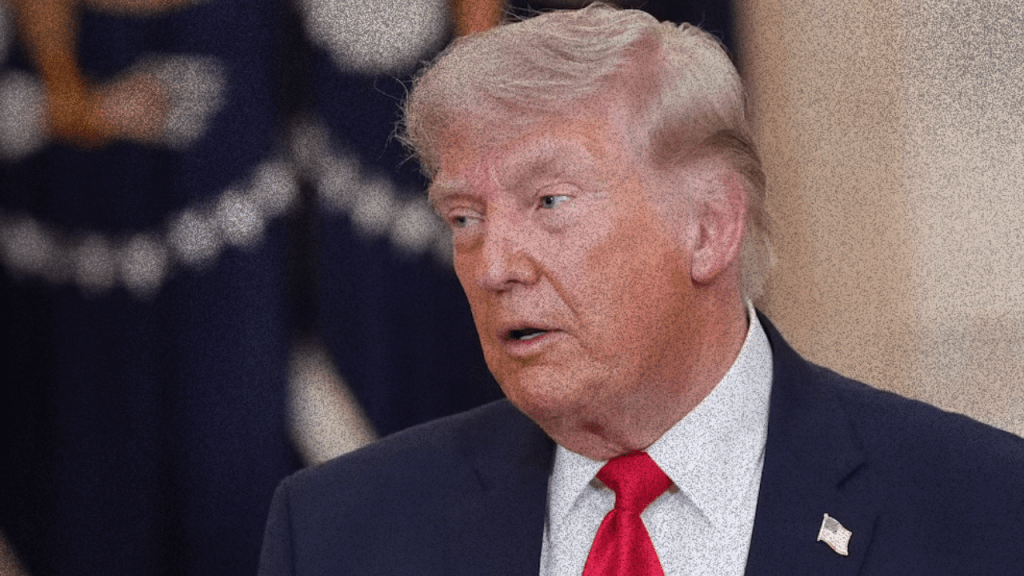
On April 1, Trump addressed the country and told Americans the war on Iran was nearly finished. Trump’s completion claim — “We are on track to complete all of America’s military objectives shortly” — came packaged with threats to hit Iran “extremely hard” for another two to three weeks, bomb its power plants and oil infrastructure if no deal was struck, and bring it “back to the Stone Ages.” These are not compatible positions. A war that is nearly finished does not require two to three more weeks of the hardest strikes yet.
CFR analysis noted the day after the address that Trump made little mention of diplomacy, gave no assurances about the Strait of Hormuz, and offered no definition of what completing military objectives actually means. What emerged from the speech was not a roadmap to conclusion. It was a public demonstration that no roadmap exists. The full text is documented in the speech analysis.
This matters beyond optics. When a state announces a war’s end without defining what ending it requires, it is not signaling confidence — it is revealing that decision-making has become detached from outcomes. The war is being narrated, not managed. And a narrated war does not resolve. It generates new narration.
Shifting Objectives Are the Architecture of Permanent War
The vagueness in Trump’s April 1 address is not rhetorical sloppiness. It is the predictable output of an administration whose stated war objectives have shifted repeatedly across weeks and speakers. CNN’s confirmed analysis documented that officials regularly listed four objectives that change depending on the date and who is providing them — with Rubio adding “destroy their air force” to the list on March 28 and then listing it as a numbered objective replacing the nuclear weapons goal in State Department public communications the same day Leavitt gave a different list.
NPR’s war coverage documented the broader trajectory: Trump told the Daily Mail the war would take four weeks or less, told the New York Times four to five weeks, left it open-ended in his notification to Congress, and was considering an off-ramp by late March while simultaneously threatening to seize Kharg Island.
This is not flexibility. A strategically flexible state adjusts tactics while maintaining fixed objectives. What the Trump administration has done is the inverse: maintained tactical continuity while cycling through incompatible objective sets. Every escalation becomes necessary. Every stall becomes strategic patience. The war cannot fail by this logic — and that is precisely what makes it unwinnable.
The White House published a release on April 1 titled White House objectives release — a title that exists only because independent reporting had made the shifting nature of those objectives impossible to ignore. The release named four goals: obliterating Iran’s ballistic missile arsenal, annihilating its navy, severing its proxy support network, and preventing Iran from acquiring a nuclear weapon. The administration’s insistence on fixity is itself an acknowledgment that the fixity was not previously visible.
Victory Has Been Declared Over Goals That Remain Unmet
Trump’s April 1 address claimed Iran’s navy is “gone,” its air force “in ruins,” its missile capability “just about used up.” Yet the regime remains intact. Mojtaba Khamenei has been installed as Supreme Leader. The IRGC is consolidating power. The Strait of Hormuz — whose closure has produced the world’s largest oil supply disruption since the 1970s energy crisis — remains under Iranian control. Iran retains its nuclear material, including uranium enriched to near-weapons-grade levels.
Time’s gap analysis documented it directly: military and foreign policy experts told NBC News there was an open question about Trump’s strategy if the remnants of the Iranian regime remain in power, control the Strait of Hormuz, still possess highly enriched uranium and retain the capacity to threaten America’s allies. “You’d have to ask yourself exactly what was this all about,” said Aaron David Miller of the Carnegie Endowment for International Peace.
When success conditions are undefined and movable, there is no logical moment at which disengagement becomes available. The administration is claiming completion while its own four-point definition of completion remains unmet. The gap between declaration and reality is the function of perception management in imperial warfighting — the point is not to achieve the stated objectives but to sustain the justification for continued action. For how that mechanism works as a governing method, see the crisis as governance piece.
The Diplomatic Track Exists to Fail
There is an active diplomatic channel. Axios ceasefire reporting confirmed that negotiations are proceeding through Pakistani, Egyptian, and Turkish mediators, with text messages exchanged between Trump envoy Steve Witkoff and Iranian Foreign Minister Abbas Araghchi. A 15-point U.S. plan was transmitted to Tehran. A 45-day ceasefire proposal was submitted to both parties on April 5–6.
Iran formally rejected it, with state news agency IRNA reporting Tehran conveyed through Pakistan the need for a permanent end to the war — not a temporary ceasefire — along with sanctions relief and an end to other wars in the region. Iran’s foreign minister called U.S. messaging about negotiations “an acknowledgment of defeat” after Washington had spent weeks demanding unconditional surrender.
Iran has no structural reason to trust U.S. commitments. The United States withdrew from the JCPOA unilaterally, imposed maximum pressure sanctions, and launched a war two days after the third round of Omani-mediated nuclear talks. The diplomatic track does not resolve the war. It demonstrates that resolution through diplomacy requires institutional infrastructure the administration spent years dismantling. When Trump’s personalized foreign policy operates, the absence of a plan is the operating system, not a temporary gap.
Reactive Decision-Making Produces Unwinnable Wars by Design
When asked directly about his mixed messages — whether the war was winding down or ramping up — Trump said: “I don’t know. I can’t tell. It depends what they do.” This is the clearest possible statement of what has replaced institutional strategy: reactive improvisation tied to adversary behavior, with no fixed framework for evaluating that behavior against defined U.S. interests. The president of the United States did not know the trajectory of the war he ordered.
Allies cannot predict U.S. actions. Adversaries cannot interpret U.S. intentions. Domestic audiences receive inconsistent explanations of what the war is meant to achieve — with members of the House Armed Services Committee telling CNN they were unsatisfied with administration briefings on the war’s objectives and timeline. This is not a communication failure. It is the external manifestation of genuine internal incoherence. Wars run this way do not conclude. They accumulate. For the structural analysis of what it means that Marines are still deploying while victory is declared, see the Marines deployment piece.
The War Continues Because Stopping It Was Never Defined
The most important detail in Trump’s April 1 address was not the two-to-three-week threat. It was the absence of anything underneath it. No benchmark. No threshold. No definition of the conditions under which U.S. forces stand down. A war cannot end on terms that have not been specified. The administration declared objectives without fixing them, announced timelines without grounding them, and claimed progress toward goals it has not met.
This is not an accident of poor planning. It is the structural logic of personalized imperial warfighting. Undefined objectives serve power by keeping the justification for action perpetually renewable. Every development — Iranian defiance, partial degradation, rejected negotiations — becomes evidence for continued engagement rather than evidence of failure. For how the regime change logic built into the war from the beginning forecloses exit by design, see the regime change analysis. Absent a genuine institutional break, there is no mechanism inside the current architecture that produces an end. Only continuation.
Sources
- Trump Iran war address, live updates — NBC News, April 1, 2026
- Trump addresses nation on Iran war — CNBC, April 1, 2026
- Trump repeats threats in first Iran war address — Council on Foreign Relations, April 2, 2026
- Trump administration’s Iran war objectives keep changing — CNN, March 31, 2026
- Iran war enters fourth week with no clear end in sight — NPR, March 21, 2026
- Trump promises Iran war is “nearing completion” — Time, April 2, 2026
- President Trump’s Clear and Unchanging Objectives — White House, April 1, 2026
- US, Iran mediators discuss potential 45-day ceasefire — Axios, April 6, 2026
- Iran rejects a U.S. ceasefire plan — NPR, April 6, 2026
- Trump’s Iran Speech: Vague Exit, Troops Still Staged — Spark Solidarity
- Trump Declares Victory While Deploying More Marines to Iran — Spark Solidarity
- Trump Iran War Strategy: Manufacturing Crisis as Governance — Spark Solidarity
- US Iran War: How Regime Change Logic Drives Escalation — Spark Solidarity
- Trump on China and the Panama Canal — Spark Solidarity