
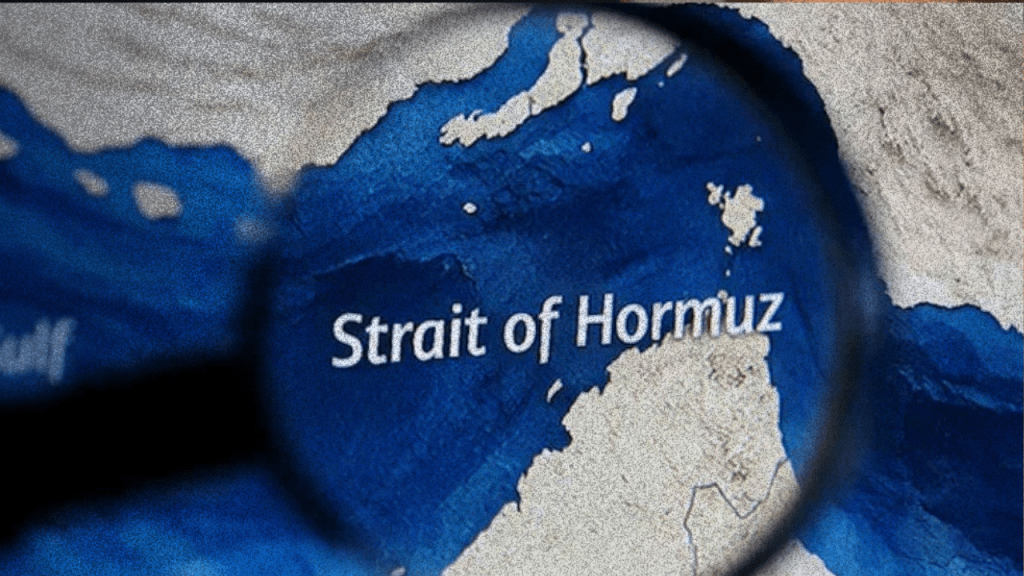
Hormuz oil shock — largest supply disruption in oil market history — is a present condition destroying working-class living standards worldwide.
The IEA’s executive director Fatih Birol has called the Strait of Hormuz closure “the largest supply disruption in the history of the global oil market.” That is not rhetorical. Each of the two major 1970s oil crises removed approximately 5 million barrels per day from global supply. The Hormuz closure has disrupted around 20 million barrels daily — with global supply down 8 million barrels per day in March alone and Birol projecting April will be worse. Brent crude has crossed $100 per barrel. UN ESCAP is tracking oil prices up 45 percent, gas up 55 percent, and fertilizer up 35 percent since late February, already tightening food supply lines across the Global South. This is not a market fluctuation. It is a rupture — and the question now is who absorbs the damage.
The answer is predictable. The same global economy that has been running on cheap, uninterrupted oil flows — flows always controlled by geopolitical actors operating beyond any democratic accountability — is now transmitting the cost of that fragility downward. Energy prices spike first on futures markets, but they arrive in working-class households as heating bills, grocery costs, and bus fares. The architecture of global capitalism was built to socialize risk onto those with the least capacity to absorb it. The Hormuz shock is not a malfunction of that system. It is the system working as designed.
Cost Pressures Are Already Moving Through Every Supply Chain Layer
Rising oil does not stay in the energy sector. It moves. Transportation costs go up first — every truck, ship, and freight train running on petroleum-based fuel becomes more expensive to operate. Those costs get passed to manufacturers, who pass them to distributors, who pass them to retailers, who pass them to consumers. Bloomberg Economics’ price tracker put the US CPI for March at 3.4 percent year on year — a marked jump from 2.4 percent in February, with rising fuel prices as the primary driver. That is a single month’s data from a crisis that is still escalating.
Food is the sharpest transmission point. Fertilizer is synthesized from natural gas. When energy costs spike, urea prices spike with them. The IEA confirms more than 30 percent of global urea trade moves through the Strait — meaning the cost increase is not absorbed by agribusiness giants with pricing power. It gets passed to smallholder farmers across South Asia, East Africa, and Latin America who have no leverage to push back, and then to urban working-class consumers whose food budgets were already under pressure before this crisis began. The cascade is not hypothetical. It is already running. This is what makes the stagflation dynamic — which comes next — so politically dangerous: the inflation here is not excess demand that central banks can cool by making credit more expensive. It is material scarcity, and rate hikes cannot conjure more oil.
Fuel Rationing Confirms What Markets Are Obscuring
Emergency measures are the most honest indicator of where a crisis actually sits on the severity spectrum — because governments do not implement fuel rationing as a precaution. Bangladesh has imposed rationing to manage depleted reserves. Indonesia has capped private vehicle fuel purchases at 50 litres per day and moved civil servants to work-from-home arrangements. The Philippines declared a national energy emergency and shifted government offices to four-day workweeks. Sri Lanka limited drivers to 15 litres per week and declared Wednesdays a public holiday for state institutions. Slovenia became the first EU member state to implement rationing, also capping private motorists at 50 litres per day. The IEA has launched its largest-ever emergency release of strategic oil stocks — 400 million barrels.
Read these measures together and a structural reality emerges that the financial press is slow to name: states are already managing triage, not growth. The policy priority has shifted from expansion to containment. That is not a precautionary posture — it is the operational signature of a system under active strain. And the countries implementing the most severe rationing are not the ones with the deepest strategic reserves or the most monetary policy flexibility. They are the countries the global energy order has always left most exposed. The emergency is not distributed evenly. It never is.
Stagflation Is the Trap — Rate Hikes Cannot Create More Oil
Stagflation is the economic condition where inflation and economic stagnation run simultaneously — and it is the specific combination that strips central banks of clean options. Under normal inflationary conditions, rate hikes work by making borrowing more expensive, cooling demand, and bringing prices down. That logic only functions when inflation is driven by demand. When inflation is driven by a supply shock — when prices are rising because there is physically less oil moving through the global economy — raising interest rates does not create more oil. It just slows growth and destroys jobs while prices keep climbing. JPMorgan economists confirmed the dynamic in a March research note: “The threat of a stagflationary tilt is being reflected in financial markets, where bond yields have moved higher this month, at the same time that equities have incorporated greater growth concerns.” The S&P 500 posted its worst quarterly performance since Q3 2022.
JPMorgan Asset Management’s chief global strategist David Kelly summarized the condition to Axios as stagflation “with a very little ‘s.’” The word “little” is doing a lot of ideological work in that framing. For the financial sector, “little” refers to the stability of asset markets and institutional exposure. For a household in Metro Manila on a four-day government workweek with fuel capped at 50 litres a week and food prices climbing, there is nothing little about it. The monetary policy toolkit’s inadequacy is not a technical inconvenience — it is a class exposure. Those with assets hedge against inflation. Those who sell their labour absorb it. The Hormuz shock is accelerating that divergence in real time, which is why the scale comparison to the 1970s is not merely academic.
The Scale Is Unprecedented — the Damage Is a Class Question
The 1970s comparison is contested in mainstream economics, and that contestation is worth engaging directly. Morningstar’s chief U.S. economist argues that comparisons to the 1970s are misplaced because the world economy is less structurally dependent on oil than it was fifty years ago — spending on petroleum products as a share of personal consumption has dropped from 8.3 percent in the 1970s to around 3.3 percent today. That is partially true. But the supply disruption itself is objectively larger: Birol confirmed the current crisis is equivalent to the two major 1970s oil shocks and the 2022 Russian gas disruption “put together.” Where that shock lands, and how hard it hits, is not determined by economic physics. It is determined by who has pricing power, who holds strategic reserves, who controls monetary policy, and who is structurally exposed by decades of underinvestment in public infrastructure, energy sovereignty, and food security.
The Global South countries now rationing fuel did not build their energy vulnerability in a vacuum. They built it inside a global economic architecture — enforced by the IMF, the World Bank, and bilateral trade agreements — that systematically discouraged energy sovereignty and locked resource-dependent economies into export dependency. That integration was always a liability dressed as an efficiency. When the IEA triggers its largest-ever emergency stock release, those stocks belong overwhelmingly to wealthy OECD states. The countries with the least buffer are absorbing the hardest hit — and whether the total social damage from this shock matches or exceeds the 1970s crisis is a question about which class, in which countries, the global system is designed to protect. The strategic importance of maritime chokepoints has been the subject of great-power competition for decades precisely because whoever controls those flows controls the material conditions of life for billions of people.
The Hormuz Crisis Exposed Fragility That Was Always There
The Strait of Hormuz did not create the vulnerability that this crisis is exposing. It revealed it. Global working-class living standards have been built on the assumption that cheap oil flows would remain uninterrupted — an assumption that was always contingent on geopolitical conditions that no democratic institution controls. That is not a coincidence of geography. It is the structural foundation of the global energy order, and it has been legible to anyone paying attention: the competition between imperial powers over supply chains, shipping routes, and resource access was never about trade efficiency. It was always about who controls the material conditions under which everyone else lives.
The oil shock is not coming. It is here, running through fertilizer prices in Bangladesh, fuel caps in Manila, four-day workweeks in Sri Lanka, and CPI projections in every major economy. The question is not whether the disruption is real — the IEA, the UN, JPMorgan, and Bloomberg Economics have all confirmed it is. The question is whether the political response to this rupture will protect the people absorbing its costs, or deepen their exposure while insulating the class that always manages to hedge its way through a crisis. History suggests the latter. Changing that outcome requires naming the system that produces it — and the Hormuz shock has made the system’s architecture impossible to ignore.
Sources
- IEA — New report highlights options to ease oil price pressures, March 2026
- IEA — Oil Market Report, March 2026
- CNBC — IEA’s Birol: Iran war equivalent to 1970s crises and 2022 gas crisis put together, March 2026
- CNBC — IEA’s Birol: April will be worse than March, April 2026
- Bloomberg Economics — US CPI March 3.4%, Hormuz oil shock analysis, 2026
- UN News — Middle East war shockwaves ripple through Asia-Pacific, March 2026
- Newsweek — List of countries rationing fuel as gas prices soar, April 2026
- IEA — Largest ever emergency oil stock release, March 2026
- Sherwood News — Iran war oil shock and stagflation market worries, April 2026
- Axios — Wall Street stagflation chatter rises amid Iran war, March 2026
- Fortune — Jamie Dimon warns of stagflation risks from Iran war, April 2026
- IEA — The Middle East and Global Energy Markets, 2026





 Spark Solidarity