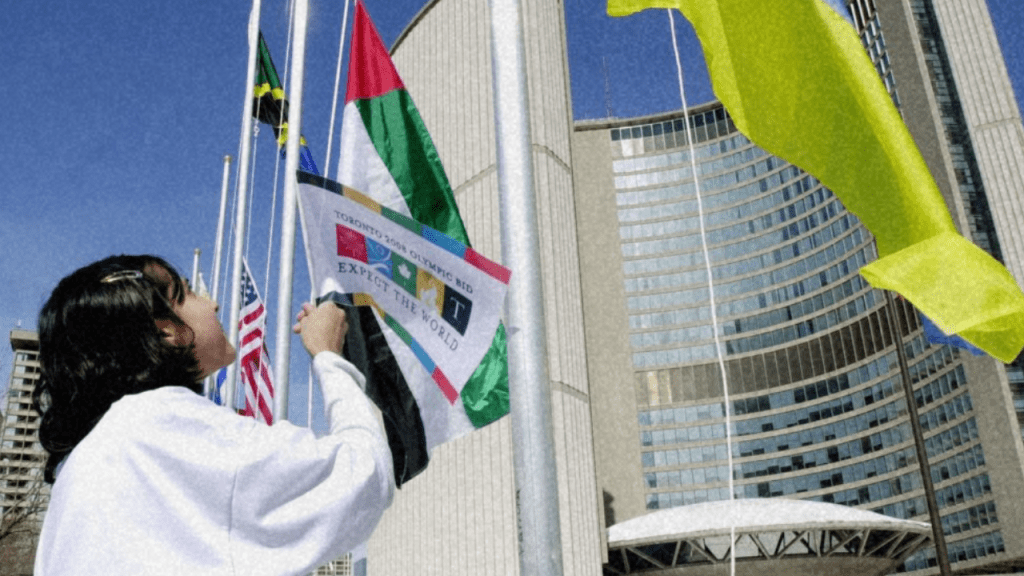
Toronto barred foreign-national flags from City Hall courtesy poles while keeping nonprofit and charitable flags eligible under the city’s policy.
The final policy was narrower than Burnside’s original proposal. Beginning December 1, 2026, foreign-national flags—and flags depicting a foreign nation’s flag—would become ineligible for courtesy poles at City Hall and Toronto’s civic centres. Nonprofit and charitable organizations would remain eligible.
How the Old Policy Worked
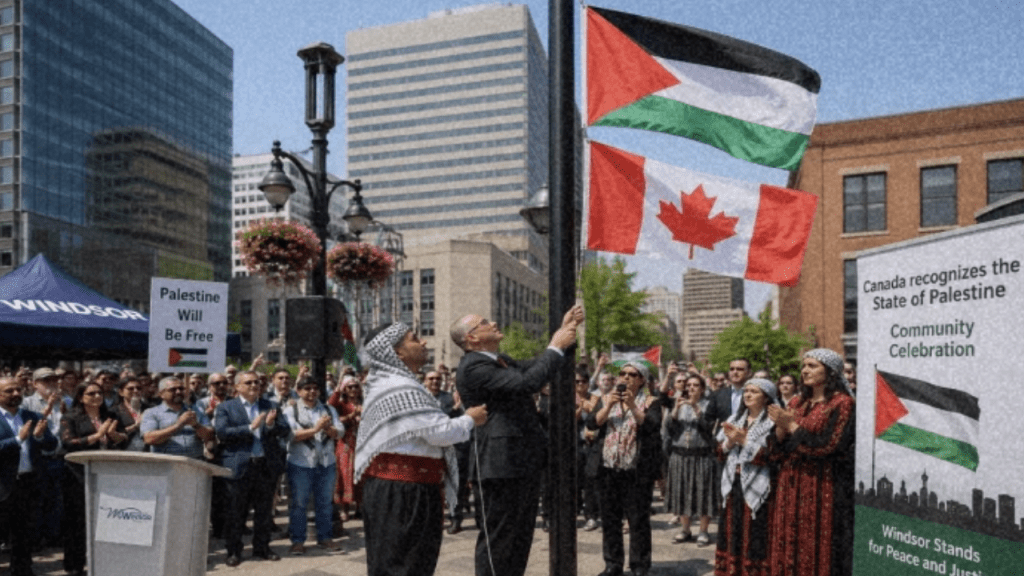
Toronto’s existing policy allowed countries recognized by Global Affairs Canada to request flag raisings. When Canada recognized Palestine on September 21, 2025, Palestine met that criterion. The International Centre of Justice for Palestinians amended its request, the Chief of Protocol approved it, and the flag went up November 17.
Recognition created eligibility. It did not automatically produce a ceremony.
The Proposal Council Rejected
Councillor Jon Burnside’s March 16 motion went further. It would have immediately prohibited foreign-national flags and flags requested by nonprofit or charitable organizations. It also proposed preserving certain City-hosted ceremonies through a separate recommendation.
Council did not adopt that version.
At 5:50 p.m. on March 26, Council passed Councillor Michael Thompson’s amendment. It removed the nonprofit and charitable prohibition, deleted the proposed continuation list, added flags depicting foreign-national flags, and delayed implementation until December 1. One minute later, Council adopted the amended item 19–7.
That distinction mattered because several contemporary accounts described the original proposal as though it were the final policy, obscuring the narrower terms Council ultimately adopted.
A Boundary Around Foreign States
The old system therefore continued through November. After December 1, organizations using a foreign-national flag would lose that municipal route to recognition, while nonprofit and charitable groups retained access.
Council did not give the Chief of Protocol a broader veto. It removed one class of requests from staff discretion by making that category ineligible.
Burnside described some flag raisings as divisive and argued that City Hall should emphasize national unity. Thompson invoked geopolitical conflicts entering local civic space and presented the revised policy as a way to reduce the temperature.
The November Palestine flag dispute formed part of that political environment. But the official Council record does not establish that the Palestine raising alone produced the March policy.
Nor did Council end symbolic recognition. It directed staff to return in early 2027 with a broader program covering flags, the TORONTO sign and other initiatives.
Toronto did not remove politics from City Hall. Council decided which forms of symbolic recognition would remain available, which would disappear and which would be redesigned.
Sources
- City of Toronto, MM39.35 — One Country, One Flag; Celebrating the Canadian Flag, including motions, votes and the March 26 Council debate.
- City of Toronto, original March 16 notice of motion.
- Now Toronto, March 23 interview with Jon Burnside.
- Global Affairs Canada, official record of Canada’s September 21, 2025 recognition of Palestine.
- City of Toronto, 2025 flag-raising schedule.