
U.S. Iran war analysis: the failure is structural — decades of manufactured ignorance and a one-sided historical archive made this outcome predictable.
The War Was Designed Around an Enemy That Does Not Exist
The opening strikes carried a built-in assumption: overwhelming airpower produces psychological shock, shock produces capitulation, capitulation produces terms. The model is familiar. It has been applied before. It did not work here because it was never applied to Iran as Iran actually is — only to the Iran that U.S. strategic culture needed it to be.
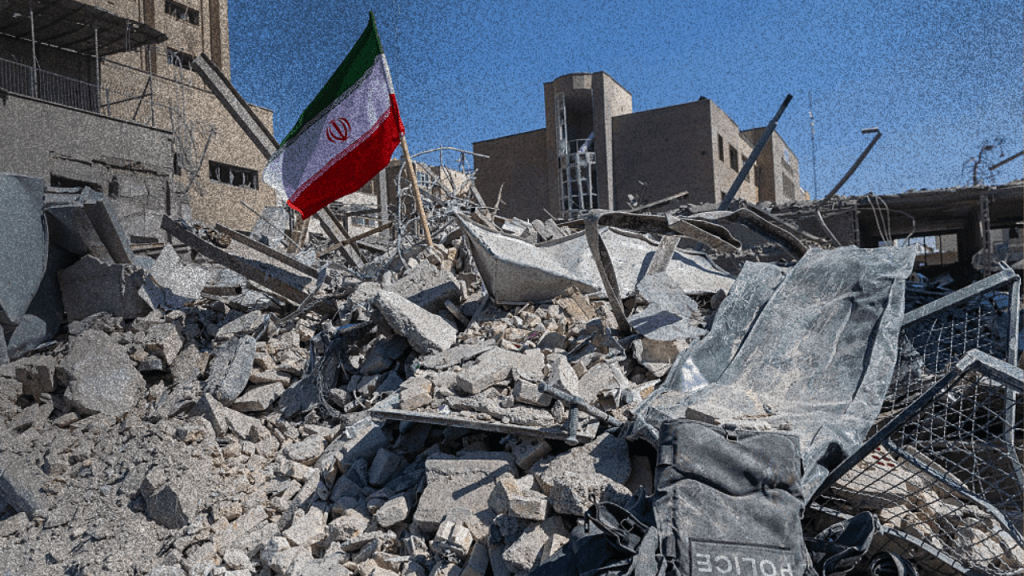
More than two weeks into the conflict that began with U.S. and Israeli strikes on February 28, 2026, the Iranian state has not disintegrated. Its leadership has not fractured. The war has not stabilized. It has widened, deepened, and hardened on both sides. The United States retains the ability to destroy targets at will. That was never the question. Destruction is not victory, and what this conflict has produced instead is the progressive exposure of a strategic framework built on projection rather than analysis. As the Soufan Center documented, Trump and Netanyahu expressed surprise that Iran’s regime did not collapse after Khamenei’s assassination — a surprise that is itself the evidence of the misreading. This is not a failure of execution. The missiles worked. The targeting was accurate. The failure is upstream — a failure of the entire epistemic architecture that Washington uses to think about Iran.
Iran Fights to Expand the Cost, Not to Win Territory
Iran was never going to contest U.S. airpower symmetrically. That was never the doctrine. The strategy is horizontal escalation: energy infrastructure, shipping lanes, regional bases, allied targets. Every strike Washington lands opens a new front somewhere else. Every containment effort creates new exposure. This is not improvisation. It is a coherent strategic framework built around distributed pressure — the imposition of sustained cost rather than the pursuit of decisive battlefield victory.
Washington planned for a different war — one where vertical escalation by the dominant power forces capitulation by the weaker one. That model assumes the weaker party exhausts itself trying to match force with force. Iran has never operated on that assumption. The result is a conflict that cannot resolve on the terms the United States set at the outset, because the United States was not fighting the strategy Iran was actually running.
Decades Without Diplomacy Produced Strategic Projection
The structural problem is not military. It is epistemic. Washington does not understand Iran, and that is not an accident or a recent failure — it is the accumulated result of decades without diplomatic relations, without meaningful cultural or linguistic expertise at the decision-making level, and without institutional mechanisms for producing anything other than ideologically pre-filtered intelligence.
In place of knowledge, there is a substitute: projection. Iran is described as irrational, erratic, driven by fanaticism. Its leadership is framed as unstable, its decision-making as opaque. This framing serves a function — it exempts Washington from having to explain its own failures. If the adversary is irrational, then failed predictions are anomalies, not evidence of a broken analytical framework. The feedback loop is self-sealing: misunderstanding produces bad assumptions, bad assumptions produce failed outcomes, failed outcomes reinforce the belief that Iran is simply incomprehensible. What Washington reads as unpredictability is, in almost every case, unfamiliar logic operating within a coherent strategic framework shaped by history, threat perception, and survival. Iran understands deterrence. Iran understands escalation. Iran understands the balance between risk and restraint. Washington cannot name this without dismantling its own narrative architecture.
The U.S. Archive on Iran Starts in 1979 and Skips the Rest
In the United States, the relationship with Iran begins with the hostage crisis. 1979 is the origin point, the defining trauma, the justification that persists across administrations and party lines. It is taught, repeated, embedded. Everything before it is treated as irrelevant context.
What disappears is the archive Iran actually holds. The 1953 CIA-assisted coup that overthrew elected Prime Minister Mohammad Mossadegh after he nationalized Iran’s oil industry — a role the CIA itself officially acknowledged in a 2013 document release. The U.S. support for Iraq during the Iran-Iraq War, including the provision of intelligence used to direct chemical weapons attacks. The shooting down of Iran Air Flight 655 on July 3, 1988 — a civilian airliner carrying 290 people over Iranian territorial waters, misidentified by USS Vincennes as a fighter jet, with all passengers killed. No apology followed. The commander of the Vincennes received a commendation medal. These events are not obscure. They are foundational to Iranian political identity. When each side speaks about history, it is not contradicting the other — it is referring to a different archive entirely. This is why every diplomatic initiative collapses so easily. It is not bad faith. It is two parties who are not addressing the same history.
The Strikes Are Consolidating Hardliners, Not Moderates
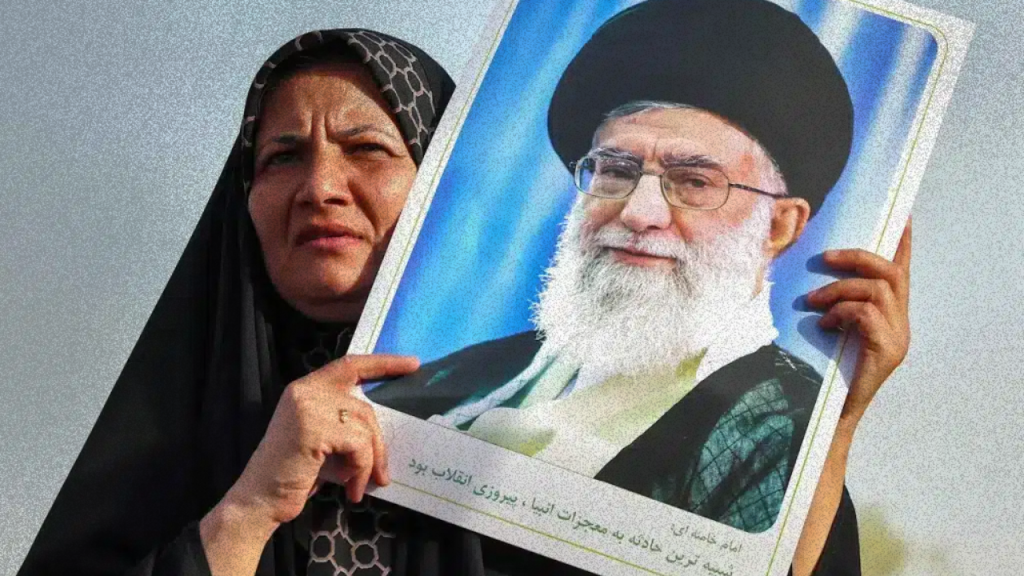
The war was supposed to weaken the Iranian system. It is doing the opposite. Washington Post reporting documents what U.S. officials themselves now predict: a weakened but more hardline government in Tehran, backed by the IRGC. The assassination campaign targeting Iranian leadership has eliminated the figures most capable of navigating negotiation or strategic flexibility — and replaced them not with moderates but with individuals whose institutional formation is entirely military. As the Stimson Center confirmed, Israel’s assassination campaign led to the promotion of IRGC veterans who are likely to prove more hostile to the U.S. and less nimble in negotiating an end to the war. Trump himself announced on March 24 that the U.S. and Israel had achieved “regime change” — while the leaders who replaced the previous government are uniformly more hardline than those they succeeded.
This is a general rule of war, not a peculiarity of Iran. When a state is under sustained external attack, power flows toward those who control force. Civilian influence contracts. Military authority expands. Decision-making narrows. Ideology hardens. As Al Jazeera reported, hardline elites — led by IRGC commanders who were first to pledge allegiance — dominated the consolidation around Mojtaba Khamenei as Supreme Leader, and the appointment signals that hardline factions retain power with “little desire to agree to a deal or negotiations in the short term.” The expectation that pressure would produce a more democratic or more negotiable Iran was always detached from how states actually behave under attack. The war is not dismantling the regime. It is reorganizing it on more hostile terms.
Both Sides Win on Their Own Terms — No Resolution Follows
The United States measures success in destroyed infrastructure, degraded capabilities, and operational dominance. Iran measures success in survival, endurance, and the capacity to impose costs. These are not competing metrics. They are parallel ones. Each side can continue to win indefinitely without resolving the conflict, because the definition of victory on each side does not require the other side to stop.
This is the escalation trap. If victory does not require settlement, then settlement becomes structurally unnecessary. If settlement is unnecessary, then escalation becomes the only remaining logic — each action demands a response, each response justifies the next action. There is no off-ramp because neither side sees a structural incentive to take one. This is the most dangerous phase of any war: not the moment of initial escalation, but the moment when escalation becomes self-sustaining, when the architecture of the conflict itself reproduces the conditions for its own continuation.
The War Is Building the Rational Case for an Iranian Bomb
The risk of immediate nuclear weapons use remains low. That is not the point. As the Arms Control Association stated before the strikes began: another wave of attacks on Iran would “strengthen the argument inside Iran that only possessing nuclear weapons can protect the state.” That argument is now being made in real time, in rubble. IAEA Director General Grossi confirmed on March 2 that there was “no structured program to manufacture nuclear weapons” at the time of the strikes — meaning the war was not launched to stop an imminent nuclear threat. It was launched against a non-nuclear state, which is now being given the clearest possible argument for becoming one.
The calculus shift is the story. For years, the pursuit of a nuclear deterrent was constrained by internal debate, strategic ambiguity, and Khamenei’s fatwa against nuclear weapons. That constraint erodes in direct proportion to the failure of conventional deterrence. If external attack cannot be prevented, if regime survival is no longer guaranteed by existing capabilities, then the argument for a nuclear deterrent becomes not ideological but practical. The war is not preventing proliferation. It is constructing the rational case for it.
The War Is Producing the Iran That Justified the War
The most precise description of this conflict’s internal logic is this: Washington is not just fighting Iran. It is producing the Iran it claims to be fighting. Iran resists, so it is framed as defiant. Iran escalates asymmetrically, so it is framed as destabilizing. Iran hardens internally, so it is framed as irredeemable. Each outcome is treated as confirmation of the original premise rather than the direct result of the actions taken. The cycle is self-sealing. The misreading generates the behavior that appears to validate the misreading.
This is not unique to Iran. It is the standard operating procedure of imperial war-making — manufacture the threat, attack the threat, produce the conditions that make the threat more real, cite the now-more-real threat as justification for continued attack. The same structure operates across every theater where Washington designates an adversary. The war does not end because ending it would require admitting that the original premise was wrong — and the entire political and institutional architecture of U.S. foreign policy is organized around never admitting that.
Sources
- Washington Post — U.S. intelligence says Iran’s regime is consolidating power, March 2026
- Soufan Center — Iran’s Power Structure Adapts to War, March 2026
- Stimson Center — Iran’s Not So New Leaders May Strike a Hard Bargain, March 2026
- Al Jazeera — World reacts to appointment of Mojtaba Khamenei as Iran’s supreme leader, March 2026
- Arms Control Association — Trump’s Chaotic and Reckless Iran Nuclear Policy, February 2026
- Arms Control Association — Did Iran’s Nuclear and Missile Programs Pose an Imminent Threat? No., March 2026
- Wikipedia — Iran Air Flight 655
- Wikipedia — 1953 Iranian Coup d’État




 Spark Solidarity