
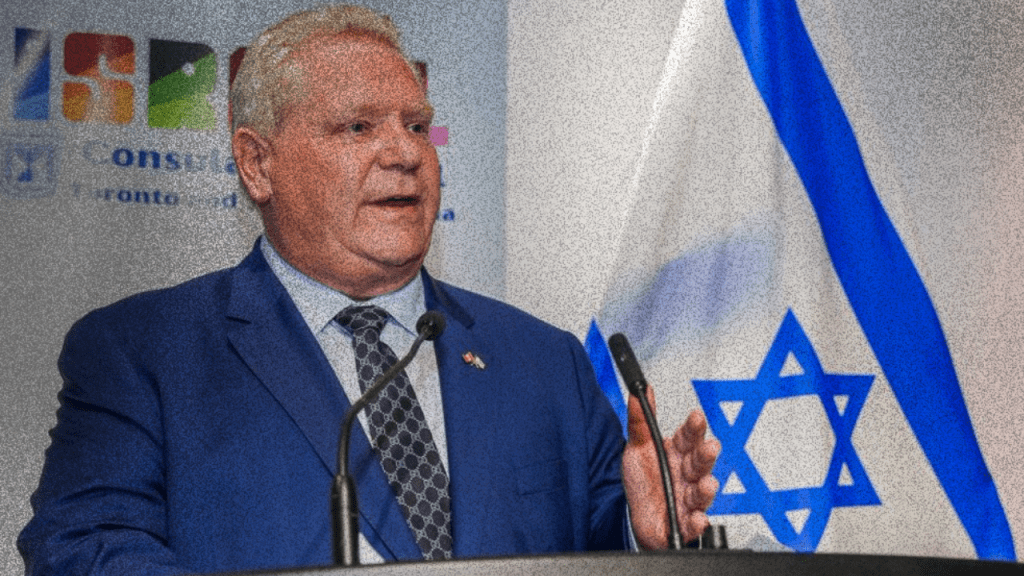
Al-Quds Day Toronto has run for 30 years without a criminal charge. Doug Ford tried to ban it using synagogue shootings as justification. A court looked at the evidence and said no.
Ford Files Injunction Hours Before the Rally Starts
On the morning of March 14, 2026, with the Al-Quds Day rally scheduled to begin at 3 p.m., Doug Ford instructed Ontario’s Attorney General to file an emergency injunction to stop it. The paperwork was filed at noon — three hours before the event. Ford’s stated justification was public safety, framed against the backdrop of three Toronto-area synagogue shootings in the preceding two weeks. “This demonstration is nothing more than a breeding ground for hate and antisemitism,” Ford said in a video posted to social media. “It glorifies violence. It celebrates terrorism. It has no place in Ontario.”
Superior Court Justice Robert Centa heard the application and dismissed it just after 2 p.m. — less than an hour before the rally began. His reasoning was direct: there was no evidence of criminal charges arising from the Al-Quds rally in Toronto in any of its 30 years, no evidence that participants had incited hatred or engaged in hate speech at prior events, and no evidence the police themselves considered the injunction necessary to preserve the peace. The province had not met the legal test. The rally proceeded.
The Synagogue Shootings Became the Justification
The political context Ford was working from: between March 2 and March 7, gunfire hit three Toronto-area synagogues. No one was injured in any of the three incidents. Buildings were damaged. No arrests were made. No perpetrators identified. No motive established. The investigations remained open. Ford used these unresolved incidents — in which the only confirmed facts were property damage and unknown perpetrators — as evidence that a pro-Palestinian rally posed a public safety threat requiring court suppression.
The logic requires scrutiny. The synagogue shootings had no established connection to Al-Quds Day organizers, participants, or the Palestinian solidarity movement broadly. The province did not allege any such connection in its court application. What it alleged was that the rally is historically associated with antisemitic rhetoric, that it was started by the Iranian revolutionary government in 1979, and that a designated terrorist organization, Samidoun, had promoted it on social media. The judge found that a single social media post from Samidoun promoting Al-Quds Day events globally did not establish organizational involvement. The province’s evidentiary record, the court found, amounted to fearmongering rather than grounds for an injunction.
This Is Ford’s Longest-Running Attempt to Ban the Rally
Ford’s first promise as premier in 2018 was an outright ban on Al-Quds Day. He has made versions of this effort every year since. This year he found the political conditions he needed: a wartime atmosphere, synagogue shootings with no suspects, and a public primed to accept that pro-Palestinian expression and antisemitic violence belong in the same sentence. The Canadian Civil Liberties Association called the injunction attempt “an extraordinary and dangerous step” that threatened Charter-protected freedoms. Rally organizers called it politically motivated. The court, implicitly, agreed — the province had waited until the day of the event to file, suggesting urgency was manufactured rather than genuine.
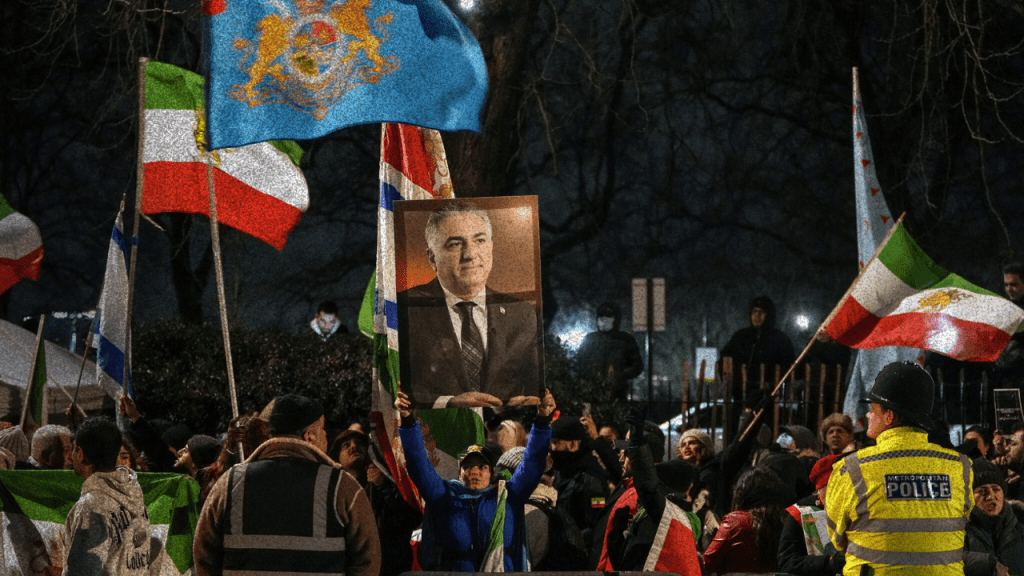
The British government banned Al-Quds Day in London this year, at police request. Ford wanted Canada to follow. The court prevented it — this time. But the infrastructure of the attempt remains: the framing that links Palestinian solidarity to antisemitic violence, the willingness to use emergency legal mechanisms to suppress protest, and the political capital Ford gains even in defeat by positioning himself as the defender of Jewish communities against a threat he helped construct.
The Rally Ran. The Pattern Continues.
Thousands attended the March 14 rally outside the U.S. Consulate. Toronto police estimated 4,500 people. Two arrests were made — both, police indicated, were counter-protesters. The rally itself produced no criminal incidents. This is consistent with its entire 30-year history in Toronto, which the court noted explicitly.
What the injunction attempt produced, regardless of outcome, was the consolidation of a narrative: that pro-Palestinian protest is presumptively dangerous, that emergency legal suppression is a legitimate tool to deploy against it, and that unresolved criminal incidents — in this case, synagogue shootings with no identified perpetrators — can serve as justification for curtailing Charter rights. The court said no this time. The argument will return. It always does. Just as security failures never produce accountability for the institutions that failed — they produce expanded authority for those same institutions to try again.
Sources
- CBC News — Al-Quds Day rally proceeds after Ford injunction rejected, March 14, 2026
- CP24 — Toronto Al-Quds rally underway after judge dismisses Ford’s injunction bid, March 14, 2026
- Global News — Al-Quds Day protest proceeds after court rejects Ford’s injunction bid, March 14, 2026
- Globe and Mail — Judge dismisses Ontario’s request for injunction against Al-Quds Day, March 14, 2026
- Jewish Telegraphic Agency — Two Toronto-area synagogues hit with gunfire on Shabbat, March 9, 2026




 Spark Solidarity