
US strikes Iranian water plant, violating Geneva Conventions, triggering Gulf-wide retaliation targeting desalination infrastructure critical to civilian survival.
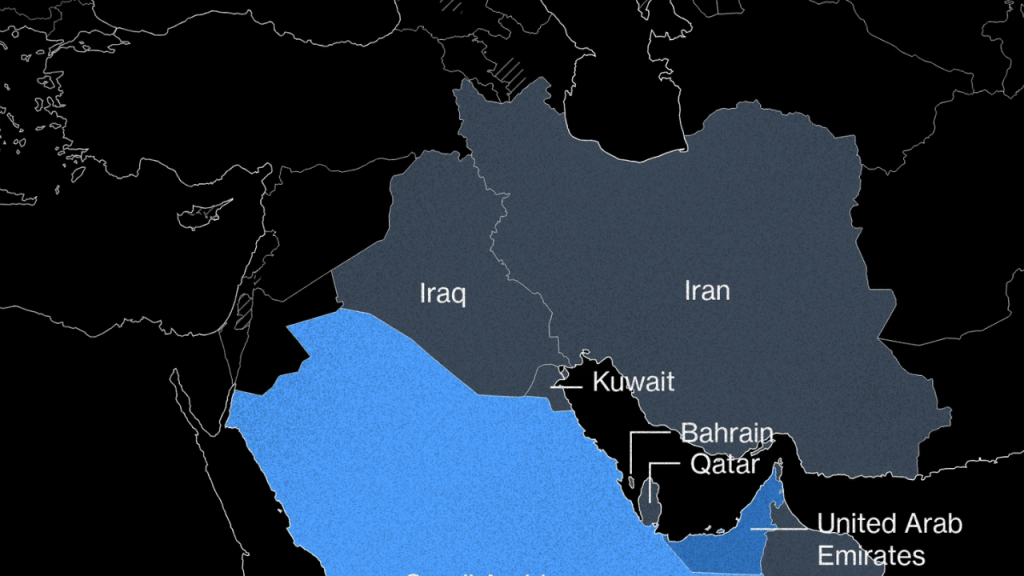
Iranian Foreign Minister Seyed Abbas Araghchi announced March 7 that the United States attacked a freshwater desalination plant on Qeshm Island, disrupting water supplies to 30 villages. The strike constitutes a war crime under Article 54 of Additional Protocol I to the Geneva Conventions, which prohibits attacks on “objects indispensable to the survival of the civilian population, such as… drinking water installations and supplies.”
The United States has not confirmed the strike. This is procedurally irrelevant. Iran’s government statement establishes the attack for record. The Rome Statute Article 8(2)(b)(xxv) criminalizes intentionally depriving civilians of objects indispensable to survival. Whether the US acknowledges the action does not alter its legal character.
The more important question is why. Operation Epic Fury launched on February 28 with what seemed to be a familiar objective: decapitate Iranian leadership, trigger internal collapse, and install a successor government before Iranian retaliation could be organized.
Eight days in, that objective has not materialized. The Islamic Republic has not collapsed. The Islamic Revolutionary Guard Corps has not fragmented. No uprising capable of producing regime change has emerged. The decapitation strategy has failed to produce the rapid political disintegration it was designed to trigger.
The strike on Qeshm’s desalination facility therefore cannot be treated as incidental. It signals a transition from one phase of coercion to another. When leadership removal fails to fracture a state, the next lever historically used by militaries has been pressure on the civilian environment that sustains it.
This logic is not new. It closely resembles the strategic model Israel applied during the 2006 Lebanon War, where Israeli planners openly articulated what became known as the Dahiya Doctrine.
The doctrine held that overwhelming destruction of infrastructure in areas associated with militant actors could impose such severe costs on the surrounding population that internal political pressure would be directed against those actors.
During that war, Israeli strikes targeted bridges, roads, power stations, and entire urban districts in Lebanon, particularly the Beirut suburb of Dahiya, a stronghold of Hezbollah. The strategic premise was explicit: civilian hardship would translate into political pressure against the militant organization embedded within that society.
The alleged strike on the desalination plant follows the same coercive logic. Water infrastructure is not simply a utility; it is a structural dependency. Disrupting it does not directly defeat a military force. Instead, it produces cascading civilian hardship that alters the political environment around that force.
In this framework, the objective shifts from immediate regime collapse to the slower manufacturing of instability from below. Civilian suffering becomes the instrument through which strategic pressure is applied. Whether framed as collective punishment or coercive deterrence, the mechanism is the same: damage the systems that sustain daily life until political pressure emerges internally.
The Qeshm strike therefore marks a potential pivot in the operational logic of the campaign. The initial phase sought rapid decapitation. The emerging phase appears designed to reshape the political battlefield by making ordinary life increasingly untenable for the population the state governs.
Iran’s retaliation makes Gulf infrastructure the battlefield
Iran read the Qeshm strike immediately and responded in kind. Bahrain’s Interior Ministry confirmed March 8 that an Iranian drone strike damaged a desalination plant inside Bahrain — the first Gulf state to publicly acknowledge such an attack.
The Associated Press independently verified the claim. Araghchi’s framing was precise: the US “set this precedent, not Iran.” Reports from Arab News and CNBC indicate similar strikes targeted desalination infrastructure in Kuwait, Saudi Arabia, and the UAE, though official confirmation from those states has not emerged.
This is not tit-for-tat retaliation in any ordinary sense. It is a strategic message delivered simultaneously to every Gulf state hosting US bases: your civilian infrastructure is now part of this war. Saudi Arabia derives 70 percent of its drinking water from desalination.
The UAE figure is 42 percent. Kuwait: 90 percent. Oman: 86 percent. Dubai alone sources 90 percent of its municipal water from the single Jebel Ali plant. This creates structural vulnerability unmatched elsewhere — no redundancy, no backup, immediate humanitarian crisis if the plant goes down.
Iran has just demonstrated it can reach these targets. The question it is forcing Gulf leaders to answer is whether continued US basing is worth what comes next.
Israel faces the same exposure. Its coastal desalination plants supply 70-86 percent of the state’s potable water. By normalizing attacks on civilian water infrastructure in Iran, the US has removed any tactical or legal barrier preventing Iran from targeting Israeli facilities in kind.
The economic asymmetry compounds everything: a $20,000 drone destroys infrastructure requiring billions to replace or forces the expenditure of $5 million Patriot interceptors to stop. Neither the US nor its Gulf partners can sustain that ratio indefinitely.
Interceptor depletion forces the search for ground solutions
The interceptor problem predates this war. The US has supplied Ukraine with air defence munitions for three years while maintaining the flow of Israeli Iron Dome munitions.
According to recent reporting from Reuters, U.S. officials are considering shifting air defence assets to sustain operations in the Middle East.
Reuters reported that Washington and Seoul have discussed the possible redeployment of U.S. Patriot missile defence systems stationed in South Korea to support Gulf operations as demand for interceptors rises.
At the same time, other defence reporting has noted that major arms manufacturers were called to the White House to discuss accelerating weapons production as military operations draw down existing inventories.
Analysts and policymakers cited in those reports have warned that U.S. stockpiles, originally structured around the assumption of sequential conflicts, are now being strained by simultaneous demands across multiple regions, including Europe, the Middle East, and East Asia.
This mirrors Britain’s 1915 munitions crisis, when privatized supply chains nearly collapsed Western Front artillery capacity. The United States has not operated a command economy geared toward total war production since 1945. Neoliberal privatization of defense manufacturing prioritizes profit margin over surge capacity.
The result is a global empire structurally unable to sustain air defense across its own commitments.
While air campaigns can devastate infrastructure and degrade military capacity, history shows they rarely topple governments on their own. With this basic lesson of modern warfare in mind, it is safe to assume that air power alone will not collapse the Islamic Republic.
With interceptor stockpiles thinning and a direct war with Iran politically and militarily untenable, Washington is turning to the familiar fallback of proxy ground pressure.
Instead of American troops or sustained air defense, the strategy shifts to the covert layer: arming Kurdish militants to open an internal front that can pin down Iranian forces, fragment the state’s defensive capacity, and potentially carve out territory along the western border.
It is the same proxy logic that has defined decades of U.S. regional strategy — creating pressure inside an adversary without formally entering the war.
US and Israeli war goals have already diverged
Djene Rhys Bajalan, a historian of the modern Middle East and associate professor at Missouri State University who studies Kurdish politics and state formation in the region, outlined a key strategic contradiction on a recent episode of the American Prestige podcast.
Bajalan argued that the fundamental fault line in Western strategy toward Iran lies in the divergent goals of the United States and Israel. In his analysis, Washington has historically pursued a regime-decapitation model followed by a negotiated transition, similar to the approach attempted in Venezuela, removing the Supreme Leader while leaving core state institutions such as the IRGC intact under a more compliant leadership.
Israel’s strategy, by contrast, is aimed less at managed transition and more at systemic collapse, pushing Iran toward internal fragmentation or civil conflict that would permanently cripple its ability to project regional power regardless of who governs.
Trump’s comment that the US “had some alternatives but they’ve all been killed” confirms Israeli strikes eliminated potential US-compatible successors during early decapitation operations.
Meanwhile, renewed talk of restoring the Pahlavi monarchy would almost certainly ignite civil war. Azeri, Kurdish, and Baloch movements, along with remaining IRGC networks, have little reason to rally behind a monarchist project and plenty of material grievances tied to Persian nationalist rule.
In that context, the fragmentation of Iran serves Israeli regional strategy far more effectively than the emergence of any stable successor regime.
The US has ceded strategic initiative to a partner whose definition of victory is incompatible with US post-war goals.
Iran is reading this divergence in real time. Iranian drones and missiles are not aimed randomly — they are targeted at the pressure points most likely to fracture the coalition holding the war together. Bahrain’s desalination plant is a message to the Gulf states. Strikes on Kurdish bases in Iraq are a message to Baghdad.
The Shiite militia escalation against US positions in Iraq is a lever on the Iraqi government, which is being squeezed between US demands for compliance and Iranian threats of consequences.
Baghdad is the hinge. If Iraq moves formally toward demanding US withdrawal, the entire US regional basing structure collapses — not because of Iranian military victory but because the political cost of maintaining bases becomes prohibitive for the Iraqi state.
Iranian resilience: the regime survives civilian pressure
The Islamic Republic faces decimated leadership, economic siege, and internal legitimacy crisis. None of this produces military collapse. Iran’s geography makes ground invasion logistically impossible without Turkish participation. The Revolutionary Guard and Basij provide armed cadre with 47 years of siege mentality indoctrination.
Unlike Iraq’s coup-based Ba’ath regime or Syria’s minoritarian Alawite structure, Iran’s theocratic system has mass organizational depth built through war communism since 1980. Even if Baloch separatists seize Sistan desert territory or Kurdish forces control western provinces, the core state apparatus in Tehran, Qom, and Isfahan remains defensible. Iranians angry at hijab enforcement or economic mismanagement do not automatically translate into support for US bombing campaigns or Pahlavi restoration.
The IRGC does not require popularity to maintain control — only guns, organization, and external threat to justify repression.
Turkey is the only regional military capable of ground invasion sufficient to remove the Islamic Republic — and Turkey will not move without a price the US has not offered. Erdoğan’s calculus is transactional: Turkish intervention requires US concessions on Kurdish autonomy in Syria, sanctions relief, F-35 sales restoration, and a free hand in Cyprus.
If the Islamic Republic approaches collapse, Turkey is more likely to occupy Iranian Azerbaijan and Kurdistan to prevent refugee flows and Kurdish state formation than to rescue US strategic goals. The one actor who could make the ground strategy work has no incentive to do so on American terms.
Dubai’s model is broken and Gulf states face a binary choice
Extending this broader regional instability to the Gulf’s economic centers, Dubai’s post-oil model rests almost entirely on a single commodity: the perception of secure luxury. Its economy depends on projecting itself as a safe hub for finance, real estate speculation, and influencer-driven lifestyle branding.
That perception shattered on March 2 when Iranian strikes reportedly landed just 12 miles from Jebel Ali. With roughly 90 percent of its water dependent on desalination from a single plant, the city is uniquely exposed. Influencers have already begun to leave.
Financial capital follows threat assessment, not marketing. The Gulf states constructed their entire diversification strategies — banking, tourism, logistics — on the assumption of US security guarantees. That assumption is now materially disproven.
Gulf leaders now face a binary choice with no good option. Continue hosting US bases and absorb infrastructure destruction — desalination plants, oil facilities, airports — for the duration of a war with no defined endpoint. Or pursue independent détente with Iran, accept diminished US patronage, and negotiate a separate peace that removes the targeting logic Iran has now established. Neither option is comfortable.
The first option means exposing Gulf civilians to a war their governments did not choose. The second means breaking with Washington at the moment of maximum American pressure. Iran has deliberately engineered this dilemma.
By relying on mass-produced drones that cost roughly $20,000 each, Tehran can sustain pressure cheaply while imposing vastly higher defensive costs on its neighbours hosting U.S. bases.
At that price point, Iran can keep the pressure constant, while Gulf states face defensive costs that quickly become economically and politically unsustainable.
This imbalance highlights a deeper problem with the broader strategy now unfolding: there is no coherent endgame.
Destruction is the policy and the water precedent is set
The 2003 invasion of Iraq was built on a lie, but it was still organized around a defined regime-change project: dismantle the Ba’ath Party, install Ahmed Chalabi, privatize Iraqi oil, and establish permanent American bases. The justification was fraudulent and the project ultimately collapsed, but the architecture of power transfer was clearly articulated.
Nothing comparable exists in the current Iran operation. There is no occupation authority waiting in the wings, no provisional government in exile with administrative capacity, and even the nuclear negotiating team sent to early talks lacked personnel with nuclear expertise. What exists instead is pressure without a political end state.
The United States cannot install a stable successor regime, cannot launch a ground invasion, and cannot sustain air defense across multiple simultaneous theaters.
Strategic initiative has effectively shifted to Israel, whose objectives do not fully align with Washington’s remaining regional priorities. The result is strategic incoherence: violence without an exit.
The Islamic Republic is unlikely to capitulate while it retains missile forces and an intact command structure. Gulf states are learning that American protection is conditional and inconsistent. Israel has gained operational freedom but now faces the long-term problem of instability on its eastern flank.
The strike on water infrastructure at Qeshm emerges from this strategic vacuum. When air power fails to produce political outcomes, civilian infrastructure becomes the lever of pressure. The logic is familiar from earlier wars, but the context is different: the Gulf’s extreme dependence on desalination and the precision of Iranian drone warfare raise the stakes dramatically.
Whoever governs Tehran after this conflict ends, one precedent will remain. The targeting of civilian water systems has been normalized as a legitimate instrument of war. That precedent will not disappear when this conflict ends. Every future war in the region will inherit it.





 Spark Solidarity