
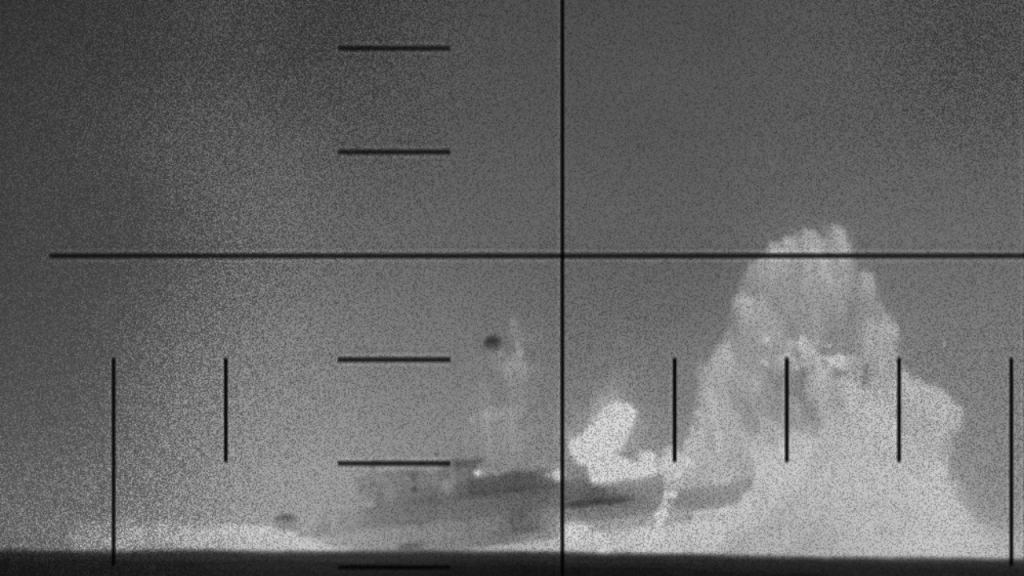
IRIS Dena sinking: a U.S. submarine torpedo killed 87 Iranian sailors seven days after the frigate trained alongside American forces at MILAN 2026.
On March 4, 2026, a U.S. Navy fast-attack submarine fired a Mark 48 torpedo into the Iranian frigate IRIS Dena roughly 25 miles south of Sri Lanka. The ship carried 180 crew. Eighty-seven bodies were recovered by Sri Lankan forces. Thirty-two survivors reached Galle National Hospital. Around sixty sailors remain unaccounted for. Defense Secretary Pete Hegseth confirmed the strike from the Pentagon: “An American submarine sunk an Iranian warship that thought it was safe in international waters. Instead, it was sunk by a torpedo. first torpedo kill.”
The IRIS Dena had sailed from Visakhapatnam, India on February 25 — the closing day of Exercise MILAN 2026 and the concurrent International Fleet Review, hosted by the Indian Navy with 74 participating nations. It was en route home when the torpedo struck. The U.S. made no attempt to rescue survivors. The ship had participated in anti-submarine warfare drills alongside American reconnaissance aircraft just days earlier. Iranian Navy Rear Admiral Shahram Irani had met India’s Chief of Naval Staff during the exercise. The crew marched in Visakhapatnam’s city parade on February 18. Sixteen days later they were dead.
IRIS Dena: MILAN 2026 as Intelligence Cover
The U.S. did not send a surface warship to MILAN 2026. Its official presence was a single P-8A Poseidon maritime patrol and reconnaissance aircraft from Patrol Squadron 4, which participated in anti-submarine warfare drills alongside Iranian and other foreign vessels. The guided-missile destroyer USS Pinckney was withdrawn from the exercise on February 15 — before it began — for reasons the Navy has not disclosed. The operational logic requires naming: a P-8A Poseidon is not a diplomatic gesture. It is a signals intelligence platform.
Its participation in MILAN drills alongside the IRIS Dena provided real-time acoustic signatures, crew procedures, communication protocols, and navigational patterns for an Iranian vessel that would be transiting those same waters days later. The exercise created legal and diplomatic cover for reconnaissance. Once the IRIS Dena cleared Indian waters and reverted to enemy combatant status under Washington’s operational rules, that intelligence became targeting data. The multilateral framework served its purpose and was discarded.
This is how multilateral institutions function under U.S. hegemony — as platforms for intelligence collection and positional advantage, not genuine security cooperation. The fiction of partnership holds until it is no longer operationally useful.
How Warship Status Launders the IRIS Dena Strike
The Pentagon’s legal position is internally coherent: the IRIS Dena was a commissioned military warship; the U.S. and Iran are in active armed conflict under Operation Epic Fury; warships are legitimate military targets regardless of immediate combat engagement. Under the law of armed conflict as Washington interprets it, the strike required no additional justification. A warship underway in international waters during declared hostilities is targetable. The warship designation alone does the legal work.
What that designation erases is the operational context. The IRIS Dena had concluded cooperative training seven days before the strike. According to MILAN protocol and Iranian sources, the ship may have been in “peace protocol” — operating without live weapons — as exercise rules required. Iranian Foreign Minister Abbas Araghchi stated the Dena was “unarmed and in a regular maneuver at sea.” It was transiting 2,000 miles from Iran’s shores, not operating in any theater of active naval confrontation.
The attack occurred in waters falling under U.S. 7th Fleet’s Indo-Pacific area of responsibility — not CENTCOM’s 5th Fleet battlespace in the Arabian Sea, where Operation Epic Fury is concentrated. The strike extended the war into a new theater specifically to reach a vessel that had left the conflict zone.
The Belgrano precedent is circulating in Western commentary. In 1982, HMS Conqueror sank the Argentine cruiser ARA General Belgrano outside Britain’s declared exclusion zone while the ship sailed away from the Falklands. The Royal Navy maintained the vessel posed a threat to its task force. The parallel logic is identical: warship designation plus declared conflict plus claimed future threat equals legal strike, regardless of the ship’s actual posture or trajectory. This is lawfare, not law — the application of legal frameworks by dominant powers to justify actions that would be prosecuted as war crimes if performed by adversaries.
Iran torpedoing a U.S. destroyer departing Bahrain after a port call would not be framed as a legitimate military strike. It would be terrorism. The asymmetry is imperial.
The domestic media function is to ensure that asymmetry is never examined. When Araghchi condemned the strike, Fox News host Sean Hannity responded: “Their foreign minister is whining after a U.S. submarine took out their destroyer with a torpedo. What did he expect during a military conflict that they start?”
This framing performs two moves. It accepts wholesale that Iran started the conflict — which requires ignoring that Operation Epic Fury was initiated by U.S.-Israeli strikes following the assassination of Supreme Leader Khamenei on February 28. And it dismisses diplomatic protest as emotional weakness, making it impossible to raise what Araghchi actually said: that the vessel was unarmed, 2,000 miles from the conflict zone, and had just participated in a multilateral exercise with U.S. forces. Hannity’s line is not commentary on the strike. It is the mechanism by which the strike’s legal and strategic questions are made unspeakable for a mass audience.
IRIS Dena and Iran’s Naval Annihilation
CENTCOM commander Admiral Brad Cooper stated the objective plainly: the U.S. is focused on “sinking the Iranian Navy — the entire Navy.” General Dan Caine reported at the same Pentagon briefing that American forces had destroyed more than twenty Iranian naval vessels and one submarine since Operation Epic Fury began on March 1. The IRIS Dena’s two sister ships, Jamaran and Sahand, were destroyed in the campaign. The strike on the Dena is not an isolated incident. It is one data point in a systematic operation — and the fact that it reached 2,000 miles from Iran’s shores into the Indian Ocean signals there is no geographic limit to where that operation applies.
The implications for non-aligned states are direct. India spent years building MILAN into a cornerstone of its Indian Ocean maritime diplomacy, presenting itself as a stabilizing neutral presence. The sinking of a vessel that departed that exercise under Indian diplomatic hospitality — before India could publicly acknowledge the ship’s destruction — places New Delhi in a position it has not resolved. Sri Lanka, which evacuated survivors to Colombo, declared neutrality. The message the strike sends to every navy that participates in multilateral exercises with the United States: proximity to American military frameworks confers no protection when Washington decides an operational objective supersedes the relationship. This mirrors the logic of leveraging institutional access for intelligence and operational advantage.
AUKUS Put Australians Inside the IRIS Dena Strike
After the strike, the Australian Prime Minister confirmed that three Australian Defence Force personnel were aboard the U.S. submarine when it fired the torpedo. The government’s position was that they participated under AUKUS training arrangements, followed Australian rules of engagement, and took no offensive role.
That framing does not survive scrutiny. Three personnel from a non-belligerent nation were present on a warship that committed a lethal act of war against another state. Whether they performed an offensive function is operationally irrelevant to the question of whether Australia is now a co-combatant in an undeclared war.
No Australian parliament voted to authorize participation in Operation Epic Fury. No congressional authorization exists on the American side either. AUKUS — structured as a defense industrial and technology-sharing arrangement — functioned in its first live test as a pipeline for co-combatant status without democratic authorization. The framework sold to the Australian public as submarine capability transfer placed Australian personnel inside an offensive strike against a vessel 2,000 miles from any declared theater, in waters Australia has no treaty obligation to contest, in a conflict its legislature never sanctioned.
Australia was also present at MILAN 2026. The multilateral exercise framework that enabled the intelligence collection and the AUKUS framework that embedded allied personnel in the strike are not separate phenomena. They are the same operational logic applied at two different levels.
IRIS Dena Sinking Sets Imperial Precedent
This is the first time a U.S. submarine has sunk a warship by torpedo since World War II. The last American submarine kill was USS Torsk on August 14, 1945 — the day before Japan’s surrender. The last time any nuclear-powered submarine sank a surface vessel was HMS Conqueror in 1982. The historical weight is not incidental to how Washington framed the strike. Hegseth’s “Quiet death” line was not operational communication. It was a message — to Iran, to the region, and to every state that maintains surface naval assets it would like to believe are protected by distance or diplomatic context.
The precedent established is specific: multilateral exercises are intelligence operations. Warship designation is sufficient legal cover for strikes anywhere on the planet during declared hostilities. Distance from a conflict theater provides no sanctuary. Allied personnel can be embedded in offensive operations through technology-sharing frameworks without parliamentary authorization.
Imperialism as defined by Lenin centers on the export of capital backed by military coercion — the capacity to reach anywhere and destroy what threatens accumulated advantage. The IRIS Dena was not a threat to American territory. It was a threat to the completeness of Iran’s naval annihilation, and it was transiting 2,000 miles away. That was sufficient. The “Quiet death” framing is not a boast about tactical sophistication. It is a statement about what impunity looks like when it operates without consequence — and when the governments and media ecosystems of allied states are structured to ensure the consequences never get named.
Sources
- Al Jazeera. Al Jazeera live report. March 4, 2026.
- USNI News. USNI torpedo kill report. March 4, 2026.
- Military.com. Military.com Dena analysis. March 4, 2026.
- Military.com. MILAN exercise context. March 5, 2026.
- CNN. CNN legal analysis piece. March 5, 2026.
- TRT World. TRT World Dena coverage. March 2026.
- Wikipedia. Sinking of IRIS Dena. March 2026.
- Wikipedia. International Fleet Review 2026.






 Spark Solidarity