
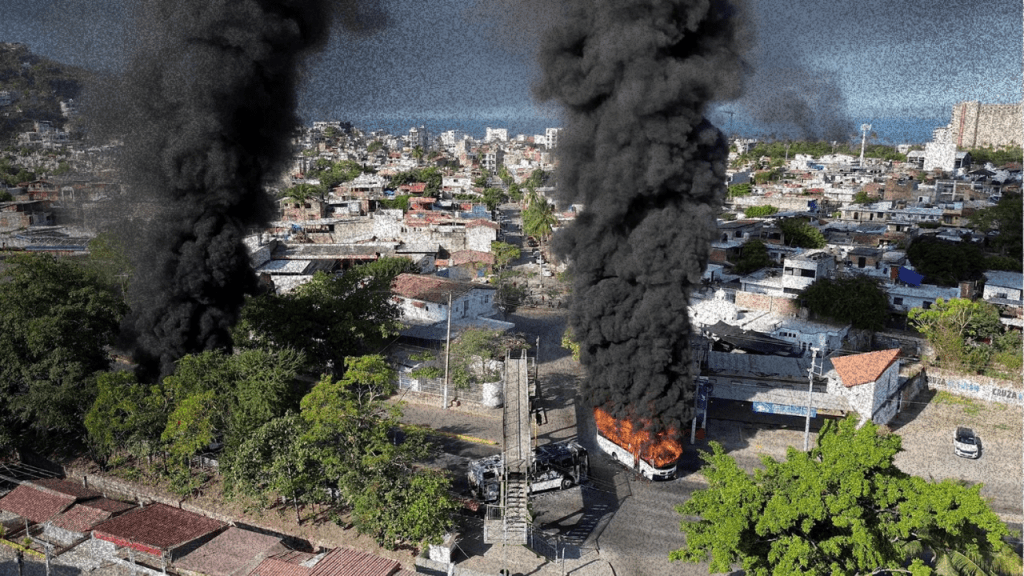
El Mencho raid reveals how U.S. intelligence, FTO designations, and targeting architecture deepen security integration and reshape Mexican sovereignty.
On February 22, 2026, Mexican Army and National Guard special forces carried out a raid on a wooded compound near Tapalpa, Jalisco, fatally wounding Nemesio Oseguera Cervantes — known as El Mencho — the leader and co-founder of the Jalisco New Generation Cartel (CJNG).
As PBS NewsHour reported via the Associated Press, Oseguera Cervantes “was wounded in an operation to capture him Sunday in Tapalpa, Jalisco, about a two-hour drive southwest of Guadalajara, and he died while he was being flown to Mexico City.”
According to Mexico’s Defense Ministry, troops came under fire during the operation. Four people were killed at the scene. Two others were arrested, and armored vehicles, rocket launchers, and other arms were seized.
CNN’s detailed reconstruction — published under the headline “How Mexico hunted ‘El Mencho’ with help from his lover’s ‘trusted man’ and US intelligence” — revealed that Mexican Defense Secretary Ricardo Trevilla Trejo said authorities had tracked one of Oseguera’s romantic partners to the hideout. The site was identified as Cabañas La Loma, a vacation rental near the Tapalpa Country Club that had been sanctioned by the U.S. Treasury in 2015 and again in 2017 for providing material assistance to CJNG drug trafficking activities.
For a broader analysis of how U.S. intelligence asymmetry functions as structural leverage in operations like this one, see this detailed examination of the U.S. intelligence role in El Mencho’s killing.
The U.S. Intelligence Layer
The White House confirmed American involvement in the intelligence effort.
As NBC News reported, White House Press Secretary Karoline Leavitt stated that the United States “provided intelligence support to the Mexican government in order to assist with an operation” targeting Oseguera. Both governments emphasized that no American ground forces participated in the raid itself.
But the intelligence contribution went deeper than that framing suggests.
Reuters disclosed in an exclusive report that a new U.S.-military-led task force — the Joint Interagency Task Force-Counter Cartel (JIATF-CC) — played a direct role. The task force, involving multiple U.S. government agencies, was launched with the goal of mapping cartel networks on both sides of the border (Reuters via U.S. News).
A former U.S. official, speaking on condition of anonymity, told Reuters that Washington had “compiled a detailed target package for El Mencho and provided it to the Mexican government for its operation.” The dossier reportedly included information from both U.S. law enforcement and U.S. intelligence agencies.
Prism News reported that the target package “helped pinpoint El Mencho,” and that CIA Director John Ratcliffe had expanded an anti-cartel program — originally established under President Biden — to include recruiting informants on the ground in Mexico (Prism News).
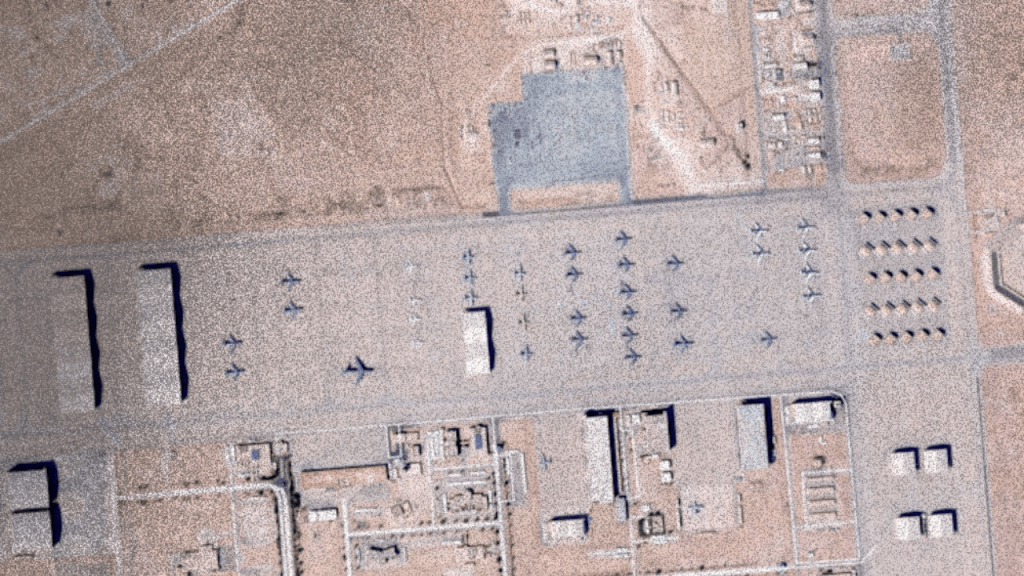
The Intercept provided the most detailed picture of the institutional infrastructure behind the operation. The task force operates out of Fort Huachuca, Arizona — a military intelligence hub located just 15 miles north of the U.S.-Mexico border — and is staffed by approximately 300 military and civilian employees. Its existence was first revealed at a ceremony at Davis-Monthan Air Force Base in Tucson the previous month (The Intercept).
The Intercept noted that “for generations, the U.S. military has played a driving role in the drug war abroad, training allied security forces, sharing intelligence on wanted drug traffickers, and facilitating covert kill-capture operations in nations such as Colombia and Mexico.”
The Distinction That Matters
The distinction between execution and targeting architecture is decisive.
The United States did not conduct the raid. It supplied the intelligence, surveillance, and targeting support that made the raid feasible. TIME’s framing — that Mexico killed the cartel leader “using U.S. intelligence” — captures the underlying reality: the operational trigger was Mexican, but the enabling architecture was transnational (TIME).
Intelligence support is not incidental. The actor that provides targeting analysis, surveillance capabilities, and real-time information shapes the operational menu available to the executing force.
The sophistication of this targeting architecture raises a prior question: whether the entity it is designed to locate and destroy — the “cartel” as popularly understood — is itself a coherent organizational object or a political construction that simplifies a complex political economy into a single villain.
This distinction carries political weight on the Mexican side. As David Mora, a senior analyst for Mexico at the International Crisis Group, told NBC News: “This is signaling to the U.S. that if we keep cooperating, sharing intelligence, Mexico can do it. We don’t need U.S. troops on Mexican soil.”
But from a structural perspective, the signal also runs in the other direction. When a state depends on an external partner for the intelligence that makes high-value operations possible, that partner shapes what is feasible, when it happens, and how it is framed — even when the executing force is formally sovereign.
A Long-Standing U.S. Priority
U.S. involvement was neither accidental nor opportunistic.
The U.S. State Department had publicly offered up to $15 million for information leading to El Mencho’s arrest or conviction. He had been indicted multiple times in U.S. federal courts since 2017.
In 2025, the Trump administration designated CJNG as a foreign terrorist organization. As Jack Riley, a former senior DEA official, told Reuters, that designation “unlocked new kinds of U.S. military assistance,” particularly intelligence, surveillance, and reconnaissance capabilities. Riley stated: “Our surveillance capabilities are going to be probably unlimited, and that will really help with real-time stuff.”
Adam Isacson, director of defense oversight at the Washington Office on Latin America (WOLA), told The Intercept: “What the Trump administration has done more than its predecessors is give NORTHCOM a hugely bigger role.” With that expanded role, Isacson noted, has come greater secrecy over what the command is actually doing (The Intercept).
The 2026 outcome aligns directly with longstanding U.S. policy. There is no need to speculate about hidden motives when public documentation already establishes the strategic interest.
Intelligence Asymmetry as Structural Leverage
The decisive dynamic lies in intelligence asymmetry.
If U.S. support included a “detailed target package” — compiled from law enforcement and intelligence sources, delivered through a new military-led task force operating from a base 15 miles north of the border — then the United States did more than assist. It shaped the feasibility, timing, and strategic framing of the operation.
This does not negate Mexican sovereignty. It clarifies the structure of modern security partnerships.
Influence does not require formal control. Intelligence asymmetry generates leverage because it determines which options are realistically available. When violence spikes after a leadership removal — as every academic study predicts it will — demand for surveillance and coordination intensifies. The partner that provides superior intelligence capabilities becomes increasingly indispensable.
The Intercept’s reporting on the JIATF-CC illustrates this precisely: the task force represents a new institutional layer of U.S. military intelligence focused on mapping cartel networks on both sides of the border, with growing secrecy and expanding jurisdiction. Each cycle of kingpin removal, blowback, and escalated cooperation reinforces the dependency.
What follows from each cycle of removal is not speculation. As we document in a separate analysis, peer-reviewed research spanning nearly two decades consistently finds that leadership decapitation increases violence, fragments organizations, and deepens the conditions that justify the next cycle of escalation.
That is not conspiracy. It is how asymmetric partnerships function.
This dynamic operates along a spectrum. At one end, intelligence architecture reshapes what a sovereign partner treats as feasible. At the other, as the United States demonstrated weeks earlier in Venezuela, the architecture becomes the operation itself — and the distinction between support and control dissolves entirely.
The Broader Framework
The operation did not occur in isolation.
The U.S. Government Accountability Office documented that since 2008, more than $3 billion has been provided to Mexico under the Mérida Initiative and the Bicentennial Framework — funding that institutionalized intelligence-sharing, training, and joint operational coordination (GAO).
WOLA’s analysis “Militarized Mexico: A Lost War” documented that since the intensification of the war on crime, annual homicides in Mexico have more than tripled, with approximately 350,000 homicides and more than 85,000 disappeared persons (WOLA).
The 2026 operation unfolded within this established architecture. It is not a departure from the pattern. It is the pattern — formalized, institutionalized, and now operating through a new task force that didn’t exist six months ago.
What Is Established
The record shows:
Mexico carried out the raid.
The United States provided meaningful intelligence assistance — including a detailed target package compiled by a new military-led task force operating from Fort Huachuca, Arizona.
El Mencho had long been a publicly designated U.S. priority target, with a $15 million bounty and multiple federal indictments.
The intelligence architecture that enabled this operation represents a deepening of U.S.-Mexico security integration under the Trump administration’s FTO framework.
The conclusion is structural, not conspiratorial. Intelligence asymmetry produces leverage. Intelligence support is a form of power — even when the executing force is formally sovereign. And each cycle of removal and retaliation deepens the dependency that makes the next cycle inevitable.
Sources
- Al Jazeera, “Violence Erupts in Mexico After Killing of Drug Cartel Kingpin ‘El Mencho’” (Feb. 22, 2026) — https://www.aljazeera.com/news/2026/2/22/mexico-announces-killing-of-drug-cartel-kingpin-el-mencho
- CBS News, “Violence Erupts in Mexico After Cartel Leader ‘El Mencho’ Killed” (Feb. 23, 2026) — https://www.cbsnews.com/news/violence-mexico-jalisco-new-generation-cartel-killed-military-puerto-vallarta/
- Reuters (via U.S. News), “New US Military-Led Group Aided Mexico’s Hunt for ‘El Mencho’” (Feb. 22, 2026) — https://www.usnews.com/news/world/articles/2026-02-22/exclusive-new-us-military-led-group-aided-mexicos-hunt-for-el-mencho-cartel-boss
- The Intercept, “Task Force Including ICE and FBI Helped Mexico Kill El Mencho” (Feb. 24, 2026) — https://theintercept.com/2026/02/24/el-mencho-mexico-fbi-task-force-counter-cartel/
- TIME, “What to Know About the Operation to Kill Mexican Drug Lord ‘El Mencho’” (Feb. 2026) — https://time.com/7380435/mexico-el-mencho-oseguera-drug-cartel-military-operation-cjng-usa/
- Prism News, “U.S. Intelligence and Task Force Aided Operation That Killed El Mencho” (Feb. 24, 2026) — https://www.prismnews.com/news/us-intelligence-and-task-force-aided-operation-that-killed-el-mencho
- U.S. Government Accountability Office, “U.S. Assistance to Mexico” (GAO-23-103795, 2023) — https://www.gao.gov/products/gao-23-103795
- WOLA, “Militarized Mexico: A Lost War That Has Not Brought Peace” — https://www.wola.org/analysis/militarized-mexico-a-lost-war/
 Spark Solidarity