
Venezuela’s military inaction during the Maduro raid was engineered through electronic warfare and ambiguity, turning discipline into paralysis.
The most common reaction to Operation Absolute Resolve was not surprise at American capability but confusion at Venezuelan silence. The country possessed layered air defenses, trained crews, Cuban security personnel embedded with the president, and months of warning that Washington wanted Maduro gone. When the operation came, 47 Venezuelan soldiers and 32 Cuban troops died in the assault. And yet no coordinated national defense formed. No air defense response materialized at the command level. No last-stand logic appeared.
For many observers, the absence of a broader response demanded a moral explanation. The Venezuelan armed forces were cowards. They were corrupt. They were secretly loyal to Washington. Maduro’s power had always been hollow.
These explanations feel intuitive because they rely on an outdated model of how warfare works — one that assumes war is still a contest of will, loyalty, and courage expressed through visible violence. The defining feature of Operation Absolute Resolve was that it was designed to prevent that contest from ever beginning. It did not overpower Venezuelan defenses at the command level. It made them unable to decide.
How Modern Militaries Actually Function
A modern military does not fight through individuals making snap decisions under fire. It fights as a system. Detection, validation, authorization, and execution are distributed across sensors, networks, and hierarchies designed to minimize individual discretion.
In air defense, the chain is rigid. Radar detects an anomaly. Command networks validate it. Authorization flows downward. Crews act. Each step exists to prevent catastrophic mistakes — unauthorized launches, friendly-fire incidents, escalation spirals. The penalties for acting without authorization are immediate and severe. This structure is not a weakness in ordinary conditions. It is what makes a military function.
But it creates a specific vulnerability when an adversary targets the chain itself rather than the people inside it.
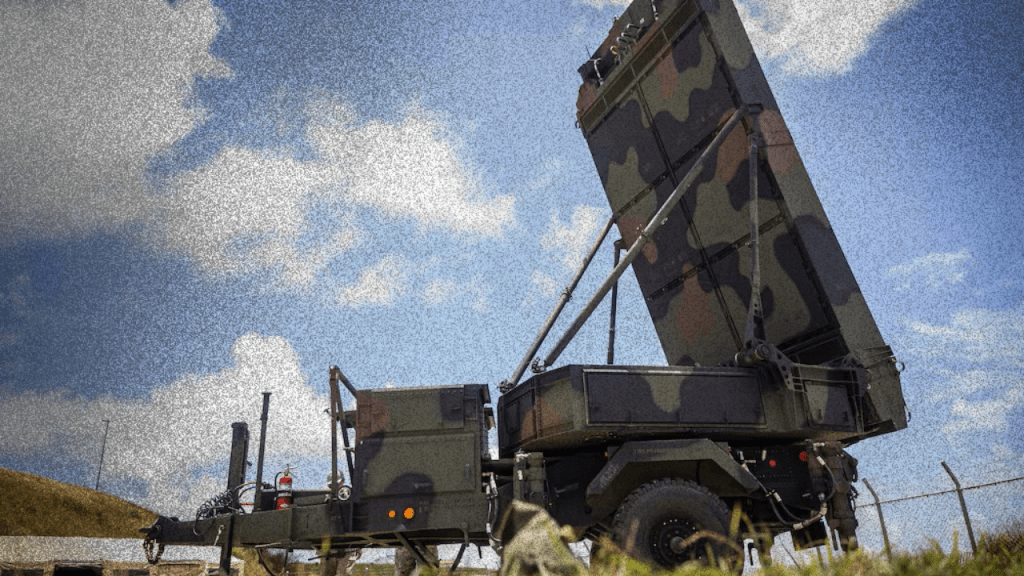
The US operation did both simultaneously. EA-18G Growlers degraded Venezuelan radar and jammed communications. US Cyber Command, whose participation Joint Chiefs Chair General Dan Caine confirmed publicly, attacked network infrastructure. Airstrikes physically destroyed Russian-made Buk surface-to-air missile batteries at key bases before they could be activated. Trump said afterward that Caracas had been largely blacked out “due to a certain expertise that we have.” Radar screens went dark or showed inconsistent data. Communications failed. Power cycled unpredictably. Nothing in Venezuelan training doctrine tells an officer that this pattern means a foreign special operations extraction is underway.
So they waited. Waiting was not fear. It was professionalism. Inside a broken system, waiting for clarity from above is the rational action.
The specific hardware that produced these conditions — LRAD systems, microwave payloads, EA-18G electronic warfare, and the doctrine tying them together — is documented in the analysis of how deniable weapons replace visible state violence, which traces the same toolkit from Pittsburgh 2009 through Belgrade 2025 to Caracas 2026.
Ambiguity as the Primary Weapon
When air-defense consoles fail, launch authorization links break, and officers cannot reach superiors, the default assumption inside a disciplined military is not resistance. It is that a political decision has already been made above one’s level.
From the position of a Venezuelan officer in those minutes, several explanations were more plausible than “the United States is kidnapping the president right now”: a coup may already be underway; senior command may have cut a deal; a stand-down order may be imminent; acting now, without authorization, risks being the officer who started a war his own government has already decided not to fight.
No explicit order to stand down was required. Silence from above was enough. When instruments stop working and superiors are unreachable, you assume surrender has already occurred somewhere else in the system. That assumption — not fear of American firepower — is what paralyzed the command response. The weapon was the ambiguity, not the hardware that produced it.
Why Professionalism Accelerates Paralysis
There is a counterintuitive implication here. This doctrine works best on disciplined, loyal, professional forces.
Loyal forces trust the chain of command. They defer upward under uncertainty. They assume coordination exists even when they cannot see it. That trust produces delay. Delay is all the doctrine requires.
If the Venezuelan military had been fragmented or ideologically divided, someone might have acted without authorization — a rogue commander firing a missile or mobilizing troops unilaterally. Cohesion creates deference, and deference creates paralysis. The more Maduro had centralized and professionalized the armed forces, the more vulnerable they became to this form of disruption. That is not an accident of design. It is the design.
Vice President Delcy Rodríguez said afterward that Maduro had given “very clear instructions to the Bolivarian Armed Forces so that in perfect military, popular, and police unity, all plans to defend the homeland would be activated.” The unity Rodríguez described — the very thing that made the armed forces coherent — was the mechanism of their paralysis. A unified force waits for a unified command. A unified command that cannot communicate produces unified inaction.
Why the Cubans Fought
The presence of resistance by Maduro’s Cuban security contingent has been used by some to argue that Venezuelan inaction reflected disloyalty. The Cuban example proves the opposite.
The 32 Cuban soldiers who died resisted because they were physically co-located with the target. They operated at human scale — they saw helicopters, heard gunfire, faced direct threats requiring immediate reaction. They did not depend on Venezuelan command networks to decide whether to act. Threat and response were local, visible, and unambiguous.
Venezuelan air-defense and command structures were blinded at the systems level. They never reached the point where “defend the head of state” became an actionable decision. Resistance occurred where the doctrine is weakest: at the point of direct contact. It did not occur at the level of national command, where the doctrine had already done its work.
This asymmetry is exactly what the doctrine predicts.
No Spectacle, No Rally Point
Had Caracas woken to burning neighborhoods, dead conscripts on camera, and wrecked civilian infrastructure across every district, the Venezuelan armed forces would have had something unambiguous to respond to. The population would have had something to rally around. Visible violence creates moral clarity, and moral clarity enables collective action.
Instead the operation produced targeted strikes on military infrastructure, a power blackout, systems that stopped working, and a president gone before dawn. There was no single spectacular moment demanding an immediate mass response. Meaning-making lagged behind events. By the time the narrative caught up, the event had already been reframed internationally as an arrest, a law-enforcement action, a fait accompli.
Without martyrs — no burning aircraft, no dead conscripts on live television, no state funerals for soldiers who died defending their country in a battle the cameras could witness — resistance lacks the narrative gravity that converts outrage into mobilization. Debate shifted to legality and international condemnation. That shift was not incidental. It was structural.
The legal and geopolitical framework through which the operation was recast as law enforcement rather than military seizure — legitimacy-by-indictment, the Noriega precedent, and the succession management theory that followed — is examined in the analysis of the US capture of Maduro and the precedent it sets.
The Testimony the White House Amplified
In the days after the operation, a guard testimony circulated on social media describing Venezuelan soldiers suddenly bleeding from the nose, vomiting blood, and collapsing after US forces “launched something” that felt like “a very intense sound wave.” White House Press Secretary Karoline Leavitt amplified the account on her official channel with the caption “Stop what you are doing and read this.”
The War Zone traced the testimony to an anonymous WhatsApp recording, attributed to a conservative influencer on X, with no named source, no medical documentation, and no independent corroboration. The symptoms described — mass nosebleeds and vomiting blood at a distance — exceed what any publicly known acoustic system can produce. No US official confirmed the account. Pentagon agencies declined to comment. The source never provided the original Spanish recording when contacted by journalists.
The White House’s decision to amplify it anyway is itself analytically significant. Whether the weapon produced those effects or not, the effect of the story was identical: it told every government in the hemisphere that resistance to US special operations is not merely difficult but physically catastrophic, that American forces carry weapons that bring soldiers to their knees before they can understand what is happening.
Deterrence through narrative requires no verification — a principle with documented precedent in the US national security apparatus, which formally proposed staged attacks on American civilians to generate public support for invading Cuba, establishing that the information management layer is not incidental to the operation but integral to its design.
Retrospective Compliance
After the fact, something else happened.
Once Maduro was gone and no national counteraction had occurred, officers reconstructed the event psychologically. If resistance had been expected, orders would have come. If action had been authorized, systems would have worked. If inaction had been wrong, someone above would have acted.
This is not propaganda. It is cognitive self-defense. The absence of action becomes proof that inaction was correct. Compliance is produced retroactively, without coercion, by the structure of the event itself. The moment when resistance could have been meaningful had already passed before most of the Venezuelan command understood clearly what had happened.
Why This Doctrine Is Difficult to Counter
Traditional deterrence fails against this approach because you cannot threaten retaliation against ambiguity. You cannot mobilize against malfunction. You cannot legally respond to silence.
Effective countermeasures would require decentralizing authorization — pre-delegating initiative to junior officers who can act without confirmation from above. But those traits increase coup risk and internal instability. A military that authorizes junior officers to launch missiles without command confirmation is a military that is one disgruntled colonel away from catastrophe. Defending against this doctrine pushes states toward the kind of fragmentation that makes them easier to overthrow by other means.
That tradeoff is the strategic pressure being applied. The doctrine does not simply neutralize defense. It forces a choice between two vulnerabilities.
What the Silence Actually Was
The Venezuelan armed forces did not fail to defend the state. They behaved exactly as a modern, disciplined military is trained to behave under conditions of systemic uncertainty. Their professionalism was the mechanism of their paralysis.
The broader lesson is not Venezuela-specific. Any state with a centralized professional military — which is to say, any state Washington might target — faces the same structural exposure. The doctrine converts the qualities that make a military effective under normal conditions into the preconditions of its own defeat.
Resistance was preempted before it became thinkable. That is not failure. That is the effect.
Sources
- Al Jazeera — “Nearly 50 Venezuelan Soldiers Killed in US Abduction of President Maduro,” January 17, 2026. https://www.aljazeera.com/news/2026/1/17/nearly-50-venezuelan-soldiers-killed-in-us-abduction-of-president-maduro
- Peoples Dispatch — “US Bombs Venezuela,” January 3, 2026. https://peoplesdispatch.org/2026/01/03/us-bombs-venezuela/
- Task & Purpose — “Delta Force, Other Special Operations Soldiers Carried Out Venezuela Raid,” January 3, 2026. https://taskandpurpose.com/news/venezuela-maduro-delta-force-absolute-resolve/
- The Aviationist — “New Details Emerge About Operation Absolute Resolve,” January 3, 2026. https://theaviationist.com/2026/01/03/operation-absolute-resolve-venezuela/
- The War Zone — “Did a Mysterious ‘Sonic Weapon’ Really Aid Delta Force in Capturing Maduro?” January 13, 2026. https://www.twz.com/news-features/did-a-mysterious-sonic-weapon-really-aid-delta-force-in-capturing-maduro

 Spark Solidarity