
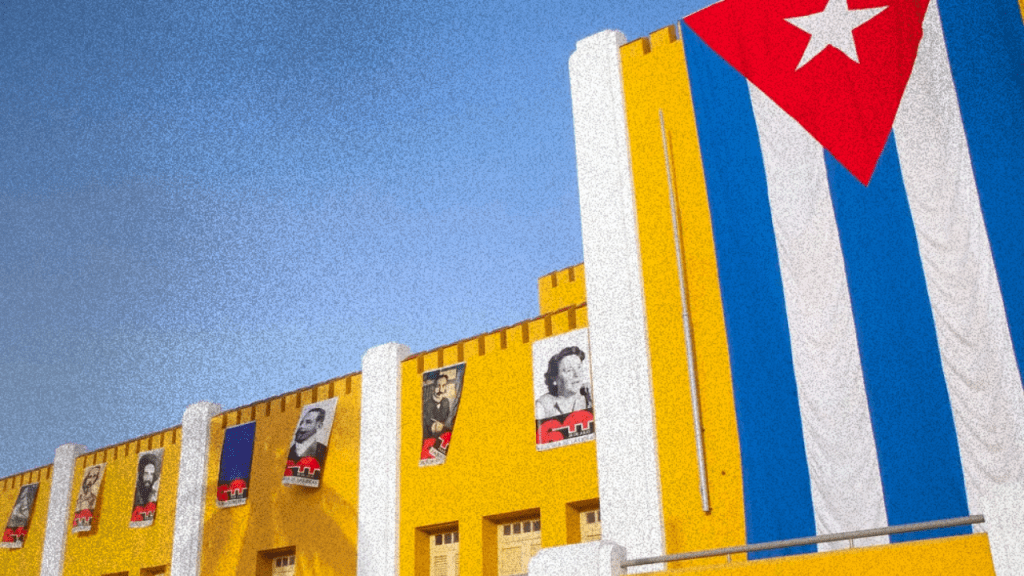
Moncada Barracks attack anniversary: How a failed 1953 assault and Batista’s repression forged the political program of the Cuban Revolution.
On July 26, 1953, Fidel Castro led approximately 160 rebels in a coordinated assault on the Moncada Barracks in Santiago de Cuba — the second-largest military installation in the country — while a smaller force of 27 struck the Carlos Manuel de Céspedes garrison in Bayamo. The operation was poorly equipped, dependent on surprise that evaporated almost immediately, and overwhelmed within hours by forces that outnumbered and outgunned the attackers by a factor of ten or more.
By any military standard, it failed. Around 8 rebels died in the initial fighting at Moncada. What followed was worse. Over the next week, the Batista regime executed dozens of captured rebels extrajudicially — Castro claimed 70 total deaths, asserting that only 5 or 6 had been killed in actual combat. Bodies were arranged across the barracks compound to simulate battlefield casualties. Abel Santamaría, who led one of the assault groups, was tortured — his eyes gouged out — before he was killed. His sister Haydee, also captured, was shown what had been done to him and to her fiancé. His eyes. His genitals. To extract information neither had given.
This is what Batista’s government did when it had the chance to demonstrate order and authority.
And this is why Moncada marks the true beginning of the Cuban Revolution — not because it succeeded, but because the state’s response to its failure stripped away every remaining claim to legitimacy. The political terrain after July 26, 1953 was not the same as it had been before. It could never be made the same again.
The Context: Reform Was Already Dead
The Moncada attack did not emerge from impatience or adventurism. It emerged from structural closure.
Fulgencio Batista had returned to power through a military coup on March 10, 1952, canceling scheduled elections and suspending the 1940 Cuban Constitution — a document that had enshrined labor rights, land protections, and democratic governance as the legal framework of the republic. The judiciary was subordinated to executive power. The military functioned as an instrument of regime preservation. Corruption was systemic, not incidental.
Economically, Cuba remained locked in colonial dependency. Wealth concentrated in urban elites and foreign-owned enterprises, particularly sugar. Seasonal employment left hundreds of thousands of agricultural workers without income for months at a stretch. By Castro’s own accounting in 1953, 600,000 Cubans were unemployed, 500,000 rural families lived in shacks working four months a year, and 400,000 industrial workers had their retirement funds systematically embezzled. These conditions persisted not from lack of resources but from how resources were organized and for whose benefit.
Political opposition existed. It was neutralized. Electoral participation offered no path to power. Legal challenges to Batista’s coup had been dismissed by courts that the coup had already rendered decorative. The press operated under threat. The idea that change was achievable through institutional means was not naive. It was demonstrably false.
Armed struggle did not replace reformist politics. It followed their exhaustion.
The pattern Castro diagnosed in 1953 — institutional channels rendered decorative while real power operates through economic discipline and state coercion — is examined as a contemporary phenomenon in the analysis of how Cuba exposes the limits of liberal democracy, which traces the same structural logic from Pinochet-era Chile through Canada’s pipeline enforcement against Indigenous land defenders.
History Will Absolve Me: Failure as Manifesto
Castro’s most consequential victory came after Moncada, not during it.
Arrested and brought to trial in October 1953, he turned the courtroom into a platform. His defense speech — later reconstructed from memory, transcribed by fellow prisoners, and circulated clandestinely as History Will Absolve Me — transformed a failed raid into the founding document of a revolutionary movement.
The speech performs three decisive political acts.
First, it delegitimizes the state. Batista is presented not as a ruler governing poorly but as an illegal usurper who destroyed constitutional order. Courts, police, and military appear not as institutions of justice but as instruments of criminal power. The legal question is inverted: it is not the rebels who violated the law, Castro argues, but the regime — which overthrew the constitution that alone gave law its authority.
Second, it justifies armed resistance as civic obligation. When a government rules illegally and forecloses all other avenues, rebellion is not sedition. It is the exercise of a right that the constitution itself recognized: the right of the people to resist tyranny. Violence belongs to the regime. The insurgents are restoring what was taken.
Third, and decisively, the speech outlines a governing program. This is what distinguishes it from defiant rhetoric. It does not merely condemn — it proposes.
The Five Revolutionary Laws Castro outlined were: the reinstatement of the 1940 Constitution; land ownership, free of mortgage or transfer, for tenant farmers, sharecroppers, and squatters working plots of five caballerías or less; a 30 percent share of profits for industrial, commercial, and mining workers in large enterprises; a 55 percent share of sugar production for small sugar planters; and the confiscation of all holdings obtained through embezzlement under previous governments. Beyond the five laws, the speech called for housing reform, an end to mass unemployment, and the overhaul of public education — land, industrialization, housing, unemployment, education, and public health named explicitly as the six problems requiring resolution.
These were not abstractions. They were material demands addressed to existing conditions, naming the population they were designed to serve — the rural poor, the urban worker, the unemployed — with specificity and legal grounding.
“Condemn me,” Castro concluded. “It does not matter. History will absolve me.”
The line is not bravado. It asserts a theory of legitimacy: that authority is not conferred by courts operating under an illegal state, but by historical conditions and social needs. The judges in that room had no authority that mattered. The people the laws were written for did.
From Moncada to the Sierra Maestra: Continuity
The period between 1953 and 1959 is often presented as a story of reinvention — as though the Cuban Revolution took its shape only through exile, guerrilla war, and eventual victory. This framing misreads the history.
The July 26 Movement took its name directly from the Moncada attack. Exile in Mexico, regroupment, and return on the Granma yacht in December 1956 did not revise the movement’s goals. They refined its methods. The guerrilla campaign in the Sierra Maestra operationalized a program already articulated in full in October 1953.
Land reform, worker profit-sharing, national sovereignty, anti-corruption measures — these were not improvisations made after seizing power. They were commitments made under repression, in a courtroom, while awaiting sentencing. When the revolutionary government enacted these policies after 1959, it was implementing, not inventing. The fifth revolutionary law — confiscation of embezzled holdings — was realized when the new government created the Ministry of the Recuperation of Financial Embezzlement and recovered over 400 million pesos in stolen funds.
This continuity matters because it undermines a persistent counter-narrative: that the revolution “radicalized” after taking power, that Castro concealed a hidden communist agenda, that the Five Laws were bait and switch. The record shows something less conspiratorial and more damning of that reading — a movement that said exactly what it intended to do, did it, and whose opponents simply preferred not to believe them.
Che Guevara: Discipline and Internationalism
Ernesto “Che” Guevara was not at Moncada. His importance to the revolution lies elsewhere.
Che encountered Castro in Mexico City in 1955, during the exile period. What he contributed was not symbolic charisma but ideological discipline and a framework of analysis the nationalist rebellion had not fully developed. Where the July 26 Movement had emerged primarily from Cuban conditions — the coup, the constitution, the specific misery of a dependent sugar economy — Che brought Marxist analysis of imperialism as a structural rather than incidental force, and guerrilla warfare theory rooted in his Guatemalan experience watching the CIA-backed overthrow of Árbenz.
In the Sierra Maestra, he functioned as military organizer and political educator simultaneously. His insistence that armed struggle required ideological clarity — that fighters needed to understand the social forces they were confronting, not merely the tactical objectives of each engagement — shaped the internal culture of the guerrilla force.
After 1959, his role shifted to state-building. He oversaw agrarian reform implementation, directed early industrial policy, and pressed for economic transformation that would break the dependency on foreign capital that had defined Cuban underdevelopment for a century. His internationalism — the conviction that socialism could not consolidate in isolation, that the Cuban struggle was inseparable from liberation movements across Latin America and beyond — pushed the revolution past its national frame.
Where Castro operated as a strategist responsive to conditions, Che remained doctrinal and absolute. Their collaboration fused Cuban nationalism with socialist internationalism and shaped both the revolution’s trajectory and its tensions. The contradictions that emerged between revolutionary ambition and material constraint, between internationalist commitment and national consolidation, trace in part to this founding fusion.
Che’s analysis of imperialism as structural rather than incidental was not abstract — it was grounded in a pattern of US conduct documented from Guatemala onward, a pattern examined in the analysis of Operation Northwoods and the logic of manufactured war, which shows how the national security apparatus planned staged attacks on American civilians and military assets to justify invading Cuba specifically.
Why Moncada Endures
Moncada endures as a political reference point because it condenses something essential about how revolutions actually begin.
Not with mass support. Not with guaranteed success. With rupture — with an act that forces both the state and its opponents to reveal what they are. The Batista regime revealed it was willing to torture, mutilate, and execute prisoners to preserve itself. The rebels revealed, in that courtroom, what they were fighting for and why.
Failure forced articulation. Repression produced legitimacy. The political program that would govern Cuba for decades after 1959 was written not from power but from a prison cell, awaiting a sentence that came anyway.
The speech’s theory — that legitimacy belongs to those who act in the interests of the people, regardless of what courts under illegal regimes decree — is what made Moncada more than a failed raid. It is what made it a foundation.
The revolutionary program articulated in that courtroom in 1953 — land, sovereignty, an end to dependency — was not permitted to consolidate in peace; as documented in the analysis of Cuba’s incarceration rate and the siege state, the embargo and its associated sanctions architecture function as a permanent external disciplinary mechanism against precisely the kind of sovereign development the Five Laws were designed to produce.
History did not absolve Moncada because it succeeded. It absolved it because it told the truth about what power is, who exercises it, and what it costs those who do not have it.
Sources
- Wikipedia — “Attack on the Moncada Barracks”: https://en.wikipedia.org/wiki/Attack_on_the_Moncada_Barracks
- Grokipedia — “Attack on the Moncada Barracks” (casualty figures, Castro claim of 70 total dead): https://grokipedia.com/page/Attack_on_the_Moncada_Barracks
- History of Cuba — “Attack on the Moncada Army Barracks” (torture details, Santamaría): http://www.historyofcuba.com/history/moncada.htm
- Marxists Internet Archive — Fidel Castro, “History Will Absolve Me” (October 16, 1953): https://www.marxists.org/history/cuba/archive/castro/1953/10/16.htm
- Wikipedia — “History Will Absolve Me” (Five Revolutionary Laws): https://en.wikipedia.org/wiki/History_Will_Absolve_Me
- The Militant — “‘History Will Absolve Me’: Program of Cuban Revolution” (Five Laws, full text excerpts): https://www.themilitant.com/2016/8031/803150.html
- Sea King Library — “Fidel Castro: History Will Absolve Me” (Five Laws drafted before the attack, Ministry of Recuperation): https://www.seakinglibrary.com/uploads/2/5/0/5/25052505/fidel_castro-_history_will_absolve_me.pdf
- Wikipedia — “26th of July Movement”: https://en.wikipedia.org/wiki/26th_of_July_Movement
- LaHabana.com — “July 26, 1953: Anniversary of the Attack on Moncada Barracks”: https://www.lahabana.com/content/july-26-1953-anniversary-of-the-attack-on-moncada-barracks/
- Office of the Historian, US State Department — Historical Documents on Cuba (contemporary US assessment of Castro and Moncada’s legacy): https://history.state.gov/historicaldocuments/frus1958-60v06/d18


 Spark Solidarity