
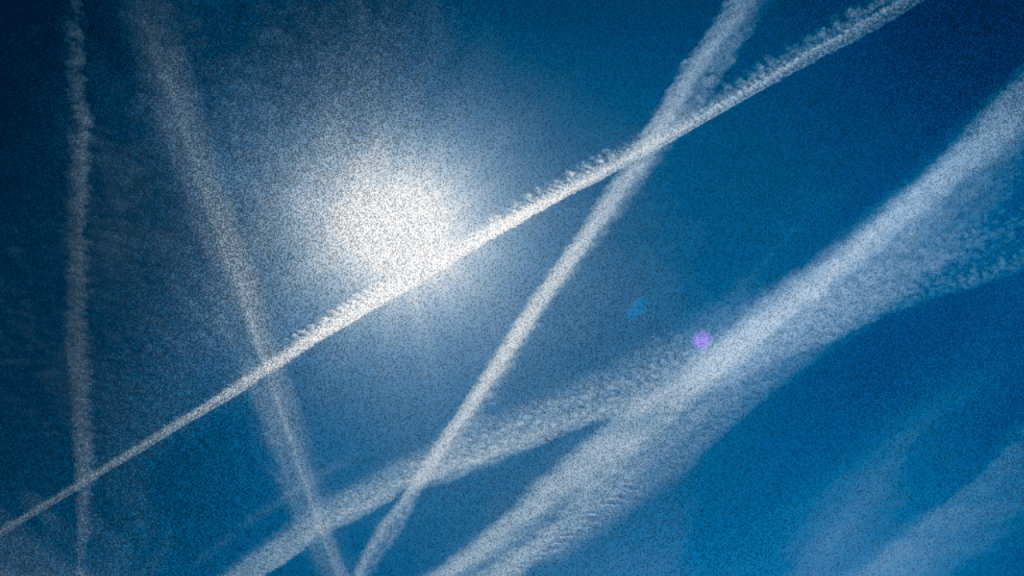
Geoengineering political power is the question no institution wants to answer — because whoever controls atmospheric systems at scale controls far more than the weather.
It’s well established and on the record: the U.S. government weaponized rain during the Vietnam War, the international community responded by writing a treaty that regulated the technology rather than eliminating it, and the research never stopped. That history matters because it reframes everything that follows. Geoengineering is not a future hypothetical. It is the current phase of a capability that has been developing for decades — and it is now reaching a scale where the political stakes are impossible to ignore.
The Tools Never Went Away
Cloud seeding programs operate openly today across dozens of countries. China runs one of the largest weather modification systems in the world. The UAE has invested heavily in precipitation enhancement to address water scarcity. Several U.S. states maintain active programs. These are normalized, bureaucratized, publicly acknowledged interventions in atmospheric processes — the same category of activity that required an international treaty when it was exposed as a military weapon in the 1970s, now operating without significant public scrutiny or debate.
At the same time, climate intervention has expanded far beyond local cloud seeding into proposals operating at planetary scale. Stratospheric aerosol injection (SAI) — the most studied approach — involves dispersing reflective particles into the upper atmosphere to reduce incoming solar radiation and lower global temperatures. The concept is modeled on the cooling effect of major volcanic eruptions: the 1991 eruption of Mount Pinatubo injected roughly 17 million tons of sulfur dioxide into the stratosphere, producing a measurable drop in global mean temperatures of approximately 0.5°C over the following two years.
SAI is not fringe. Harvard’s Solar Geoengineering Research Program, NOAA, NASA, and the UK government are all actively researching it. Congress has directed NOAA to fund research as part of its Earth’s Radiation Budget Program. The EPA confirmed in 2025 that it is the only federal agency currently tracking private SAI activity — specifically a startup called Make Sunsets, which has conducted more than 124 unregulated balloon launches releasing sulfur dioxide into the atmosphere and is now lobbying the U.S. government. Mexico banned the company’s operations after early launches were conducted there without government approval. No equivalent ban exists in the United States. No law specifically governing solar geoengineering has been passed by Congress.
At Scale, This Is Power
The technical debate around SAI — whether it works, what its side effects are, how it could be deployed — is not the primary issue here. The primary issue is what it means politically if it works.
A system capable of altering global temperature, precipitation patterns, or regional monsoon cycles does not merely affect the climate. It affects agriculture. It affects water access. It affects whether crops grow or fail, whether rivers flood or dry up, whether populations can sustain themselves where they currently live. These are not abstract variables. They are the material foundations of economies, states, and the conditions under which people either remain stable or move.
A 2025 paper from Harvard’s Solar Geoengineering Research Program concluded that the United States and China are the only countries currently capable of deploying SAI at scale over the objections of other nations. That framing is worth sitting with. The paper is not describing a shared global resource or a commons-governed solution to climate change. It is describing a capability that two states could exercise unilaterally — over the objections of every other country on earth — with effects that would fall unevenly on populations that had no vote in the decision.
Modeling studies suggest that SAI using sulfur dioxide could cause droughts in Africa and Asia while providing cooling benefits primarily to the Global North. The populations most exposed to the risks are not the populations funding the research or controlling the deployment infrastructure. This is not a new pattern. It is the same pattern that has characterized every major military and technological capability developed under conditions of imperial power — the benefits flow upward, the costs flow outward, and the people who absorb the consequences are not the people making the decisions.
The Governance Gap Is Not Accidental
There is no functional international framework governing SAI. The existing treaty architecture — ENMOD, the Convention on Biological Diversity, the Montreal Protocol — provides overlapping and partial coverage that legal scholars describe as fragmented and likely inadequate for large-scale deployment scenarios. Congress has not passed legislation. No binding international agreement exists. Private actors are already operating in the space without oversight.
This gap is not the product of oversight. It is the product of a deliberate pace — moving research and deployment capacity forward faster than the political structures that would constrain them. The same dynamic that allowed Operation Popeye to run for five years before Congress knew it existed is operating today at a larger scale and with higher stakes. The technology advances. The accountability structures lag. And the gap between the two is where power operates without scrutiny.
Weather already shapes politics without deliberate intervention. Research has documented that temperature and precipitation affect protest turnout, political participation, and the conditions under which unrest either emerges or is suppressed. Climate variability has been linked in multiple contexts to resource strain and instability, particularly in regions where subsistence agriculture is already under pressure. If weather without deliberate modification already carries these political effects, then weather with deliberate modification — at scale, controlled by two states, without binding international oversight — is not a climate tool. It is a power instrument.
The Language Shift Is the Tell
What was once framed as “weather modification” is now discussed as “climate intervention,” “solar radiation management,” or “Earth system risk reduction.” The underlying idea is identical: introduce material into the atmosphere to produce desired atmospheric outcomes. The reframing serves a function. It moves the conversation from the military and covert precedents — cloud seeding, Operation Popeye, ENMOD — into a technocratic register where the political stakes are obscured by scientific complexity. Institutions that would be immediately scrutinized if they proposed “weather warfare” face far less resistance when they propose “stratospheric aerosol injection research programs.”
This is how technologies with profound political implications get normalized. Not through public debate and democratic mandate, but through gradual reframing, incremental funding, and the slow accumulation of facts on the ground — until deployment is presented as the natural extension of research that was never properly contested in the first place.
The Question That Doesn’t Get Asked
The institutional conversation about geoengineering is almost entirely technical: does it work, what are the side effects, how do you model the outcomes. The political question — who decides, who benefits, who bears the risk, and under what authority — is treated as secondary, something to be worked out after the science is settled.
That sequencing is not neutral. It is a choice about whose interests shape the development of the technology. And it is the same choice that was made with nuclear weapons, with surveillance infrastructure, with autonomous weapons systems — develop first, govern later, and by the time governance is seriously attempted, the capability is already deployed and the power asymmetries it creates are already locked in.
The U.S. government weaponized rain fifty years ago, kept it secret from Congress, and the response was a treaty that regulated rather than prohibited the technology. The research continued. The capability expanded. And now two states hold the ability to modify the planetary atmosphere at scale, unilaterally, over the objections of everyone else on earth — with no binding framework to stop them, no democratic mandate from the populations whose harvests and water supplies would be affected, and no public reckoning with what that actually means.
That is not a climate story. That is a power story. And it has been developing, in plain sight, for a very long time.
Sources
- Mongabay — Geoengineering gains momentum, but governance is lacking, August 2024
- Harvard Salata Institute — Who Could Deploy Stratospheric Aerosol Injection?, 2025
- U.S. EPA — Government Action on Geoengineering, 2025
- Physics Today — The urgent need for research governance of solar geoengineering, December 2025
- Geoengineering Monitor — Stratospheric Aerosol Injection
- ScienceInsights — Is Stratospheric Aerosol Injection in Use Today?, 2026
- Wikipedia — Environmental Modification Convention (ENMOD)
- Spark Solidarity — Weather Modification Military History: It Already Happened
 Spark Solidarity