
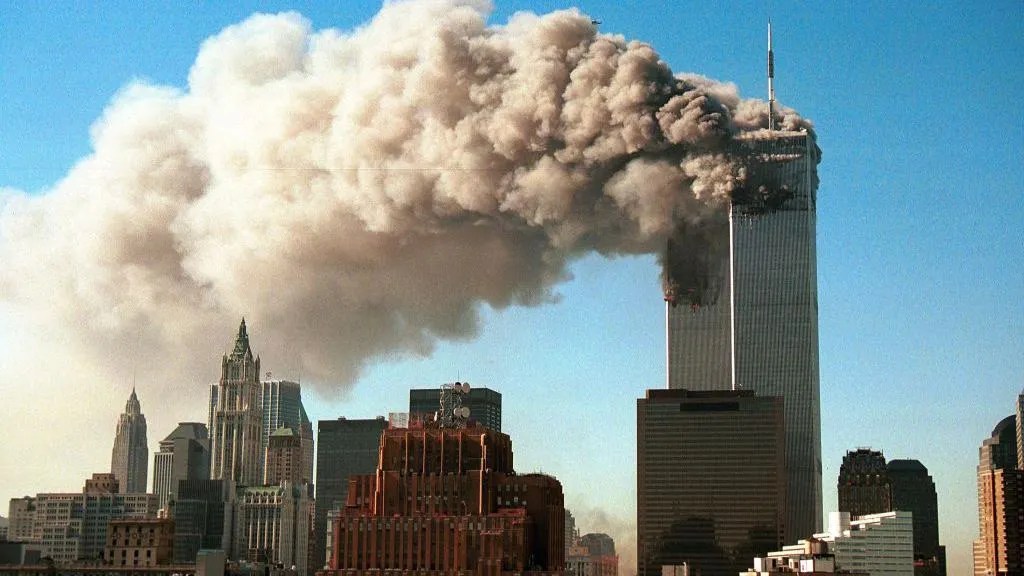
The 9/11 case has never gone to trial — and the U.S. torture program is exactly why. Here’s the structural history they don’t want you to read.
In July 2025, the U.S. Court of Appeals for the DC Circuit voided the plea agreements that had been reached with three Guantánamo detainees — Khalid Sheikh Mohammed, Walid bin Attash, and Mustafa al-Hawsawi — accused of planning the September 11, 2001 attacks. The 2-1 ruling reversed two lower court decisions and cleared the way for the government to pursue the death penalty in a case that has been mired in pretrial proceedings for over two decades. As of early 2026, the case remains in the pretrial phase. No trial date has been set.
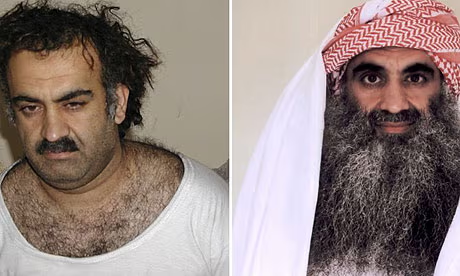
The official explanation — that the families of nearly 3,000 victims deserve a trial — obscures what is actually happening. The U.S. government built a torture program that made a legitimate trial functionally impossible, then spent twenty years pretending otherwise, and is now using the specter of the death penalty to maintain the appearance of justice while delivering none. Understanding why the case has never gone to trial requires understanding what the CIA did at its black sites, why that evidence cannot be used, and who benefits from the permanent suspension of legal resolution.
What the CIA Did
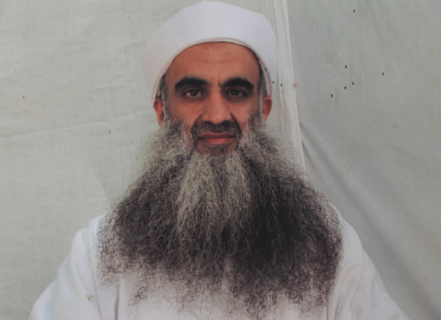
Khalid Sheikh Mohammed was captured in Pakistan in March 2003 and immediately transferred to CIA black sites — first in Afghanistan, then Poland. According to CIA records cited in the 2014 Senate Intelligence Committee report, interrogators began applying “enhanced interrogation techniques” minutes after his arrival at Detention Site Cobalt. Over the following weeks, Mohammed was subjected to sleep deprivation for roughly 180 consecutive hours, stress positions, walling, and waterboarding. He was waterboarded 183 times. During sessions on March 12, 2003, a CIA medical officer noted that “we are basically doing a series of near drownings.” A cable two days later reported that waterboarding “is not working in gaining his compliance.” It continued for another ten days.
These are not contested claims. They come from the CIA’s own internal records, reviewed by the Senate Select Committee on Intelligence and summarized in the executive summary released in December 2014. The Senate report also documented that Mohammed’s children were threatened, that he was subjected to “rectal rehydration” without medical necessity — described by the interrogation chief as illustrating “total control over the detainee” — and that the techniques were systematically applied even after CIA records showed they were not producing actionable intelligence.
The two psychologists who designed and ran the program, James Mitchell and Bruce Jessen, were paid $81 million through their private contracting firm. They had no prior experience with actual interrogation. They reverse-engineered SERE resistance training — a program designed to help American soldiers withstand torture, not to extract reliable information — and applied it to prisoners in CIA custody. The program was built on a theory of “learned helplessness” derived from experiments on dogs. CIA’s own assessments concluded the techniques did not produce otherwise unavailable intelligence. The contractors ran the program anyway. No one was prosecuted.

Walid bin Attash and Mustafa al-Hawsawi were subjected to the same program. Amnesty International documented that al-Hawsawi was anally raped in CIA custody and diagnosed with chronic hemorrhoids, anal fissures, and rectal prolapse — injuries that were still affecting him years later. European Court of Human Rights rulings confirmed that Poland and Lithuania hosted black sites where these men were held and tortured, establishing state complicity on both sides of the Atlantic. None of this has resulted in criminal accountability in the United States or Europe.
Why There Can Be No Trial
The legal consequences of the torture program are straightforward. Evidence obtained through torture is inadmissible — under U.S. law, international law, and the rules governing Guantánamo’s own military commissions. The 9/11 defendants were tortured extensively before their arrival at Guantánamo. Statements obtained under torture cannot be used. Defense attorneys have argued that even post-arrival statements to the FBI are tainted, on the grounds that the FBI participated in or was present during CIA interrogations and that the coercive atmosphere of the black sites created conditions that could not simply be suspended upon transfer.
In 2023, a military judge in a separate Guantánamo case — the prosecution of the accused USS Cole bomber — excluded a confession on the grounds that it was a product of torture. That ruling directly threatened the evidentiary foundation of the 9/11 case. It is widely understood among Guantánamo legal observers to be one of the factors that prompted the government to negotiate the plea deal rather than risk a full evidentiary hearing that would expose the torture record and potentially collapse the prosecution.
The military commissions system itself was not designed to produce fair trials. It was designed to produce convictions while shielding the torture record from scrutiny. As The Nation’s legal correspondent documented, the Guantánamo detention facility was established in November 2001 with a presidential military order authorizing indefinite detention and future trials, but the base commander was never approached about building trial facilities. The $12 million “Expeditionary Legal Complex” was not built until 2007 — six years after the facility opened, and only after it became politically untenable to leave the detainees in a permanent extrajudicial limbo with no pretense of proceedings. The system was an afterthought constructed to maintain the appearance of legality while structurally preventing it.
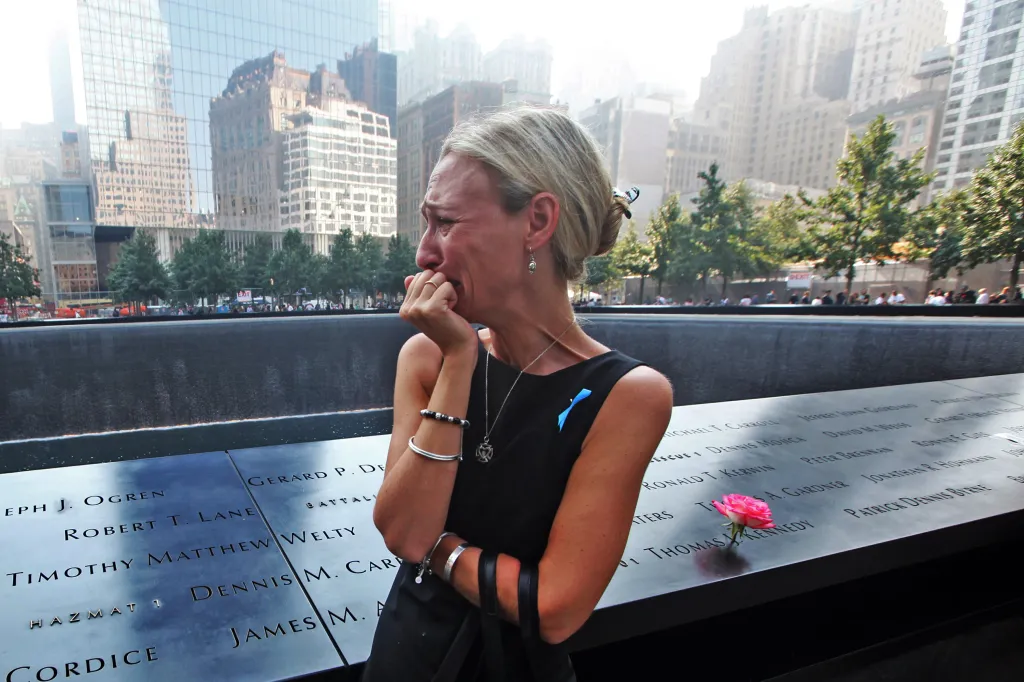
The result is a case that has now run through more than fifty pretrial hearings over thirteen years without reaching trial. Georgetown law professor Stephen Vladeck, who follows Guantánamo proceedings closely, described the legal situation as unprecedented in the history of the military commissions. Two lower courts had already ruled that Austin acted outside his authority in revoking the plea deal. The DC Circuit reversed them. The case is likely headed to the Supreme Court, where further years of litigation await. The defendants will remain in indefinite detention for the duration.
The Plea Deal and Its Reversal
The plea deal was reached in July 2024 after more than two years of negotiations. It was approved by Brigadier General Susan Escallier, the Pentagon’s senior official for military commissions — the official with delegated authority to make exactly that decision. Under its terms, Mohammed, bin Attash, and al-Hawsawi would plead guilty to conspiracy and murder charges in exchange for sentences of life in prison without parole, avoiding a death-penalty trial. They would also be required to answer questions from victims’ families about the attacks. Prosecutors described the settlement in a letter to victims’ families as “our collective, reasoned, and good-faith judgment that this resolution is the best path to finality and justice.” Two days after the announcement, Defense Secretary Lloyd Austin revoked it.
Austin’s stated justification was that the magnitude of the September 11 attacks required a full trial. The actual sequence of events tells a different story. Republican Senator Tom Cotton had condemned the deal on social media as “disgraceful” and introduced legislation to mandate a death-penalty trial. Some victims’ families publicly opposed the deal. The Biden White House issued a statement saying it had no knowledge of the agreement and had played no role in the decision. Austin, operating within a politically exposed Democratic administration in an election year, reversed his own prosecutors’ two-year negotiated settlement within 48 hours.
The military judge in the case, Matthew McCall, ruled that Austin had acted outside his authority and too late — that the agreement was already legally in effect when he tried to revoke it. The intermediate military appeals court affirmed that ruling. The DC Circuit reversed both, in a 2-1 decision, holding that Austin had acted within the scope of his delegated powers and deferring to his judgment that a trial was in the national interest. Judge Robert Wilkins dissented. The majority’s reasoning — that a secretary of defense who gives an official independent authority can unilaterally override her decisions days after the fact without explanation — was sufficient to reconstruct the legal basis for indefinite delay.

Perpetual Limbo as a System
The framing that dominates coverage of the 9/11 case — two sides of victims’ families, one wanting a trial and one accepting a plea deal, with justice hanging in the balance — mislocates the source of the problem. The question is not which resolution victims prefer. The question is why, 24 years after the attacks, a functioning legal resolution has been impossible to achieve, and who is responsible for that impossibility.

The answer is not procedural complexity. It is not the cumbersome logistics of holding proceedings on a Caribbean island, though those are real. It is not the difficulty of managing classified material, though that is real too. The central structural problem is that the United States government tortured the defendants so severely, for so long, using techniques so far outside any legal authorization, that the evidentiary record of their alleged crimes is permanently contaminated. A trial in any court with functioning evidentiary rules would expose that record in detail, potentially collapse the prosecution, and force the government to confront the fact that its own conduct made accountability for the 9/11 attacks legally impossible.
The military commissions system was designed to prevent exactly that confrontation. It was created by executive order outside the civilian court system, structured to limit defense access to classified evidence, and located on a base in Cuba specifically to complicate legal challenges. When the Supreme Court ruled in Hamdan v. Rumsfeld in 2006 that detainees were entitled to the minimal protections of Common Article 3 of the Geneva Conventions, Congress passed the Military Commissions Act to re-establish a system that could still produce convictions without a fully adversarial process. The result has been a courtroom that operates for years producing nothing — a legal theater in which the appearance of proceedings substitutes for their substance.
Human Rights Watch documented that of the roughly 800 men detained at Guantánamo since 2002, 27 remain held without charge as of early 2025, having never been recommended for prosecution or release. The war crimes prosecution system that was promised to justify their detention has resulted in a small number of plea agreements and convictions, several of which were subsequently overturned on appeal. The 9/11 case — the flagship prosecution, the one that was supposed to deliver accountability for the defining atrocity of the post-9/11 era — has not produced a single conviction in 24 years of proceedings.
Guantánamo’s New Function
The legal void surrounding the 9/11 case is now operating alongside a new application of the same infrastructure. In January 2025, Trump announced a plan to expand Guantánamo to detain up to 30,000 migrants, and the first military flights began arriving within days. NBC News reported that some early transfers were held in the same facility that has housed terrorism suspects, including in sections previously used for al-Qaeda detainees. The administration has framed this as a temporary measure, without specifying any legal basis for indefinite offshore detention of civil immigration detainees.

The ACLU and Center for Constitutional Rights filed suit, arguing that no legal authority exists to transfer individuals held on civil immigration charges from the United States to an offshore military facility. Several immigration lawyers warned publicly that Guantánamo’s jurisdictional ambiguity — the same ambiguity that has been used for two decades to insulate terrorism detainees from court oversight — will likely be deployed against migrants as well, producing the same outcome: indefinite detention with no path to resolution.
The connection is structural, not incidental. Guantánamo was designed to function as a space outside normal legal accountability — a zone where the government could detain people indefinitely, apply coercive methods, and resist judicial oversight by exploiting the facility’s ambiguous territorial status. That design is now being extended. The original justification was the security emergency created by the 9/11 attacks. The new justification is the security emergency created by immigration. The underlying logic is identical: certain categories of people can be held outside the legal systems that constrain the treatment of ordinary detainees, and the executive branch should have unilateral authority to make that determination.
What Accountability Would Actually Require
The victims’ families who oppose the plea deal and demand a trial are not wrong that the 9/11 plotters should face accountability. What they are not being told clearly is that the U.S. government’s own conduct has made that accountability structurally unavailable. The torture program did not make the 9/11 defendants easier to prosecute. It made them impossible to prosecute through any process that meets basic legal standards. That is not an argument for impunity. It is a description of the consequence of building an accountability system on a foundation of systematic torture.
No one who designed, authorized, or conducted the CIA torture program has been criminally prosecuted. James Mitchell and Bruce Jessen settled a civil lawsuit in 2017 without admitting wrongdoing, after a federal judge allowed it to proceed. The Justice Department opened and then closed investigations into the destruction of interrogation videotapes and into individual acts of torture that exceeded even the CIA’s own internal authorizations. The lawyers who wrote the legal memos authorizing the program — the so-called torture memos — were reviewed by the Justice Department’s Office of Professional Responsibility, which recommended sanctions; the recommendation was overruled. The political officials who ordered and supervised the program — including the former vice president, the former CIA director, and the former national security adviser — have never been investigated.
The 9/11 military commissions case, now in its twenty-fourth year without a trial, is the most visible institutional consequence of that impunity. A system built to produce accountability through a process insulated from scrutiny of the torture record has produced neither accountability nor resolution. The legal limbo the defendants occupy — held indefinitely, legally innocent, untried — is not a failure of the system. It is the system working exactly as designed.
Sources
- Sherman, Mark and Jennifer Peltz. “Appeals Court Throws Out Plea Deal for Alleged Mastermind of Sept. 11 Attacks.” Associated Press, July 11, 2025. https://apnews.com/article/sept-11-guantanamo-plea-deal-mohammed-1a982f469fe828f3dcd01de39ab11987
- “Guantánamo Plea Deals for Accused 9/11 Plotters Are Canceled by Federal Appeals Court.” NPR, July 11, 2025. https://www.npr.org/2025/07/11/nx-s1-5464835/guantanamo-gitmo-9-11-plea-deal-ruling
- “US Appeals Court Throws Out 9/11 Guantánamo Plea Deals, Clears Path for Death Penalty Cases.” JURIST, July 14, 2025. https://www.jurist.org/news/2025/07/appeals-court-throws-out-9-11-guantanamo-plea-deals-clears-path-for-death-penalty-cases/
- “United States v. Khalid Sheikh Mohammed.” Wikipedia. https://en.wikipedia.org/wiki/United_States_v._Khalid_Sheikh_Mohammed
- “Khalid Sheikh Mohammed Agrees to Plead Guilty.” NPR, July 31, 2024. https://www.npr.org/2024/07/31/nx-s1-5059244/khalid-sheikh-mohammed-9-11-matermind-plea-deal
- Senate Select Committee on Intelligence. “Committee Study of the Central Intelligence Agency’s Detention and Interrogation Program.” December 2014. https://www.intelligence.senate.gov/sites/default/files/publications/CRPT-113srpt288.pdf
- Annas, George J. and Sondra S. Crosby. “Post-9/11 Torture at CIA ‘Black Sites’ — Physicians and Lawyers Working Together.” New England Journal of Medicine, 2015. https://www.nejm.org/doi/full/10.1056/NEJMp1503428
- “What the CIA Did to Its Detainees.” PBS Frontline. https://apps.frontline.org/torture/
- Hall, Julia. “European Complicity in CIA Torture in ‘Black Sites.’” Amnesty International, August 2021. https://www.amnesty.org/en/latest/news/2020/02/european-complicity-in-cia-torture-in-black-sites/
- “The Costs of Unlawful US Detentions and Interrogations Post-9/11.” Human Rights Watch, January 9, 2022. https://www.hrw.org/news/2022/01/09/legacy-dark-side
- “Judge Excludes Gitmo Defendant’s Confession Because of CIA Torture.” Law Dragon, August 18, 2023. https://www.lawdragon.com/news-features/2023-08-18-judge-excludes-gitmo-defendants-confession-because-of-cia-torture
- Pitter, Laura. “The Uncertain Fate of Guantánamo Under Trump.” The Nation, January 29, 2025. https://www.thenation.com/article/world/guantanamo-plea-deal-trump/
- “Guantánamo Plea Deals for Accused 9/11 Plotters Are Halted by Federal Appeals Court.” NPR, January 9, 2025. https://www.npr.org/2025/01/09/nx-s1-5252462/guantanamo-9-11-khalid-sheikh-mohammed-plea-deal
- Kube, Courtney et al. “Trump Admin Plans to Use Notorious Guantánamo Detention Facility and Nearby Tents to Hold Immigrants.” NBC News, February 5, 2025. https://www.nbcnews.com/politics/national-security/trump-admin-plans-use-notorious-guantanamo-detention-facility-nearby-t-rcna190707
- “Groups Sue Trump Administration Over Unlawful Detention of Immigrants at Guantánamo Bay.” American Civil Liberties Union, 2025. https://www.aclu.org/press-releases/groups-sue-trump-administration-over-unlawful-detention-of-immigrants-at-guantanamo-bay
- Vine, David. “Trump’s Guantánamo Plan Will Be a Costly, Morally Bankrupt Fiasco.” The Nation, February 17, 2025. https://www.thenation.com/article/society/trump-guantanamo-bay-migrant-detention/
Spark Solidarity is a left political media project based in Canada. sparksolidarity.ca



 Spark Solidarity