
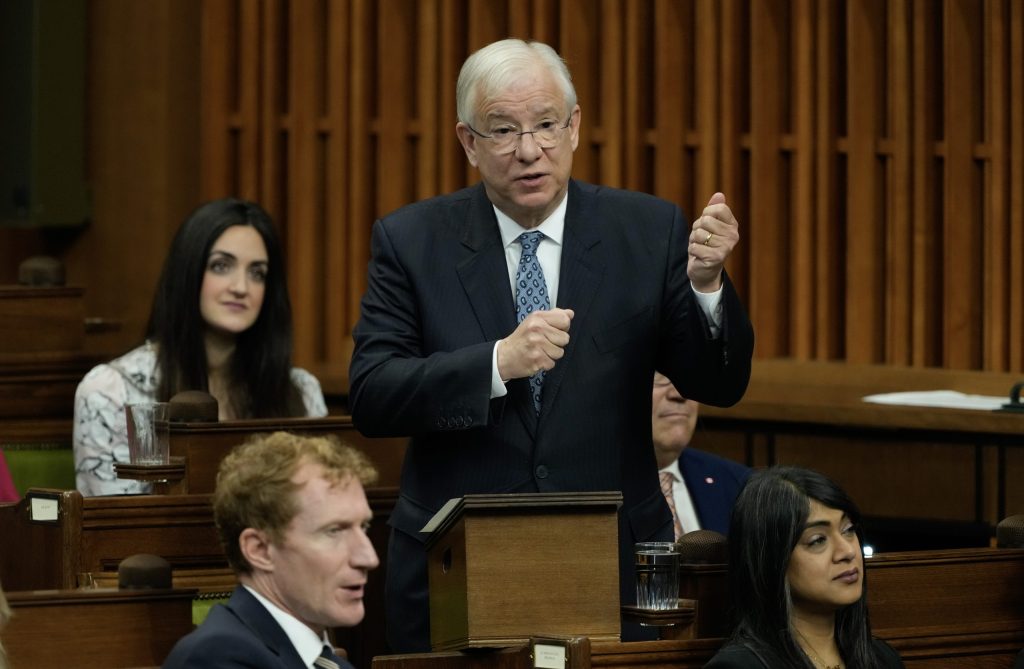
Francis Scarpaleggia’s election as Speaker is framed as renewal, but it reveals elite consensus and the emptiness of Canada’s democracy.
The election of longtime Liberal MP Francis Scarpaleggia as Speaker of the House of Commons is being presented as a moment of institutional renewal, but in reality it is little more than the staging of parliamentary spectacle.
This process reveals more about the consolidation of elite consensus and the emptiness of Canadian democracy than it does about any genuine contest of ideas.
First, consider the “choice” offered to MPs. Every single candidate for Speaker was a Liberal, after the expected Conservative contenders withdrew at the last moment. The Speaker is supposed to embody impartiality, yet the vote functioned as an intraparty shuffle within the ruling bloc.
This exposes the Speaker’s election not as an expression of democracy but as an insider’s ritual designed to manage appearances of neutrality while entrenching partisan control.
The rhetoric surrounding Scarpaleggia’s victory only deepened the sense of hollowness. His remarks, peppered with hockey metaphors about “sticks on the ice,” trivialized the material stakes of politics.
At a moment when Canada faces spiraling inequality, a housing crisis, and complicity in global imperial projects, reducing debate to a game with “rules” signals that parliamentary decorum matters more to the political class than people’s lives.
Order, in this case, means suppressing the unruly demands of workers, Indigenous peoples, and pro-Palestinian voices who refuse to play by colonial rules.
Prime Minister Mark Carney’s remarks further revealed the spectacle at work. Casting the Speaker as a defender of “Athenian democracy” ignores the colonial and exclusionary foundations of the Canadian state. Invoking Athens serves as myth-making, covering over the fact that Canada’s parliamentary system is rooted not in egalitarian ideals but in settler colonialism and capitalist exploitation.
Carney positioned himself as a humble rookie, sure to make mistakes, but this feigned modesty hides his real function: to extend technocratic management of the state while using ritualized traditions like the Speaker’s election to cloak neoliberal rule in legitimacy.
Nor did the opposition offer any meaningful resistance. Andrew Scheer romanticized the history of British Speakers executed for defying monarchs, while carefully avoiding any suggestion that today’s Parliament might need to confront real power—corporate, financial, or imperial.
The Bloc, NDP, and Greens each offered polite congratulations, signaling once again their willingness to play their scripted roles in maintaining the legitimacy of an institution that serves capital, not people.
The clearest reminder of this colonial continuity came in the article’s closing note: King Charles was in Ottawa to deliver the Speech from the Throne. The presence of a monarch underscores that the Speaker’s role is not about representing ordinary Canadians but about safeguarding a parliamentary order that continues to pledge allegiance to imperial tradition.
Seen from the left, Scarpaleggia’s election is not a fresh start but the rehearsal of an old play. Parliament prioritizes civility, tradition, and decorum, while the real crises of capitalism, colonialism, and imperialism remain unaddressed. What is being defended here is not democracy—it is the smooth functioning of a system designed to exclude, pacify, and manage dissent.







 Spark Solidarity