
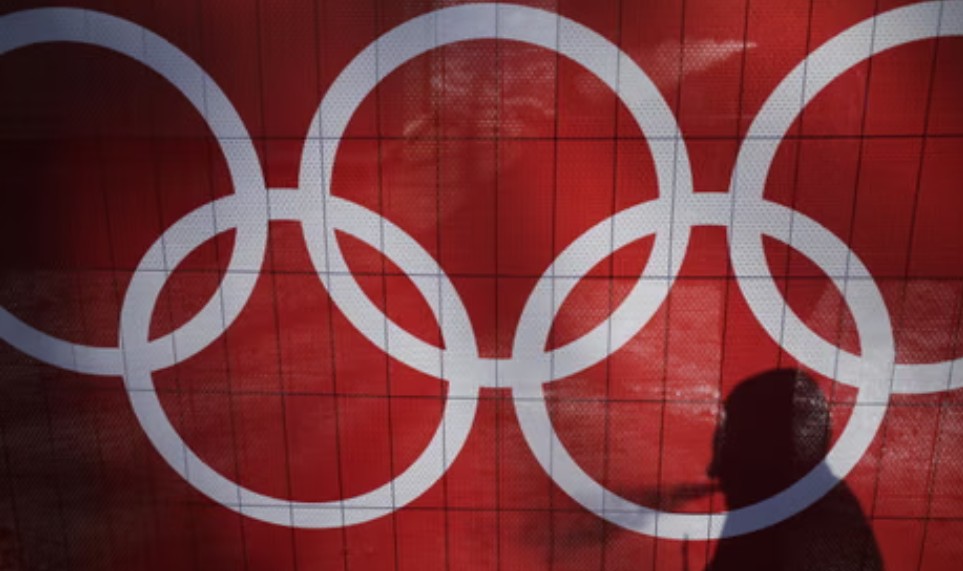
Russia was exiled from global sport after Ukraine, while Israel, despite far greater civilian deaths in Gaza, faces no sanctions — exposing sport’s true politics.
In March 2022, just weeks after Russia’s invasion of Ukraine, the international sporting world moved with remarkable speed and unanimity. UEFA stripped St. Petersburg of the Champions League final. FIFA barred Russia from World Cup qualifiers.
The International Ice Hockey Federation banned Russian teams for years. The International Olympic Committee erased their flag and anthem from competition. What might once have been unimaginable — the wholesale expulsion of one of the world’s great sporting nations — became immediate reality. Russia wasn’t just sanctioned; it was symbolically exiled.
The message was clear: sport may be marketed as a neutral arena of peace and unity, but in practice it is a geopolitical weapon. Who gets to wear their flag, who hears their anthem, and who takes their place on the podium is never divorced from politics. These privileges depend not on athletic merit alone but on whether a state’s foreign policy aligns with the ruling order. When a country steps out of line, it isn’t just punished with tariffs or UN resolutions. It can be blacklisted from the world’s most visible stage, stripped of the ability to project itself through spectacle.
This is the lie we are constantly sold during every Olympic opening ceremony, every FIFA press release about “uniting the world,” every carefully staged ad campaign about inclusion: that sports exist above politics. They do not. Sports are politics — dramatized in stadiums, broadcast on screens, and dressed up as entertainment. They reward allies and punish enemies. They decide who is celebrated and who is erased. And nowhere is this clearer than in the selective treatment of Russia and Israel.
Sports as Statecraft
Every four years, the world is treated to the spectacle of the Olympic Games, a parade of flags, uniforms, and anthems. Broadcasters and officials insist that this is a celebration of humanity beyond politics. FIFA repeats the same refrain whenever its tournaments come under scrutiny, claiming football is a universal language that unites the world. Yet the very structure of international sport proves the opposite. Athletes don’t compete simply as individuals; they march behind their national banners, they stand beneath their state’s flag, they hear their anthem broadcast to billions. Medals are not just personal triumphs — they are tallied by country, counted as a measure of national prestige.
This is why states pour billions into sports. A gold medal is not only an athlete’s accomplishment but a public relations victory for the nation that claims them. Every anthem played is an affirmation of sovereignty; every podium appearance is propaganda with global reach. Sports aren’t immune from politics — they are politics in motion, carefully choreographed rituals of nationalism and legitimacy.
And when a state falls out of favor, these rituals become tools of punishment. The medals, flags, and anthems that once broadcast national pride can be stripped away in an instant. Bans from federations are not mere technicalities; they are acts of erasure. A country without its athletes on the field or its symbols on display is symbolically exiled from the international community.
The myth of apolitical sports is convenient branding for billion-dollar institutions. The reality is starker: international competition is a stage-managed extension of foreign policy. Who is allowed to play and who is cast out tells us less about athletic merit than about the balance of power.
Case Study: Russia’s Expulsion
Few countries invested more in the image-building power of sport than Russia. The 2014 Sochi Winter Olympics became the most expensive Games in history, costing more than $50 billion. It was designed as a spectacle of modernity and strength, rebranding Russia as a stable and prosperous power. Four years later, the 2018 FIFA World Cup carried the same purpose: packed stadiums, glossy broadcast packages, and international stars performing under the glow of Russian hospitality. Sponsorships from global corporations plastered across Champions League matches reinforced the message. For a time, it worked. Sport became Russia’s soft power showcase.
That carefully constructed image collapsed in February 2022. Within weeks of the invasion of Ukraine, international federations turned against Russia with unprecedented speed. UEFA stripped St. Petersburg of the Champions League final. FIFA barred Russia from World Cup qualifiers. The International Ice Hockey Federation banned Russian teams for four years. The International Olympic Committee not only excluded Russia’s delegation but also banned its anthem, flag, and uniforms. Athletes could compete only as anonymous “neutral” individuals — stripped of national identity, reduced to symbols of disgrace.
The justification, offered by officials and repeated in press releases, was the protection of athletes and the integrity of competition. But if neutrality was truly the concern, Russia could have been allowed to field competitors without national symbols, as it had during previous doping scandals. Instead, the response was harsher: wholesale expulsion, a sporting death sentence designed to isolate Russia on the world stage.
This was not about fairness, and it was not about safety. It was about geopolitics. Russia, once welcomed as a partner through the very same institutions, was cast out the moment it became a pariah to the West. The bans were less a defense of sport’s purity than an extension of foreign policy, punishment rendered through stadiums and scoreboards.
Case Study: Israel’s Protection
If Russia’s exile from sport was swift and total, Israel’s treatment has been the opposite — protection, indulgence, and silence in the face of atrocities far greater in scale. Since October 7th, 2023, Israel’s bombardment of Gaza has killed more than 62,000 people, according to the Gaza Health Ministry, numbers corroborated by UN agencies and international monitors. The majority of the dead are women and children. Entire neighborhoods have been flattened. Hospitals, schools, refugee camps, and aid convoys have been struck. Over 200 journalists have been killed. The International Criminal Court has issued arrest warrants, framing these acts as textbook examples of war crimes and genocide. By sheer numbers, Gaza’s civilian death toll has already eclipsed Ukraine’s many times over: an estimated 13,000 civilians killed in Ukraine since 2022 compared to more than 53,000 in Gaza in less than a year.
Yet in the realm of sport, Israel has faced no consequences. Its athletes continue to compete under their own flag, to hear their anthem, and to represent their nation without restriction. Israeli competitors are preparing for the next Winter Olympics as if nothing has changed. Rather than facing sanctions, Israel has been shielded from them.
When other nations attempted to act, it was not Israel that was punished, but those who resisted its inclusion. Indonesia, unwilling to host a FIFA tournament that included an Israeli team, saw the event moved elsewhere — FIFA penalized Indonesia, not Israel. When Australia admitted it could not guarantee the safety of Israeli players at a hockey tournament, the IIHF canceled the entire event instead of barring Israel. When 300 Palestinian sports clubs formally petitioned the IOC to suspend Israel’s Olympic committee, they were met with silence.
The contrast could not be clearer. Russia was stripped of its identity, its anthem, and its place in competition after 13,000 deaths in Ukraine. Israel, responsible for more than four times that toll in Gaza in a fraction of the time, faces no sanctions, no exile, not even the pretense of neutrality. Russia is cast out as an enemy. Israel is embraced as an ally. The difference lies not in principle or morality but in geopolitical alignment: punishment for one, protection for the other.
Why the Double Standard?
The answer lies in how power decides which narratives are amplified and which are ignored. When Russia invaded Ukraine, the framing was immediate and unanimous: “unprovoked aggression.” Russia became the villain of the international order, a rogue state threatening Europe’s stability. By contrast, Israel’s bombardment of Gaza — despite killing far more civilians in far less time — is consistently cast as “self-defense.” Israeli violence is softened with the language of necessity, framed as a democracy under siege rather than as a state carrying out atrocities. The stories told about war determine how sporting bodies justify their decisions.
But narrative alone doesn’t explain everything. Money makes neutrality impossible. The International Olympic Committee runs on cash, not goodwill. NBC has already paid $7.65 billion for Olympic broadcast rights through 2032. Corporate sponsors like Visa, Coca-Cola, and Samsung bankroll these spectacles. None of them will risk alienating Washington, Wall Street, or Tel Aviv by calling for Israel’s exclusion. Silence is not a moral choice; it’s an economic calculation.
And behind both narrative and profit sits politics. Russia is a pariah in the eyes of the West, punished to the fullest extent possible. Israel, by contrast, is firmly embedded within the Western power bloc. It is treated not as a rogue state but as a partner, its crimes shielded under the umbrella of alliance. The double standard is not accidental — it reflects the hierarchy of global power. Sport becomes simply another arena where that hierarchy is enforced: Russia erased, Israel protected.
Sport as Spectacle
International sport sells itself as a celebration of unity, peace, and human achievement. But the treatment of Russia and Israel exposes this as little more than marketing. Far from being neutral, sports are propaganda — instruments of statecraft that determine who is honored and who is erased.
Russia, after pouring billions into Olympic and World Cup prestige, was cast out overnight when it invaded Ukraine. Its anthem silenced, its flag banned, its teams exiled. The justification was principle, but the reality was punishment of an enemy state. Israel, meanwhile, has killed more civilians in Gaza in months than Russia has in Ukraine over years. Yet its teams still march beneath their flag, its athletes still hear their anthem, and its participation is not only protected but actively enforced. The difference has nothing to do with morality. It has everything to do with alignment. Russia is a pariah. Israel is an ally.
This is the true function of sport at the international level. It is not a neutral stage but a billboard for power, a spectacle designed to launder legitimacy for friends and deny it to foes. The next Olympics, the next World Cup, the next hockey championship will not be a festival of human togetherness. They will be stage-managed pageants of geopolitical loyalty, draped in flags and anthems while the world looks away from the rubble.


 Spark Solidarity