

The 2025 election didn’t change Canada, it confirmed how little elections can do when the system is rigged to preserve elite power no matter who wins.
On April 28th, Canada went to the polls. Voters were told the stakes were high: a possible Conservative government aligned with Trumpist rhetoric, or a Liberal one led by Mark Carney, a technocrat promising stability in the face of economic turbulence and global uncertainty.
What they weren’t told—at least not loudly enough, was that the outcome of the election wouldn’t change the structural reality Canadians live under every day.
The election didn’t fail. It worked exactly as intended.
Carney’s Liberals secured 169 seats with just 43.7% of the vote—nearly clinching a majority. The Conservatives, despite winning 41.3% of the vote, ended up with 144 seats. Meanwhile, the NDP, with 6.3% support, were left with only 7 seats, losing official party status.
This is not democracy reflecting the popular will. This is first-past-the-post (FPTP) functioning as designed: to manufacture majorities for the establishment and crush smaller challengers.
This outcome mirrors what Cedric J. Robinson called the “managed democracy” of capitalist states. Elections serve not to upend elite control but to reinforce it—shuffling personnel without altering power structures.
As Michael Parenti wrote in Democracy for the Few, the illusion of choice sustains a system where real power lies outside the voting booth.
While Liberal strategists framed Carney as a “lesser evil” to Pierre Poilievre, this framing only deepens the trap. Faced with economic anxiety and the threat of Trump-style tariffs, many voters returned to the party of bankers and budget hawks in the hopes of stability.
But as historian and urban theorist Mike Davis warned, economic metrics like GDP growth and balanced budgets are hollow victories when wages stagnate, rents rise, and public services erode.
Carney’s campaign leaned into this disconnect, touting fiscal discipline and global investor confidence. But to working-class Canadians, these abstract successes offered no relief. Public healthcare remains under strain. Housing is a crisis. And even as inflation slows, the cost of living continues to climb.
This technocratic response—fixation on numbers, not needs—is a feature, not a bug. It creates the appearance of competence while insulating decision-makers from popular demands.
As Noam Chomsky has long argued, such rhetoric provides cover for policies that protect capital while dismissing calls for redistributive justice.
It also distances the political class from the electorate. When people see record corporate profits alongside headlines about belt-tightening, what they understand is that the economy is not broken—it’s working as intended, just not for them.
The political system is similarly designed: not to elevate popular demands, but to channel, diffuse, and ultimately neutralize them. Elections under capitalism are not instruments of transformation. They are pressure valves.
Nowhere was this clearer than on the issue of Gaza. The VotePalestine campaign mobilized hundreds of thousands, pushed over 300 candidates to support arms embargoes, and helped make Gaza a central election issue. It was an unprecedented grassroots success.
But despite this pressure, the new government remains locked into the NATO-aligned consensus. Carney offered tepid critiques of Netanyahu’s government but refused to commit to a full arms embargo. As the bombs fell on Rafah, Canada stood with the aggressor.
As Rashid Khalidi outlines in The Hundred Years’ War on Palestine, such moral posturing without material action is exactly how Western democracies preserve their reputation while abetting ongoing violence.
The bipartisan commitment to Israeli impunity reveals that foreign policy isn’t made by voters—it’s shaped by entrenched economic and military alliances. Even as Gaza burned, electoral politics absorbed dissent and funneled it back into institutions designed to defuse it.
The result is a parliament more consolidated than any in recent memory. With the NDP reduced to a fringe, there is little institutional space for anti-imperialist or anti-austerity politics.
As Sheldon Wolin described in Democracy Incorporated, this is the essence of inverted totalitarianism: opposition exists, but only in forms that pose no real threat to elite control. Parliamentary debate becomes spectacle; the outcome never changes.
This system is not broken. It is functioning perfectly. First-past-the-post distorts the popular will, props up establishment parties, and rewards parties that can manufacture fear and convert it into power. It punishes new movements, suffocates smaller voices, and ensures continuity of governance between Bay Street and Washington.
This isn’t just about seat math. It’s about how policy is made. Governments elected under this system can rule unilaterally with minority support, passing unpopular laws with no real accountability.
That’s how Doug Ford steamrolled public education and environmental protections in Ontario. That’s how Justin Trudeau tried to ram through pipeline expansions. And that’s how Mark Carney will govern: empowered by illusion.
And yet—this election revealed cracks.
The success of the VotePalestine campaign, the record turnout among youth and racialized communities, the growing support for electoral reform and proportional representation: these aren’t signs of cynicism. They’re signs that more and more people are refusing to play along with a rigged game.
The push for reform is real. Over 9,000 Canadians signed Fair Vote Canada’s petition for a Citizens’ Assembly on Electoral Reform ahead of the election. Even Green Party leaders have backed the call. So did a growing number of independents. The appetite for something better is building. But electoral reform, while necessary, is not sufficient.
As David Graeber wrote in The Democracy Project, real democracy begins when people stop waiting for permission.
As Arundhati Roy warns in The NGO-ization of Resistance, electoral politics can become a trap when they replace struggle with spectacle. To resist that trap, we must organize beyond the ballot box.
This means building worker power through unions that refuse to be co-opted. It means defending students, renters, migrants, and Indigenous land defenders with material support and mutual aid.
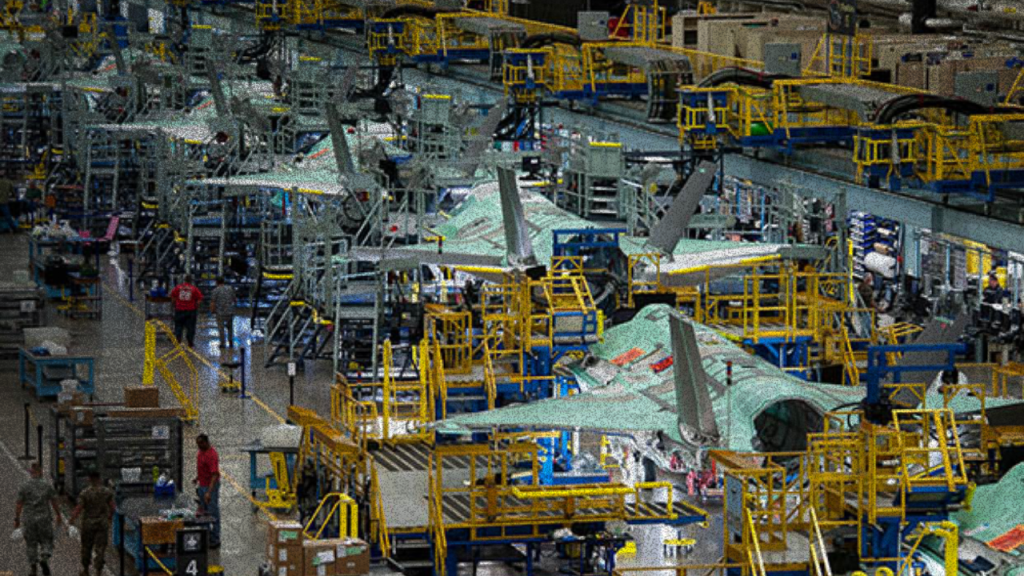
It means shutting down weapons shipments, blocking arms manufacturing, and turning every port of complicity into a site of resistance.
The next struggle won’t be fought in Question Period. It will be fought in the streets, on campuses, in union halls, and through campaigns that refuse to make peace with managed decline.
Carney didn’t win because his vision inspired the country. He won because a system built to protect wealth did its job.
But systems can be broken. Not by votes alone, but by people who stop mistaking ballots for power.
Solidarity in struggle.


 Spark Solidarity