
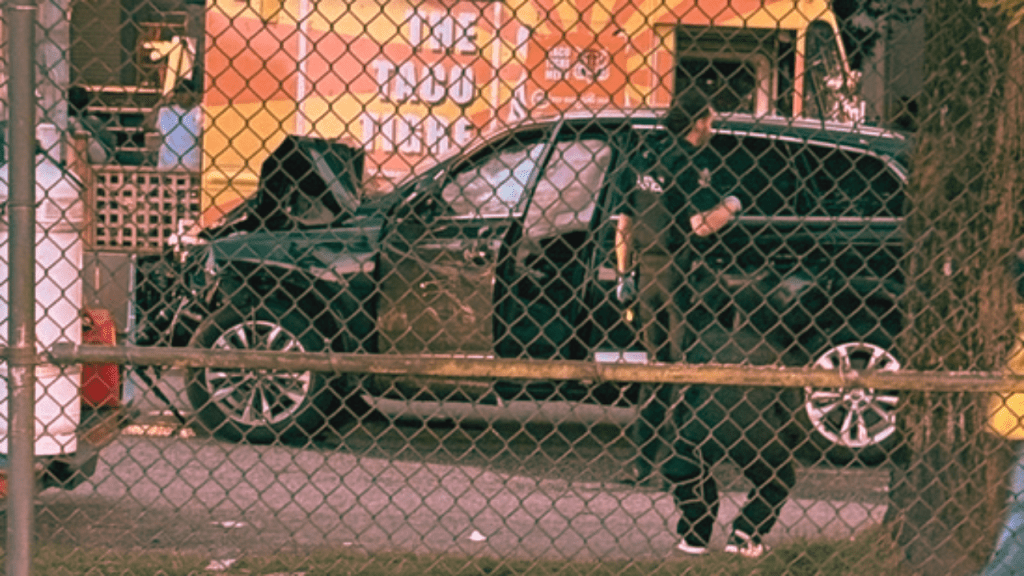
Reports indicate the Vancouver suspect was known to police — if so, it’s yet another example of a police failure that will be rewarded, not punished.
When tragedies like the Vancouver vehicle attack happen, the instinctive reaction — the one we are trained to have — is to think, “The system failed.” But the truth is much worse: the system didn’t fail. It worked exactly as intended.
According to witness reports, around 8 p.m. on Saturday April 26th, a black Audi SUV drove into a crowd gathered for the Lapu Lapu Day festival at East 41st Avenue and Fraser Street.
A 30-year-old Vancouver man was arrested at the scene. Police later confirmed that the suspect was already known to them, though they have provided no details about how or why.
Witnesses described seeing multiple people being struck, and emergency crews rushed to attend to the injured as chaos unfolded.
But even amid the horror, the larger context cannot be ignored. The police — whose role, we are told, is to protect the public — allowed a basic, predictable vulnerability to fester.
According to reports by Vancouver Sun Kim Bolan, both Vancouver city councilor Sean Orr and Pete Fry confirmed that the city normally parks dump trucks to block streets during festivals as a public safety measure.
However, they stated that no such precautions were taken for the Lapu Lapu Day festival on the night of the attack.
This does not happen because the authorities forgot. Not because they lacked resources. But because when violence happens — when tragedy strikes — the police don’t lose power. They gain it.
It’s tempting to view Vancouver’s failure to secure the festival as an isolated oversight. But it wasn’t. It fits into a clear, repeating pattern that we have seen unfold time and time again.
In New Orleans, just a few months ago, city officials had detailed safety plans on file to block streets during New Year’s celebrations — but they never actually put those plans into practice.
A truck plowed into the crowd on Bourbon Street, killing fifteen and injuring dozens.
In Toronto, back in 2018, Alek Minassian — a man who briefly served in the Canadian Armed Forces before leaving after only 16 days — displayed behavior troubling enough to raise concerns within security circles, yet he managed to rent a van and carry out one of the deadliest mass murders in Canadian history.
Just a few months later, another random act of violence took place in Toronto. In July 2018, Faisal Hussain — a man with a long-documented history of police interactions, opened fire on Toronto’s Danforth Avenue, killing two and injuring thirteen.
Though Hussain had no formal criminal record, he had been arrested for shoplifting just two days before the shooting.
Despite these extensive warning signs, Hussain managed to carry out one of the most devastating shootings in Toronto’s recent history, further revealing how state institutions consistently fail to intervene before tragedy strikes.
And this pattern was not new. Just four years earlier, in 2014, Michael Zehaf-Bibeau — a man well known to police, flagged by the RCMP as a high-risk traveler, and reported for erratic behavior — fatally shot Cpl. Nathan Cirillo at the National War Memorial before storming Parliament Hill.
Despite his lengthy criminal record, and multiple red flags, Zehaf-Bibeau was allowed to slip through the cracks, only for his attack to become the justification for sweeping expansions in state surveillance powers through legislation like Bill C-51.
Each of these incidents, portrayed in the media as isolated or unpredictable tragedies, fit a deeper pattern: warnings were present, authorities knew the risks, yet interventions were absent — until the violence occurred and could be used to tighten the very structures of control that failed to prevent it.
Each time, public safety collapses. Each time, the system’s defenders — the police, the intelligence agencies, and the political class — emerge stronger, not weaker. Fear and tragedy are not existential threats to the state. They are fuel.
The Vancouver attack follows a familiar political formula. The Hegelian dialectic of Problem → Reaction → Solution.
First, a problem is created or allowed: in this case, by ignoring obvious safety precautions that any competent public safety authority would have taken.
Then comes the reaction: horror, grief, outrage. The public demands action. They demand protection. They demand a solution.
And finally, the state steps forward with the answer it had waiting all along: bigger police budgets, expanded surveillance powers, harsher restrictions on public assembly and protest.
In the haze of trauma and mourning, the public doesn’t debate the real cause — the structural failures of the system itself. Instead, they are herded toward solutions that were already prepared behind the curtain, ready to be unveiled.
The brilliance — and the horror — of this cycle is that the outcome was decided before the tragedy even occurred.
Ask yourself: what punishment will the police in Vancouver face for leaving a major public festival unprotected? None. No police chiefs will be fired. No budgets will be slashed. No serious internal investigations will threaten the institution itself.
Instead, the police will be framed by politicians and media alike as overwhelmed heroes. Political leaders will rush to promise new security measures — and every single one of those measures will further expand police power while shrinking public freedom.
This isn’t incompetence. It’s institutional survival.
The police always benefit from these tragedies. Fear is their currency. Violence is their opportunity. Failure isn’t punished — it’s rewarded. The worse the failure, the greater the political justification for growing the security apparatus.
If you expect the media to challenge any of this, you will be disappointed.
The liberal media in Canada — CBC, CTV, Global News — will frame the Vancouver attack just as they have framed every preventable mass casualty event before it: a senseless event, an unpredictable horror, a time for mourning, not questions.
The real story — why the festival was left unprotected, why no basic precautions were taken, why the police knew the suspect yet prevented nothing — will barely even be raised.
Instead, the public will be carefully guided toward the only conclusion the system allows: that we need more security, not more accountability. That we need to trust the very institutions that have failed us again and again. That we must expand the powers of policing, surveillance, and repression in order to feel safe.
This is how liberal democracies manufacture consent.
Not through open censorship, but through the careful management of public fear and grief. By narrowing the scope of debate until only two options remain: mourn the dead quietly, or demand even more authoritarianism.
Every mass casualty event isn’t just a tragedy. It’s a political opportunity.
Each death becomes another line item justifying bigger police budgets, new surveillance technologies, harsher laws against protest and dissent. The screws tighten a little more each time. The public sphere shrinks. Fear grows. And democracy — if it even still exists — becomes increasingly hollowed out.
Until we recognize that violence serves the system — that it is not a failure, but a tool — we will continue sleepwalking through a ritual of tragedy and repression. The police do not fear mass violence. The politicians do not fear public outrage. The media does not fear public grief.
They harvest it. They profit from it.
And they will continue to engineer a society ruled by fear and obedience — unless we name the game for what it is.

 Spark Solidarity