
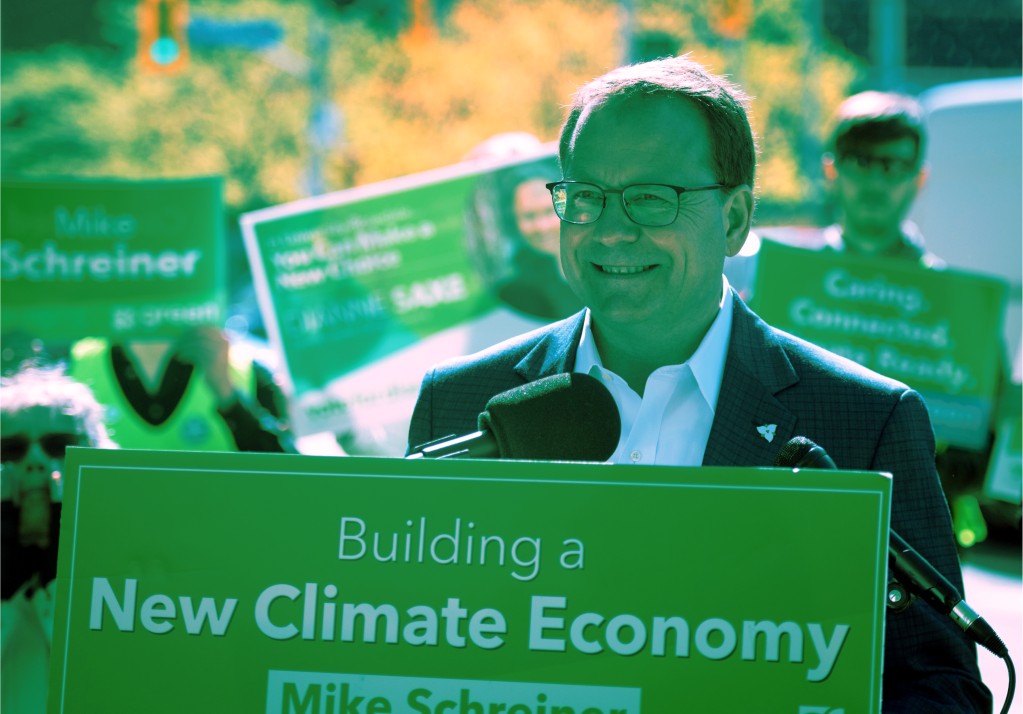
Mike Schreiner’s Ontario Greens awkwardly balance reformative aims with neoliberal acceptance, frustrating activists and diluting their environmental vision.
The Ontario Green Party, particularly under Mike Schreiner’s leadership, occupies an uneasy ideological space between radical environmentalism and mainstream political acceptability. Schreiner’s efforts to portray the Greens as responsible governing partners, while still claiming to champion environmental and social justice, have resulted in both tepid approval from centrist liberals and outright disdain from the principled left.
A key flashpoint highlighting this tension is the controversy around nuclear energy. Historically, the Greens opposed nuclear power not only due to risks of meltdowns or radioactive waste but also because nuclear energy represents a centralized, militarized, and capital-intensive system closely tied to corporate power and state secrecy. Schreiner’s openness to nuclear power, labeled the “nuclear sellout” by critics, is seen by many as a betrayal of the Greens’ core principles and an accommodation of corporate interests.
While this critique has merit, the anti-nuclear stance itself needs updating. Traditional nuclear fission, associated with catastrophic risks and environmental harm from uranium mining, indeed deserves opposition. However, nuclear fusion—a cleaner, safer, and virtually limitless energy source—must be at the forefront of modern environmental discussions. Fusion technology offers transformative potential, eliminating radioactive waste, meltdown risks, and ecological destruction linked to traditional nuclear power. For any genuinely progressive environmental movement, advocating for massive public investment in fusion research and development should be essential, alongside insisting on democratization and public ownership of fusion technologies.
The issue with Schreiner’s approach is precisely his incrementalism. By accommodating traditional nuclear power, the Ontario Greens remain tethered to the worst aspects of the existing nuclear industry, including corporate monopolies, environmental racism, and ecological harm. Schreiner’s compromise falls short by not embracing fusion technology, missing an opportunity for a genuinely revolutionary environmental policy.
Furthermore, Schreiner’s Greens lack a broader systemic critique. They focus primarily on moderate, market-friendly reforms—better building codes, homeowner incentives, and electric vehicle tax breaks—rather than challenging the capitalist system itself. A serious ecological project recognizes the climate crisis as inseparable from capitalism, identifying infinite economic growth and commodification as fundamentally incompatible with ecological sustainability. Schreiner’s Greens instead promote a more palatable vision, preserving capitalist markets with greener branding.
This dilution of radical ideals aligns with broader neoliberal patterns where electoral politics serve primarily to neutralize genuine opposition. The Green Party in Ontario illustrate how electoralism under neoliberalism absorbs and defangs movements seeking real change. Parties marketing themselves as the system’s conscience only reinforce the myth that the current system can be morally improved rather than fundamentally transformed.
To remain relevant, the Ontario Greens must reject this cautious accommodation. Radical movements elsewhere—such as the Green Party in Quebec or Europe’s People Over Profit—highlight genuine alternatives, openly challenging capitalism rather than managing it. The path forward involves rejecting incremental tweaks in favor of transformative policies, positioning fusion energy and systemic economic transformation at the heart of environmental politics. Anything less simply perpetuates the status quo.









 Spark Solidarity