
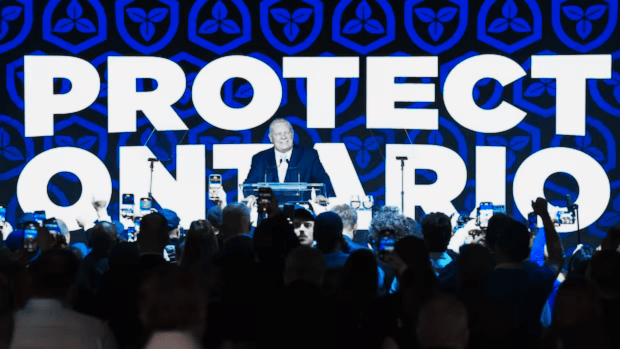
Ontario’s 2025 election was a costly, predictable charade, reinforcing Doug Ford’s dominance without addressing voters’ deepening frustration and apathy.
The 2025 Ontario election was a predictable, expensive exercise in political futility. Without urgency or clear purpose, Premier Doug Ford called a snap election, ostensibly to secure a stronger mandate amid the possibility of a second Trump presidency—an explanation so transparently absurd even Ontario’s typically complacent press struggled to take it seriously. In reality, this election merely confirmed the province’s stagnant political landscape.
Doug Ford’s Progressive Conservatives barely budged, dropping from 83 to 80 seats in the 124-seat legislature—essentially statistical noise. Ford’s persistent dominance reflects not political strength or competence, but rather a lack of viable alternatives and voters’ short memories. Despite a record characterized by incompetence and opportunism, Ford remains secure, buoyed by voter apathy and a media ecosystem inclined to treat his folksy persona as charming rather than concerning.
The opposition parties offered little to inspire confidence. The NDP, under Marit Stiles, slid from 31 to 27 seats, reinforcing their status as perennial runners-up whose main function seems limited to lending the legislature an appearance of democratic legitimacy. Stiles, largely invisible throughout the campaign, exemplifies a leadership vacuum in a party seemingly resigned to perpetual opposition.
The Liberals provided the only notable movement, rising from eight seats to fourteen—enough to regain official party status and thus secure increased funding and speaking privileges. However, even this minor victory felt hollow. Party leader Bonnie Crombie lost her own riding, encapsulating the disconnect between the managerial centrist class and the electorate of Ontario. Despite their modest comeback, the Liberals remain fundamentally unchanged, dominated by interchangeable career politicians seamlessly cycling between consultancy jobs and government positions.
Meanwhile, the Greens celebrated a small win, securing a second seat as Alin Clancy joined Mike Schreiner in the legislature. While symbolically meaningful, it changes little in the broader context where Progressive Conservatives overwhelmingly dominate. Celebrating this incremental victory feels akin to celebrating minor improvements within a fundamentally oppressive system.
This election underlines profound systemic apathy. Turnout barely improved, rising marginally from 44% in 2022 to 45.4% in 2025, reflecting justified voter cynicism. Ontarians increasingly recognize elections as empty rituals rather than genuine opportunities for change. The province’s structural issues—declining infrastructure, worsening healthcare conditions, rising living costs—remain unaddressed. Elections have become mere formalities to legitimize existing power dynamics rather than vehicles for meaningful reform.
While voter abstention is understandable, it’s equally important to recognize that abstention alone isn’t a radical act. Opting out without meaningful engagement or organized action offers no real challenge to entrenched power. The illusion that either voting or non-voting can alone lead to systemic transformation ignores deeper structural realities.
Ultimately, Ontario’s 2025 election changed nothing substantial. Doug Ford’s political survival underscores a dispiriting truth: provincial politics remains trapped in a cycle of symbolic gestures and minimal expectations, guaranteeing that elections will continue as expensive rituals confirming the status quo rather than opportunities to improve lives.





 Spark Solidarity