
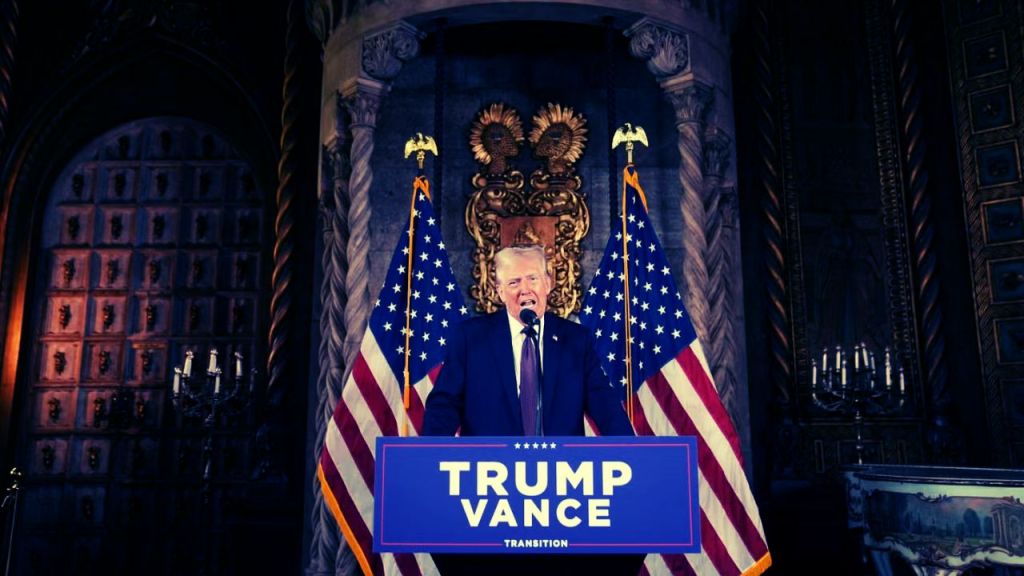
Trump imperialism in his second term has shifted from chaotic disruption to overt expansionism, reviving territorial ambitions and unsettling global stability
Donald Trump’s second term has brought a shift from the chaotic unpredictability of his first presidency to a more overt, yet still erratic, imperialist approach. While his initial tenure inadvertently weakened the machinery of American imperialism, his current administration has embraced expansionist policies that are disrupting global stability. Unlike past presidents who carefully executed U.S. dominance abroad, Trump’s approach remains defined by self-interest, impulsiveness, and a disregard for long-term geopolitical consequences.
The Art of the Deal: A Political Manual
Trump’s book The Art of the Deal was originally marketed as a business guide, but in hindsight, it reads more like a political strategy manual for his presidency. One of the book’s key tactics involves taking settled matters and reopening them as bargaining chips. This approach has been evident in his second term, particularly in his more aggressive foreign policy maneuvers—throwing out provocative statements, making outrageous demands, and then settling for the concessions he truly sought.
This strategy has resurfaced in his revived ambitions to acquire Greenland and assert U.S. control over key global trade routes like the Panama Canal. Additionally, his controversial proposal to relocate Palestinian populations and redevelop Gaza has drawn international condemnation, echoing 19th-century imperialist ambitions. By treating international relations as a series of negotiations rather than long-term strategic plans, Trump continues to disrupt the traditional mechanisms of American imperialism.
Trump’s Lack of Ideology: A Challenge to Imperial Strategy
One of the defining features of Trump’s leadership remains his lack of ideological commitment. Unlike past presidents who pursued global dominance through a structured framework of liberal imperialism, Trump is singularly focused on his personal image. His foreign policy decisions are still driven by a desire for validation and historical significance rather than strategic foresight.
This was evident in his renewed diplomatic engagement with adversarial leaders. His personal ambition to leave a legacy has led him to reconsider policies such as lifting the Cuban blockade—though not out of ideological realignment, but because of his vanity and desire for recognition. His approach continues to unsettle both Democrats and Republicans, who have long operated within the rigid playbook of American imperialism.
Dysfunction as a Feature, Not a Bug
Trump’s second term remains marked by internal chaos and an ever-changing circle of advisors. Unlike traditional administrations that rely on a cohesive team to execute foreign policy with precision, Trump still surrounds himself with loyalists and enablers rather than seasoned strategists. Figures like John Bolton and other neoconservatives—who once ensured the efficient execution of American imperialism—remain alienated.
Without a stable, competent team, Trump’s administration struggles to maintain a unified imperial strategy. His erratic leadership has already resulted in new trade tensions with China, abrupt shifts in troop deployments, and policy reversals that weaken the United States’ global influence. His lack of strategic vision continues to lead to chaotic decision-making, often undermining American imperialism rather than strengthening it.
The Unpredictability Factor: A Nightmare for U.S. Allies
Trump’s approach to foreign policy remains shaped by his desire to be admired by authoritarian leaders like Vladimir Putin, Xi Jinping, and Kim Jong-un. However, this is not out of ideological alignment but rather personal vanity—he wants to be recognized as their equal. This has led to erratic policy shifts, such as reconsidering long-standing U.S. military alliances or abruptly changing diplomatic stances without consulting his own administration.
For traditional U.S. allies, this unpredictability is a nightmare. The success of American imperialism depends on stability and long-term strategic planning. Trump’s erratic moves—whether through aggressive territorial ambitions or diplomatic flip-flops—continue to create uncertainty that weakens U.S. global influence.
The Real Danger: A Competent Administration
While many feared the damage Trump could do in his first term, his second term has demonstrated that the real long-term threat to global stability comes from a return to the calculated, efficient execution of American imperialism under a more competent administration. A future leader like Kamala Harris or any other traditional politician would likely restore the architects of interventionist policies—the ones who know how to maintain U.S. dominance with ruthless precision.
Trump, by contrast, remains a bull in a china shop. His actions continue to alienate allies, disrupt military strategies, and create fractures in the system that his successors will struggle to repair. His incompetence is not a conscious challenge to American imperialism, but its unintended consequence.
Trump’s presidency continues to expose the fragility of American imperialism, but not in the way many expected. While his first term weakened U.S. global dominance through sheer chaos, his second term has taken a more explicitly expansionist direction, reviving old imperial ambitions in Greenland, Gaza, and the Panama Canal. His self-interest, unpredictability, and inability to maintain a functioning team continue to create cracks in the global order. The greatest irony remains that Trump, a man without a strategic vision, may still be one of the most disruptive figures in the history of American imperialism.
 Spark Solidarity