
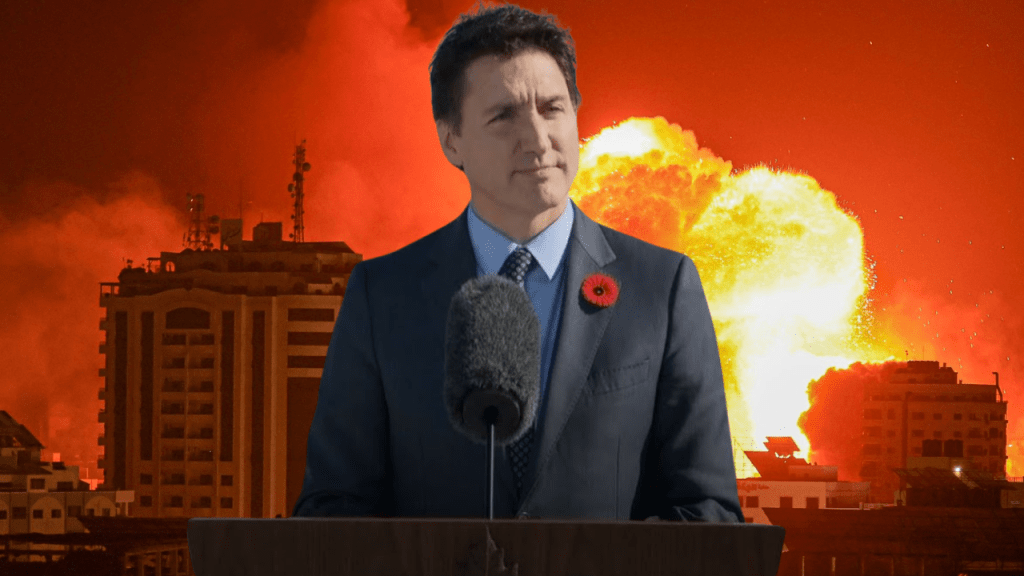
The Trudeau legacy is marked by hypocrisy and complicity, prioritizing economic and geopolitical interests over human rights and justice on the global stage.
Justin Trudeau’s rise to power in 2015 came with the promise of progressive values, human rights advocacy, and global cooperation. However, from the outset of his tenure, Trudeau’s foreign policy has been marred by contradictions, performative gestures, and complicity in imperialist agendas. A closer look at key events from the start of his leadership to today reveals a consistent pattern of prioritizing economic and geopolitical interests over justice and human rights.
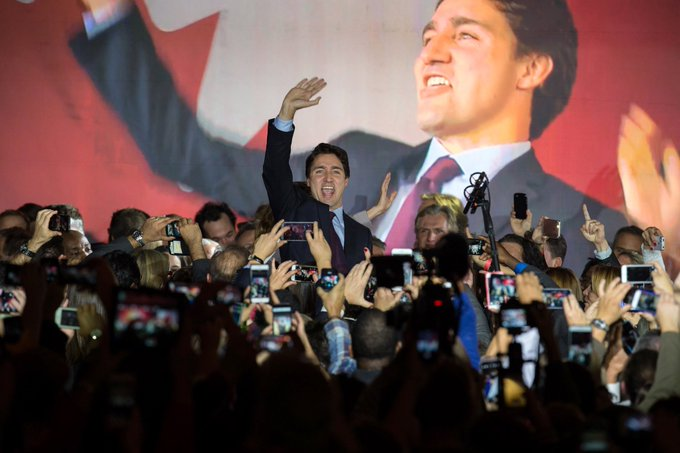
The Saudi Arms Deal (2018)
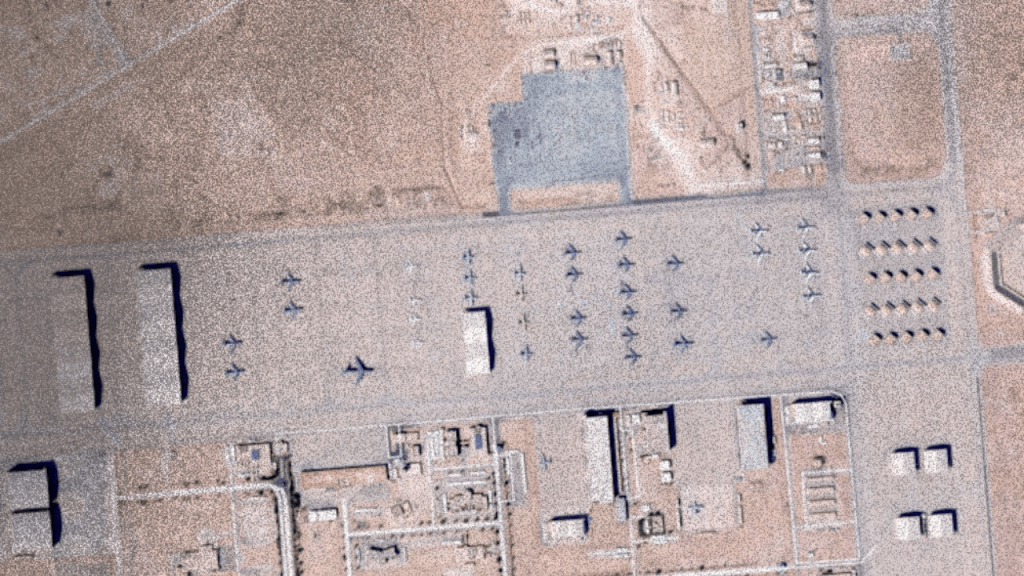
One of the earliest stains on Trudeau’s foreign policy record came in 2018 when his government defended a $15 billion arms deal with Saudi Arabia, despite its brutal human rights violations and the catastrophic war in Yemen.
Trudeau claimed his hands were tied, citing contractual obligations, but this defense laid bare his government’s willingness to prioritize economic gains over ethical considerations.
The Venezuelan Crisis (2019)
In 2019, Trudeau’s government further aligned itself with U.S. foreign policy by recognizing Juan Guaidó as Venezuela’s interim president, undermining the democratically elected government of Nicolás Maduro.
Canada’s participation in the Lima Group—criticized by some Caribbean leaders as a “morally bankrupt mongoose gang”—exposed its role in promoting U.S.-backed coups and destabilizing Latin America, all while securing resource extraction opportunities for Canadian corporations.
The Meng Wanzhou Affair (2018–2021)
Canada’s arrest of Huawei executive Meng Wanzhou at the request of the U.S. in 2018 plunged its relations with China into crisis. This move demonstrated Canada’s subservience to U.S. interests, sparking retaliation from China, including the detention of Michael Kovrig and Michael Spavor.
The prolonged legal process and Trudeau’s refusal to intervene in Meng’s extradition are often criticized as failures to protect Canadian citizens abroad. However, the deeper failure lies in the government’s unwillingness to be transparent with the public about the true nature of the “Two Michaels” case.
By portraying them as ordinary citizens rather than acknowledging their intelligence roles, Trudeau’s government not only escalated hostilities with China but also risked putting actual Canadian civilians in danger, as the fallout from Canada’s clandestine operations created broader diplomatic tensions.
The Assassination of Qasem Soleimani (2020)
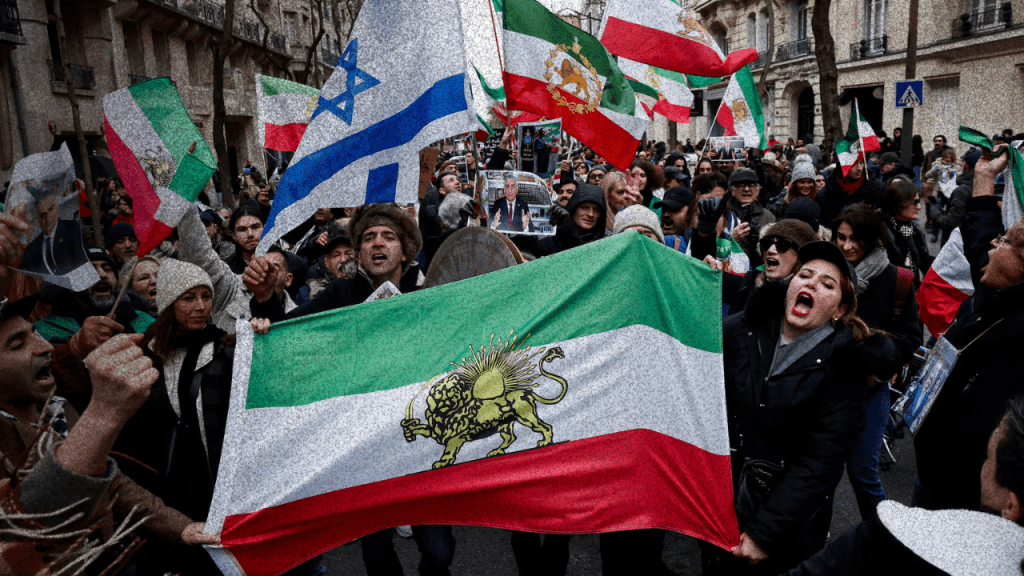
In 2020, Trudeau failed to condemn the U.S. assassination of Iranian General Qasem Soleimani, a reckless act that heightened tensions in the Middle East. Instead of holding U.S. President Donald Trump accountable for escalating the crisis, Trudeau’s government joined in pressuring Iran, further destabilizing the region.
This approach contributed to the tragic downing of Ukraine International Airlines Flight PS752, which claimed the lives of 55 Canadian citizens. Critics argue that Trudeau’s unwillingness to confront the U.S. directly not only failed to prevent this catastrophe but also reinforced Canada’s complicity in the resulting devastation.
The Afghanistan Withdrawal (2021)
The chaotic withdrawal of U.S. and allied forces from Afghanistan in 2021 highlighted the Trudeau government’s lack of strategic foresight and accountability. Canada’s participation in the decades-long occupation, with no clear plan for rebuilding or stabilizing the region, contributed to the rapid resurgence of the Taliban.
The rushed exit left thousands of Afghan allies behind, many of whom faced deadly retaliation, exposing Canada’s failure to deliver on its humanitarian obligations. Critics argue that the occupation’s incoherent objectives and Trudeau’s lack of leadership directly paved the way for the Taliban’s return to power.
Operation UNIFIER and the Ukraine Conflict (2015–Present)
Since 2015, Canada’s Operation UNIFIER has trained over 43,000 Ukrainian soldiers, embedding Canada deeply in NATO’s militaristic agenda and fueling tensions with Russia.
Trudeau’s steadfast support for Ukraine, including arms shipments and sweeping economic sanctions on Russia, has been criticized for prolonging the conflict and exacerbating global economic instability, particularly in food and energy markets.
By prioritizing a militarized response over diplomacy, Canada has not only contributed to the war’s escalation but also sidelined potential pathways for a peaceful resolution. Critics argue this approach reflects a deeper alignment with Western imperialist strategies at the expense of global stability.
Israel, October 7th and Complicity in Genocide (2023–2025)
Since October 7th, Trudeau’s unwavering support for Israel has deepened Canada’s complicity in what many human rights organizations have labelled as genocide in Gaza. Israel’s indiscriminate bombing campaigns, which have killed tens of thousands of Palestinians, including thousands of civilians, have been widely condemned internationally.
Yet, Trudeau continues to justify these actions under the pretext of self-defense, while Canadian military exports to Israel persist under existing permits, directly fueling the machinery of devastation.
Trudeau’s government has further stifled accountability by leveraging the International Holocaust Remembrance Alliance (IHRA) definition of antisemitism to equate legitimate criticism of Israel with hate speech. This move has polarized public discourse, marginalizing those advocating for Palestinian rights and shielding Israel from necessary scrutiny.
In early 2024, Canada paused funding for the United Nations Relief and Works Agency (UNRWA), citing unverified Israeli claims of misconduct. This decision denied critical aid to millions of Palestinian refugees, worsening the humanitarian catastrophe in Gaza.
Meanwhile, Trudeau’s government has remained conspicuously silent on the International Court of Justice (ICJ) ruling condemning Israel’s actions in occupied territories, further aligning Canada with narratives that dehumanize Palestinians and legitimize their oppression.
Critics argue that Trudeau’s steadfast support for Israel, despite mounting evidence of war crimes and genocide, lays bare the hypocrisy of his government’s human rights rhetoric. From October 7th onward, his foreign policy has prioritized political alliances and imperialist interests over justice, accountability, and the dignity of Palestinian lives.
The Victims of Communism Memorial (2022)
Domestically, the Trudeau government faced backlash for mishandling the Victims of Communism Memorial project. The inclusion of Nazi collaborators’ names and the promotion of an anti-communist narrative reflected a broader effort to whitewash fascist crimes while ignoring Canada’s colonial and capitalist violence.
The Trudeau Legacy: Complicity and Contradictions
From arms deals and military interventions to diplomatic failures and alignment with imperialist powers, Trudeau’s foreign policy has consistently prioritized economic and geopolitical interests over justice and human rights. His government’s selective approach to human rights advocacy reveals a troubling pattern: condemnation of adversaries like China, Iran, and Venezuela, while turning a blind eye to the abuses of allies like Saudi Arabia and Israel.

Trudeau’s tenure has left a legacy defined by hypocrisy, subservience to U.S. interests, and complicity in global injustices. Far from the progressive leader he claims to be, Trudeau has perpetuated the very systems of oppression and exploitation he once vowed to challenge. His record is a stark reminder that Canada, under his leadership, remains deeply entrenched in the machinery of Western imperialism.
 Spark Solidarity