
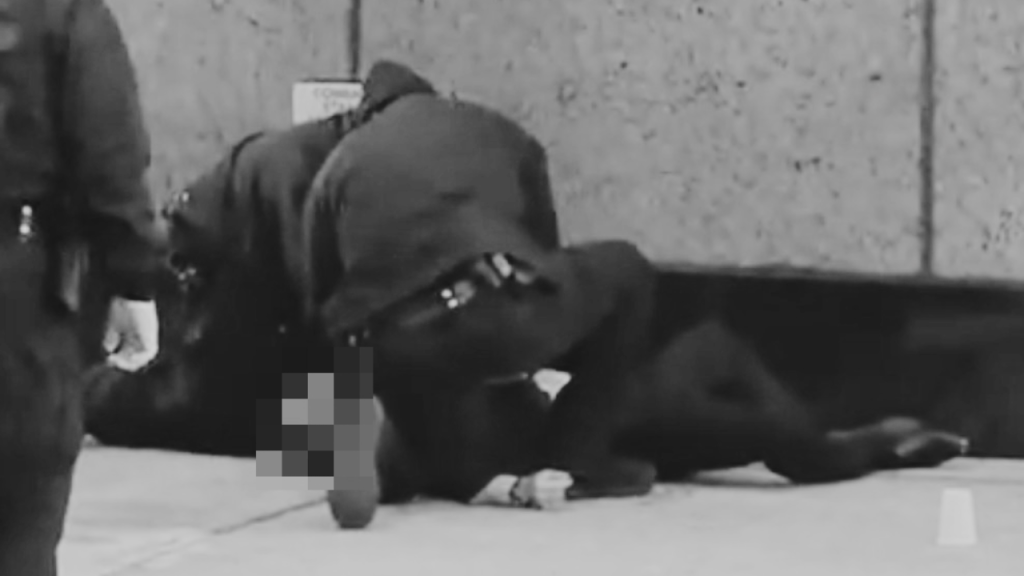
The UnitedHealth CEO assassination reflects societal tensions, echoing historical patterns of targeted violence amid inequality, exploitation, and systemic contradictions.
The assassination of figures like Brian Thompson may signify the intensification of contradictions within a society undergoing immense strain—economic, political, and social. Throughout history, such acts have often marked key moments where these tensions reach a boiling point, reflecting broader societal unrest and the erosion of trust in established systems.
In the late 19th and early 20th centuries, during the Gilded Age and the transition into modernity, a wave of high-profile assassinations carried out by anarchists and other radicals mirrored the deep discontent of that era. This period was defined by extreme inequality, rampant exploitation of labor, and the alienation bred by industrialization and urbanization. Figures such as President William McKinley, Empress Elisabeth of Austria, and industrial magnates became targets not just for personal vendettas but as symbols of an oppressive system. The assassins were often motivated by ideological beliefs, viewing their actions as a means to disrupt the mechanisms of capitalist and imperial power.
Similarly, the attack on Thompson, the CEO of one of the largest health insurance companies in the U.S., could be interpreted as emblematic of mounting frustrations with modern neoliberal systems. UnitedHealthcare, as part of the privatized healthcare industry, represents to many the commodification of essential human needs, contributing to the sense of alienation and exploitation that typifies late-stage capitalism. The brazenness of this act—carried out with premeditated precision—echoes historical patterns where targeted violence emerges as a symptom of deeper social contradictions.
The phrases inscribed on the shell casings—”deny,” “defend,” and “depose”—are strikingly symbolic. They seem to hint at a critique of systemic injustice or a rejection of the mechanisms that perpetuate inequality. This act may not have emerged in isolation but within the context of a society increasingly polarized and destabilized by wealth concentration, labor precarity, and the breakdown of public trust.
The anarchist movements of the late 19th century arose as direct responses to these conditions. Figures like Luigi Galleani and movements such as the Black International saw violence against oligarchs and state leaders as a form of direct action to provoke systemic collapse or inspire broader uprisings. These actions, while often condemned as acts of terrorism, were reflective of the broader despair and outrage felt by the masses. They coincided with periods of rapid industrialization, stark inequality, and the dehumanization wrought by unchecked capitalism—parallels to conditions today.
As contradictions in contemporary society intensify, with economic precarity, political gridlock, and social alienation becoming increasingly acute, acts like the assassination of Thompson may signal the emergence of new or resurgent forms of dissent.
While not condoning violence, these acts must be seen as responses to systemic conditions the victims themselves helped create. The violence inflicted by elites through exploitation and inequality far exceeds what they endure, highlighting deep societal fault lines and the pressures driving radical action.
In this context, the act may be seen not as an isolated tragedy but as part of a larger historical pattern. It underscores the urgency of addressing the inequities and alienation that define our era—before they manifest into further social violence, civil unrest or all out war.






 Spark Solidarity