
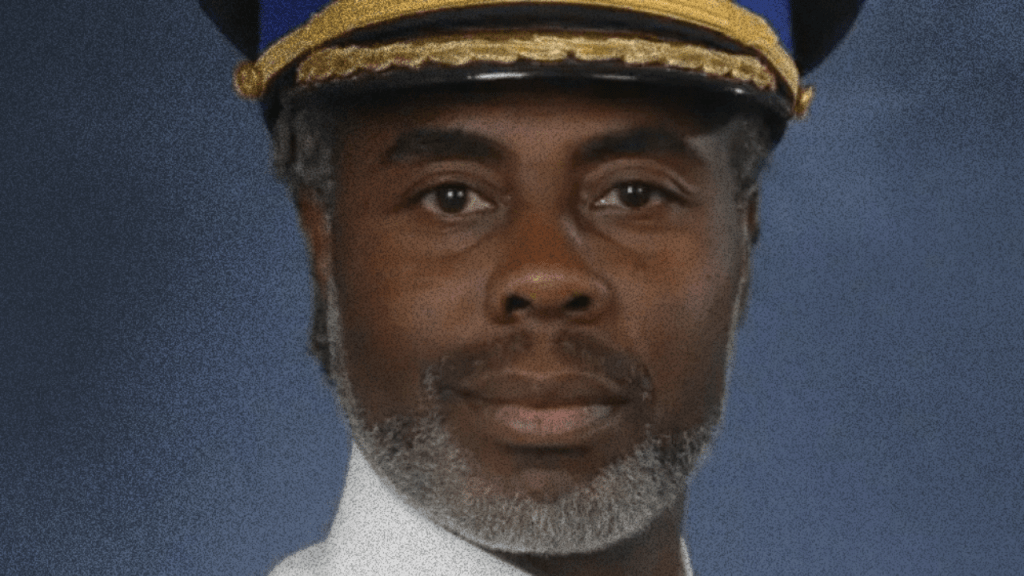
Patrice Vilcéus called racism a cancer inside Montreal police and resigned. His exit didn’t threaten the institution. It stabilized it.
When Patrice Vilcéus resigned from the Service de police de la Ville de Montréal, the moment carried an immediate moral charge. A senior commander — Haitian-born, thirty years inside the institution, former head of the SPVM’s Eclipse anti-gang squad — described racism not as a misunderstanding or a perception issue, but as “a cancer eating away at the organization.” For many observers, that language felt like rupture. Something finally cracked. Someone important finally said the quiet part out loud.
That reaction is understandable. But it is also misleading.
The resignation feels significant because it is morally legible. It fits neatly into a story liberal institutions know how to tell: a principled individual reaches their limit, speaks truth to power, and exits with integrity. What that story obscures is how little such moments matter to institutions designed to absorb them. Moral clarity does not translate into structural change. In fact, resignation is often the mechanism through which institutions stabilize themselves.
This is not a story about one officer. It is a story about how policing works.
Why This Resignation Feels Like a Turning Point
Vilcéus was not a junior officer, a disgruntled employee, or an outsider looking in. He was part of senior leadership. He enforced policy. He sat inside the organization that routinely insists accusations of racism are exaggerated, external, or based on misunderstanding. That positional legitimacy is why his words landed. They could not be dismissed as activist rhetoric or community grievance. This was testimony, not allegation.
In a four-page letter obtained by media outlets, Vilcéus wrote that he spent his career combatting “all forms of unjust exclusion and unfair treatment” and had been “careful not to remain a mere observer of racism, racial profiling and social challenges.” He pointed directly to the institution’s own data as evidence: “The scientific research commissioned by the SPVM is a flagrant example of the cancer eating away at the organization, and the judgment of the Superior Court presided over by the Honourable Justice Dominique Poulin is the apotheosis.”
For years, critics of the SPVM have been framed as hostile to policing itself, driven by ideology, emotion, or mistrust. Vilcéus’ resignation punctured that defense. It confirmed that what racialized communities have been saying for decades is visible even from the top of the hierarchy. That confirmation matters symbolically. It feels like validation.
But symbolic validation is not transformation. Institutions do not change because someone important leaves angrily. They change when their ability to function is materially threatened. Nothing about this resignation threatens the SPVM’s mandate, budget, or authority. A vacancy is filled. A press statement is issued. Patrols continue.
The moment feels large because it speaks to truth. It is structurally small because it lacks leverage.
The Court Said It. The Government Refused to Hear It.
Vilcéus’ resignation came weeks after a landmark legal ruling — not from activists, not from community groups, but from a Quebec Superior Court judge.
On September 3, 2024, Justice Dominique Poulin ruled in a class-action lawsuit brought by the Black Coalition of Quebec that racial profiling is a “systemic” problem within the SPVM, and that the City of Montreal is directly accountable for it. The case was initiated by Alexandre Lamontagne, a Black man who was stopped by police outside an Old Montreal bar in 2017, pinned to the ground, handcuffed, taken to the station, and issued three statements of offence — most of which were eventually dropped. The $171-million lawsuit represented approximately $5,000 per person racially profiled and stopped by Montreal police between August 2017 and January 2019. Poulin wrote in her judgment that “the SPVM institution creates discriminatory effects on racialized people” and that the city “can’t put the blame exclusively on its police officers.”
The city’s response was to appeal the ruling. As CBC reported in October 2024, Montreal’s legal team argued that the judge hadn’t adequately considered the city’s “pioneering efforts” to fight racism since the 1980s, and that holding the city responsible for “the totality of the disparities” experienced by racialized people was unreasonable. The appeal did not dispute that racial profiling occurred. It disputed financial accountability for it.
Meanwhile, Quebec Public Security Minister François Bonnardel offered his government’s position plainly when asked about Vilcéus’ resignation letter: “I have never believed that there’s systemic racism in the police.” A senior police commander describes an institutional cancer. A court rules that the institution creates discriminatory effects. The provincial minister responsible for overseeing policing says he doesn’t believe the problem exists.
Racism as Structure, Not Deviation
What makes Vilcéus’ language uncomfortable for the institution is not its tone, but its diagnosis. Calling racism a “cancer” rejects the idea that the problem is episodic or accidental. It denies the comforting fiction of bad apples. It points instead to something systemic, reproduced through routine decisions and organizational design.
Policing does not operate primarily through explicit ideology. It operates through discretion: who gets stopped, who gets questioned, who gets followed, who gets arrested, who gets released, who gets charged. Those decisions are shaped by institutional incentives, informal norms, and internal hierarchies. Promotion systems reward conformity. Discipline systems protect officers over civilians. Data collection is partial, contested, and often resisted. Complaints processes are slow and opaque. All of this produces racialized outcomes without requiring explicit racist intent from every officer involved.
This is why diversity training and representation initiatives fail to touch the core of the problem. They address attitudes, not function. They focus on interpersonal bias rather than structural reproduction. They exist precisely because they are safe. They promise progress without altering power.
Vilcéus’ resignation implicitly acknowledges this. If racism were merely a matter of attitudes or misunderstandings, it would be fixable from within by someone at his level. The fact that exit became the only viable option is not evidence of personal frustration. It is evidence of institutional design.
Montreal’s Long, Documented Pattern
None of this emerged suddenly. Montreal has a decades-long history of racialized policing that has been documented, protested, investigated, and ultimately preserved.
The data is not speculative. A 2019 report commissioned by the City of Montreal and the SPVM itself — the same data cited in the Poulin ruling — found that Black, Arab, Latino, and Indigenous people were stopped at dramatically higher rates than white residents. That report became central evidence in the class-action lawsuit. The institution both commissioned the data and then used its limitations to contest the findings when the data was used against it in court.
The pattern extends further back. On August 9, 2008, police shot and killed Fredy Villanueva in Montreal-Nord — an 18-year-old Honduran immigrant, shot by Constable Jean-Loup Lapointe in a parking lot while intervening in the arrest of his brother during a confrontation over an illegal dice game. No charges were filed against the officers. Villanueva’s death sparked riots across Montréal-Nord. The subsequent coroner’s inquest found Villanueva had not been trying to disarm the officer and did not deserve to die. The lead investigator identified fifteen serious flaws in the Sûreté du Québec’s investigation of the shooting, many of which favoured the officer who pulled the trigger. Lapointe was never charged.
The protests that followed Villanueva’s death were not spontaneous eruptions of anger. They were accumulations of experience. That year, reports commissioned by Montreal police themselves — and initially suppressed — described the situation in Montréal-Nord as “alarming,” with youth in the neighbourhood “constantly on guard” and “scared of being arrested without reason.” The police chief at the time said he found the reports difficult to believe.
What is most consistent across decades is not the abuse itself, but the institutional response to it. The SPVM has repeatedly framed racism as unconscious bias, individual error, or misinterpretation of data. Structural explanations are resisted because they implicate the institution’s core practices. To accept them would require changes that policing is structurally unwilling to make. Vilcéus did not introduce new information. He restated what has been known, quantified, and protested for years. The issue has never been awareness. It has always been incentive.
The Trap of Reform and Representation
Moments like this are quickly absorbed into a reformist narrative. The presence of a Black commander is treated as evidence that the institution can transcend its foundations. His departure is framed as a tragic failure of inclusion rather than a confirmation of structural limits.
This is the trap of representation politics. Representation answers the question of who is present, not what is being done. It changes the face of authority without changing its function. In coercive institutions, representation often serves to legitimize power rather than redistribute it.
The same legitimizing function — reform branding coexisting with operational brutality against the communities the institution claims to serve — was on display in Montreal weeks before Vilcéus resigned, documented in the report on Montreal Pride protestors brutalized by police for peacefully opposing genocide and corporate complicity.
Vilcéus’ career trajectory is often cited as proof of progress. He rose through the ranks. He reached command. He introduced the SPVM’s first Black History Month celebration in 2004 and helped organize a tribute to Montreal’s first Black police officer. And still, he could not change outcomes. That is not a failure of identity. It is a demonstration of structure. The system allowed him to rise precisely because rising did not threaten the system.
When he named the problem clearly, his usefulness ended. Reform narratives require insiders who can absorb critique without destabilizing function. Once critique becomes structural, it becomes incompatible with the role. Vilcéus himself noted the dynamic in his resignation letter: “It is crucial to overcome the resistance of certain managers who defend the status quo with sterile visions.”
The SPVM’s formal response demonstrated exactly what he was describing. A statement from the force said police chief Fady Dagher “is committed to fighting discrimination in all its forms” and that the SPVM “relies on a professional, respectful and discrimination-free service.” It added: “Is everything the SPVM does perfect? No. There is always room for improvement.” Thirty years of documented racial profiling. A court ruling. A senior commander’s resignation. “There is always room for improvement.”
ACAB as Analysis, Not Slogan
This is where anti-police analysis — often reduced to the slogan ACAB — becomes clarifying rather than inflammatory. ACAB is not a claim about individual morality. It is a claim about institutional function. It argues that policing, as an institution, is designed to manage inequality, not resolve it. It enforces social order as defined by political and economic power, not by justice.
From that perspective, Vilcéus’ resignation is not surprising. It is predictable. Moral clarity inside policing does not produce reform. It produces exit. The system cannot accommodate dissent that challenges its function. It can only neutralize it.
ACAB does not deny that some officers recognize harm or oppose racism. It explains why those officers either conform, compartmentalize, or leave. The role itself demands participation in practices that produce racialized harm. When someone refuses that participation, they become incompatible with the institution.
This is why the resignation strengthens, rather than weakens, anti-police analysis. It shows that even at senior levels, even with legitimacy and experience, meaningful change is not possible from within. That is not cynicism. It is observation.
The documented presence of white supremacist networks inside law enforcement — the structural rather than individual dimension of that design — is examined in the analysis of the AP/ABC documentary investigating white supremacy in law enforcement.
Why the Resignation Changes Nothing
Institutions like the SPVM are built to survive turnover. Chiefs retire. Commanders resign. Policies are renamed. None of this alters the core mandate of policing: discretionary enforcement backed by state violence, largely insulated from democratic control.
Once Vilcéus left, the conflict was converted into a personal story. Media coverage focused on his experience, his disappointment, his integrity. The institution became the background. That reframing matters. Structural conflict becomes individualized tragedy. Pressure dissipates.
That conversion — from structural indictment to personal narrative, from institutional accountability to individual story — follows the same pattern documented in the analysis of Toronto G20 policing, spectacle, and power, which examines how state violence is reframed through spectacle to insulate institutions from accountability.
Vilcéus now has no power to compel change. He cannot reassign budgets, discipline officers, alter deployment strategies, or reshape training doctrine. His testimony joins an archive of reports, inquiries, and resignations that are acknowledged and then ignored. Truth without leverage has no force.
In fact, his departure likely stabilizes the institution. As long as a dissenting figure remains inside, they represent a potential fracture. Their presence forces tension. Their exit restores coherence. The system loses a critic, not a pillar.
The Pattern Remains
What this moment ultimately reveals is not that reform failed this time, but that reform is not the mechanism through which policing changes at all. Policing changes only when its legitimacy is materially threatened, its funding disrupted, its authority curtailed, or its ability to function constrained. A resignation does none of these things.
Vilcéus did not resign because the institution was about to change. He resigned because it was not.
That distinction matters. It shifts the focus away from personalities and toward structure. It forces a harder question: if even senior insiders cannot alter outcomes, what does that say about the institution itself?
The answer is uncomfortable but clear. The system continues. The conscience exits. Nothing breaks.
And that is exactly how it is designed to work.
Sources
- CBC News, “Racism is a ‘cancer eating away’ at the SPVM, says outgoing Montreal police commander,” September 25, 2024 (Vilcéus four-page letter, resignation quotes, career biography, Dagher thanks, Bonnardel response): https://www.cbc.ca/news/canada/montreal/spvm-patrice-vilceus-resigns-1.7333853
- Global News, “Racism is a ‘cancer eating away’ at Montreal police, officer says in resignation letter,” September 25, 2024 (Bonnardel “I have never believed” quote, SPVM statement, 2020 Floyd memo): https://globalnews.ca/news/10774249/montreal-police-officer-racism-resignation/
- CTV News, “Montreal police say efforts to address racism ongoing after veteran officer’s critical resignation letter,” September 26, 2024 (SPVM formal response, “room for improvement” quote): https://montreal.ctvnews.ca/montreal-police-say-efforts-to-address-racism-ongoing-after-veteran-officer-s-critical-resignation-letter-1.7052353
- CBC News, “Montreal must pay victims of ‘systemic’ racial profiling by police. How much? That’s unclear,” September 3, 2024 (Justice Poulin ruling, $171M class action, Black Coalition of Quebec, Lamontagne case, “SPVM institution creates discriminatory effects” quote, city held accountable): https://www.cbc.ca/news/canada/montreal/racial-profiling-ruling-spvm-1.7312151
- CBC News, “Why is Montreal appealing a historic ruling on racial profiling by its police?” October 30, 2024 (city’s appeal reasoning, 2019 commissioned report data, Armony methodology dispute, “pioneering efforts” argument): https://www.cbc.ca/news/canada/montreal/appeal-spvm-police-superior-court-1.7365356
- Wikipedia, “Killing of Fredy Villanueva” (August 9, 2008; Montréal-Nord; Henri-Bourassa Park; Constable Lapointe; no charges filed; coroner findings; 15 investigative flaws): https://en.wikipedia.org/wiki/Shooting_of_Fredy_Villanueva
- CBC News, “Fredy Villanueva’s mother says he ‘died for nothing,’” December 18, 2013 (coroner’s report, Judge Perreault findings, “did not deserve to die,” officers never charged): https://www.cbc.ca/news/canada/montreal/fredy-villanueva-s-mother-says-he-died-for-nothing-1.2466825
- CBC News, “Police racism reports tabled at Villanueva probe,” 2010 (Montreal police-commissioned reports describing “alarming” situation in Montréal-Nord, youth “constantly on guard,” suppression attempt): https://www.cbc.ca/news/canada/montreal/police-racism-reports-tabled-at-villanueva-probe-1.922150
- Ted Rutland (Concordia University), “Anti-gun or anti-Black? The racial targets of the SPVM’s ‘anti-gun’ squad,” Montréal sans profilage, 2020 (74% of anti-gun squad arrests were Black; 42x more likely than white residents; “double-down” pattern): https://www.concordia.ca/faculty/ted-rutland.html




 Spark Solidarity