
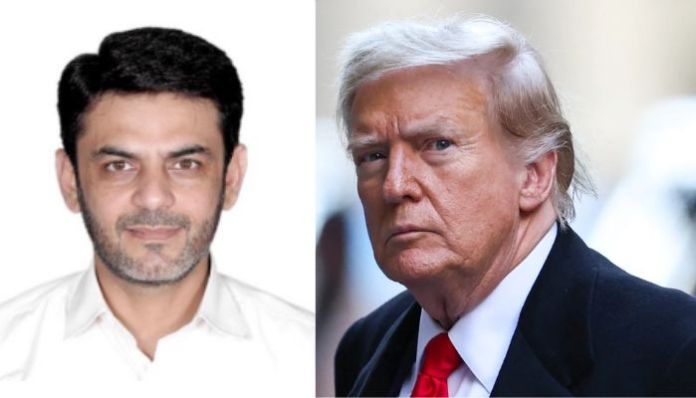
Asif Raza Merchant, a Pakistani national, charged in a suspected Iran-linked murder-for-hire plot, raising critical questions about timing amidst Israel-Iran conflict.
Multiple credible sources have reported on Asif Raza Merchant, a Pakistani national with alleged ties to Iran, having been charged with orchestrating a murder-for-hire plot targeting U.S. government officials, potentially including former President Donald Trump. Given the timing of these charges amidst a deepening conflict between Iran and Israel, it is crucial to scrutinize the validity of this narrative and the methods employed by U.S. authorities.
On August 6, 2024, The Independent reported the accusation against Merchant, highlighting his alleged connections to Iran. Business Standard and Fox News quickly followed with similar stories, emphasizing the severity of the charges. Yahoo News Canada and WION News provided additional details, stating that Merchant had been indicted for an alleged plot to assassinate Trump and other U.S. government officials. Merchant was arrested on July 12, 2024, just as he was preparing to leave the country, according to these sources.
However, this case warrants a critical examination, especially considering the historical context of U.S. counterterrorism operations. It bears striking similarities to previous ‘honey pot’ stings orchestrated by U.S. authorities. These operations often involve informants and undercover agents who actively instigate and escalate plots, raising significant ethical and legal concerns about entrapment.
For example, in 2011, Manssor Arbabsiar, an Iranian-American, was accused of plotting to assassinate the Saudi Arabian ambassador to the United States. This plot, allegedly backed by elements within the Iranian government, was foiled when Arbabsiar attempted to hire a hitman who turned out to be an undercover DEA agent. Critics argue that this plot might never have materialized without the DEA’s involvement.
Similarly, numerous cases involving Iranian nationals have surfaced over the years, often linked to cyber espionage activities targeting U.S. infrastructure and businesses. These cases frequently rely on sophisticated undercover operations to gather evidence, again raising questions about the authenticity of the threats and the extent of U.S. authorities’ involvement in fabricating them.
The U.S. has also conducted numerous operations targeting individuals and companies for violating sanctions against Iran. These operations typically involve complex investigations to trace illegal transactions and shipments, leading to high-profile arrests and prosecutions. Yet, the reliance on informants and undercover agents in these cases has led to accusations of entrapment and the manufacture of crimes that might not have occurred otherwise.
Trevor Aaronson’s book, “The Terror Factory: Inside the FBI’s Manufactured War on Terrorism,” provides a damning critique of these tactics. Aaronson’s investigative work reveals how the FBI has been involved in creating and prosecuting terrorist plots, often using methods that blur the line between preventing terrorism and actively instigating it.
Given the current geopolitical climate, with Iran embroiled in escalating tensions with Israel, it is crucial to question the timing and motives behind the charges against Asif Raza Merchant. Are these charges part of a broader strategy to paint Iran in a negative light and justify further U.S. actions in the region? The historical context of U.S. counterterrorism operations suggests that this possibility cannot be dismissed outright.
While the case of Asif Raza Merchant is being presented as a significant counterterrorism success, it fits into a broader and more troubling pattern of U.S. operations that often involve significant undercover work and raise serious questions about the balance between security and civil liberties. As the story unfolds, it is essential to remain critical of the narrative being constructed and to consider the broader implications of these tactics on international relations and the perception of justice.

 Spark Solidarity