
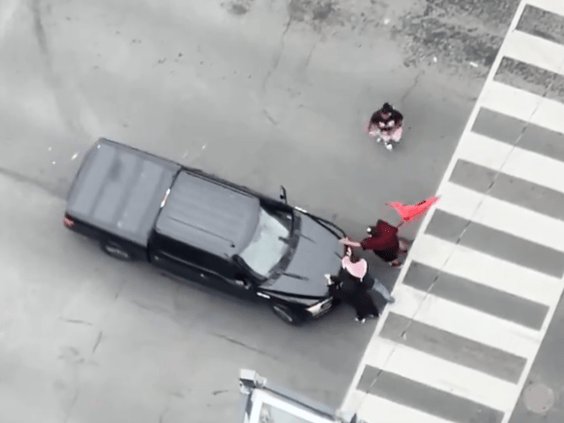
Protesters run over in Toronto: Demonstration against police impunity met with violence from motorists, highlighting public bias and inadequate police response.
A demonstration on Jarvis Street near the Gardiner Expressway turned violent on Tuesday morning when a driver struck several protesters. The Indigenous-led anti-police protest action that closed roads during the early morning rush hour involved about 40 people demonstrating against the recent shooting of a Black Indigenous man in crisis.
Despite the severity of the incident, the Toronto Police response and public commentary have been disturbingly critical of the protesters rather than the reckless driver. This incident has highlighted broader issues of police violence and public bias against those exercising their right to protest.
Incident and Arrest
Multiple protesters were struck by a vehicle near the Gardiner Expressway ramp at Jarvis Street. Despite the severity of the incident, the driver was arrested without any charges being laid yet. Protesters refused medical attention and declined to provide statements to the police, reflecting a deep mistrust in the authorities’ willingness to address their grievances fairly.
Protesters’ Perspective
The protesters, who were advocating for justice and highlighting issues within the Toronto Police Service, started their action at lower Jarvis by Lakeshore and blocked an intersection. According to eyewitnesses, the driver ran over three protesters during the blockade, yet the police response was to remove the demonstrators rather than pursue the driver. Protesters emphasized that they were exercising their rights, not committing a crime. Toronto police have recently been criticized for their aggressive tactics, underscoring broader issues of police violence and impunity.
One protester stated, “The police refused to go after the driver who hit us. They said we were not victims of a crime because we were protesting in the street.”
The right to protest is constitutionally protected under Section 2 of the Canadian Charter of Rights and Freedoms, which guarantees freedoms of expression, peaceful assembly, and association. Section 2(c) specifically protects peaceful demonstrations on public streets, as affirmed in Garbeau v. Montréal (2015).
Although framed as public safety measures, these regulations often serve to stifle public dissent. Municipal bylaws further restrict when and where protests can occur, undermining the spirit of free assembly. It’s important to note that the recent protest group was not blocking the highway but the street below it, yet they still faced significant opposition and criticism.
Public Commentary and Media Narrative
Aerial footage shared on social media showed the vehicle plowing into protesters, an act that should have been universally condemned. However, some social media comments justified the driver’s actions as self-defence, framing the protesters as aggressors. This narrative has been furthered by right-wing agitators and conservative media outlets, contributing to a biased portrayal of the events.
One social media user remarked, “If I had masked men running at my car, I’d be inclined to fear for my life.” Such comments ignore the fact that the driver used their vehicle as a weapon against people standing up for their rights.
Toronto Police and Public Response
The Toronto Police’s failure to protect the demonstrators and their focus on arresting protesters rather than the driver highlights a troubling bias. Instead of ensuring safety and accountability, the police response has been to criminalize the protest. Comparing this protest to others, such as the Ottawa truckers’ protest, is misleading and detracts from the core issue of police accountability.
The demonstrators later moved to Metropolitan Park, yet the immediate reopening of roads after their departure shows a priority of traffic flow over citizens’ rights and safety.
Police Shooting Of Tylor Maxie Coore
The protesters were advocating for Tylor Maxie Coore, a 32-year-old Afro-Indigenous man from Whitebear First Nation, who was shot by Toronto police on July 23, 2024, following a call about a man in mental distress in Toronto’s downtown Cabbagetown area.
Police responded to a report near Parliament and Carlton streets, and during the interaction, an officer shot Coore. He was taken to the hospital with serious injuries and remains in intensive care. The Special Investigations Unit (SIU) is investigating the incident. Coore’s family stated that he suffers from schizophrenia and was experiencing a mental health crisis. His mother, Cheryl Maxie, has asserted that guns were an inappropriate response to her son’s condition.
The family of Tylor Maxie Coore launched a GoFundMe page to cover legal fees and raise mental health awareness, but GoFundMe deleted the page, claiming it violated their policy against funding legal defenses. This decision has faced criticism for hindering the family’s ability to seek justice. Supporters are now exploring alternative ways to raise funds for the Coore family.
Criminalizing Protesters Reflect Systemic Flaws
The narrative around this protest is a glaring example of the authorities and the public choosing to criminalize demonstrators instead of confronting the real issues. Instead of holding those who commit violence against protesters accountable, the focus remains on vilifying citizens exercising their rights. The voices of those advocating for justice must be heard and respected, yet in the current climate, are increasingly suppressed.


 Spark Solidarity