

China is not imperialist; it champions a state-led model built on long-term planning, mutual benefit, and non-interference to drive sustainable progress.
China’s approach to global engagement stands apart from the traditional models of Western imperialism. Rather than imposing a profit‐driven agenda overseas, Beijing champions a state‐led development model that emphasizes long‑term planning, mutual benefit, and non‑interference in the domestic affairs of its partners.
This alternative strategy—often summarized as “socialism with Chinese characteristics”—forms the core of China’s foreign and economic policies and offers an intriguing counter‑narrative to the neoliberal doctrine that has long dominated global economic relations.
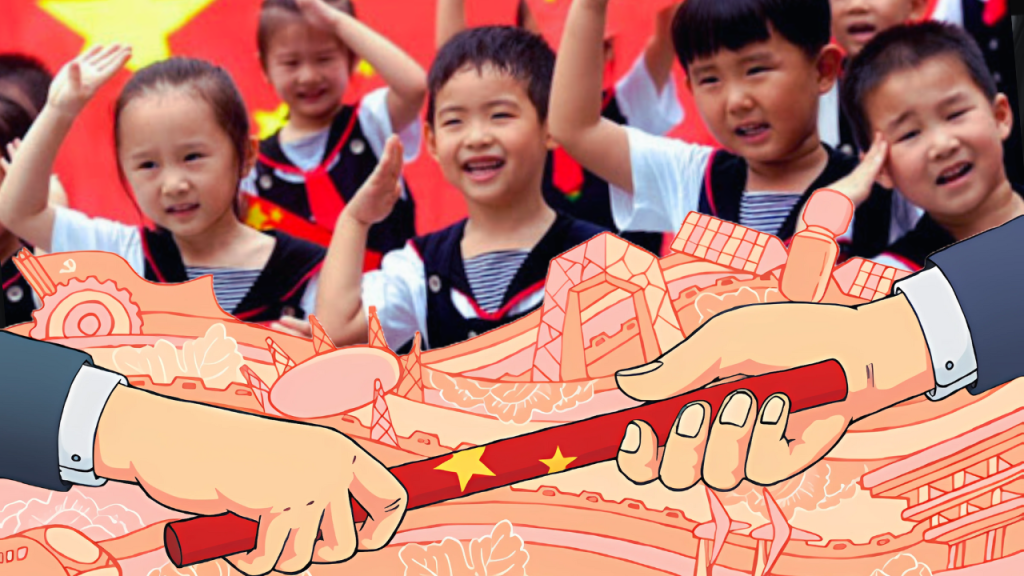
Moreover, as China sets its sights on achieving Socialism by 2050, it is positioning its model as a transformative path toward sustainable, equitable development worldwide.
At its core, China’s unique model combines market‑oriented reforms with robust state control. The Chinese government plays a central role in steering its economy, setting ambitious long‑term objectives through detailed five‑year plans and directing resources toward key sectors such as energy, telecommunications, and transportation.
This approach enables China to promote not only rapid economic growth but also to address income disparities and ensure a broader sharing of prosperity. Proponents argue that such a system—where economic decisions are informed by long‑term social and national goals rather than short‑term profit motives—offers a compelling alternative to the often-volatile dynamics of free‑market capitalism.
Critics on the left have noted that while China’s model is not without its authoritarian elements, its emphasis on equitable development and social stability speaks to the failures of neoliberal policies that have, in many parts of the world, exacerbated inequality and undermined public welfare.
On the international stage, China’s non‑interventionist foreign policy further distinguishes its global strategy. Unlike traditional imperial powers that expanded through colonization and military intervention, China asserts a strict principle of non‑interference. Beijing’s official stance is that each nation should determine its own political and economic path free from external coercion.
This commitment is evident in initiatives like the Belt and Road Initiative (BRI), which focuses on building infrastructure and forging trade links rather than seeking direct political control over partner countries. While some detractors label the BRI as a form of “debt‑trap diplomacy,” many independent analysts argue that China’s engagement is fundamentally based on mutual development and respect for sovereignty.
In fact, the non‑interference policy has resonated with many developing nations that have grown weary of the conditionalities attached to loans from institutions like the International Monetary Fund, which often mandate austerity measures and structural reforms that hurt local populations.
Trade and infrastructure are other key pillars of China’s global strategy. By investing billions in building roads, railways, ports, and energy facilities in Asia, Africa, and Latin America, China is not only boosting its own economic growth but also laying the groundwork for sustained mutual development. These projects are typically designed with a “win‑win” mindset, aiming to create connectivity and trade networks that benefit all parties involved.
Rather than exploiting local resources for unilateral gain, China’s investments are intended to integrate national economies into a broader global market, thereby fostering economic interdependence and reducing the likelihood of conflict. This stands in stark contrast to the historical practices of colonial powers, whose extractive strategies left lasting scars on former colonies. Progressive commentators have argued that China’s model, despite its imperfections, demonstrates a genuine attempt to create a more balanced global economic order—one that prioritizes sustainable development over exploitative extraction.
Critics, however, are not entirely without reason in questioning aspects of China’s approach. Concerns about transparency, labor conditions, and the concentration of political power remain. Yet many on the left contend that Western powers have long ignored or downplayed similar issues within their own spheres of influence. For instance, decades of neoliberal policies have often led to harsh austerity measures, privatization of public services, and a growing wealth gap—a legacy that has undermined the social fabric in many advanced democracies. In this light, China’s state‑led model is seen by some as a corrective to the excesses of global capitalism, where the focus on shareholder value has frequently come at the expense of workers’ rights and social welfare.
Moreover, China’s efforts to train and support political elites in developing countries—through initiatives like the Julius Nyerere School of Leadership in Tanzania—reflect its desire to foster partnerships based on shared experiences and common goals rather than domination. Such educational exchanges aim to build capacities and promote governance models that emphasize state responsibility, social solidarity, and collective progress. This collaborative approach challenges the notion that global influence must be exerted through coercion; instead, it posits that leadership built on mutual respect and shared development challenges the prevailing narrative of Western superiority.
In the context of rising global inequalities and widespread disenchantment with neoliberal policies, China’s alternative model has found considerable appeal among progressive circles. Its focus on using state power to achieve social outcomes—rather than merely generating profit—has led many to view China’s approach as a potentially transformative model for the global south. As debates over the merits of different development models intensify, it is clear that the Chinese state‑led paradigm is not simply a rehash of old-style authoritarianism. Rather, it is an evolving strategy that seeks to redefine the terms of global cooperation in a way that is more responsive to the needs of ordinary people.
Ultimately, while China’s model may not be perfect, its commitment to long‑term planning, mutual benefit, and respect for national sovereignty offers an important counterpoint to the prevailing neoliberal orthodoxy. In a world where free‑market capitalism has often left developing countries vulnerable to external shocks and exploitation, Beijing’s approach—despite its controversies—presents an alternative vision of global economic relations. This vision is one that emphasizes equitable growth, social justice, and international solidarity over the narrow pursuit of profit—a perspective that many on the left see as urgently needed in today’s interconnected and often unjust global economy.
The main points of China’s foreign and economic policies are its state‑led development model, its steadfast commitment to non‑interference, its focus on building mutually beneficial infrastructure and trade links, and its challenge to traditional Western notions of imperialism and capitalism. These elements together form a framework that many view as an alternative path to development—one that strives to ensure that economic progress translates into real improvements in human welfare.
Whether this model will ultimately prove sustainable and just remains a subject of intense debate, but its emergence has certainly reshaped discussions about what a fairer, more equitable global order might look like.






 Spark Solidarity