
Bolivia Coup Attempt: On June 26, 2024, armed forces tried to overthrow President Luis Arce, highlighting deep political divisions and sparking widespread public reaction.
On June 26th, 2024, Bolivia experienced a dramatic and chaotic attempted coup against President Luis Arce’s government. The events unfolded rapidly, highlighting the deep-seated political tensions and divisions within the country. This article examines the sequence of events, public reaction, conflicting narratives, and the broader implications for Bolivia’s political future.
The Sequence of Events
The attempted coup began with armed soldiers and armored vehicles surrounding key government buildings in La Paz, including the presidential palace. The sight of armored vehicles forcefully breaching the doors of the government palace sent shockwaves through the capital, signaling a serious and immediate threat to the current administration.
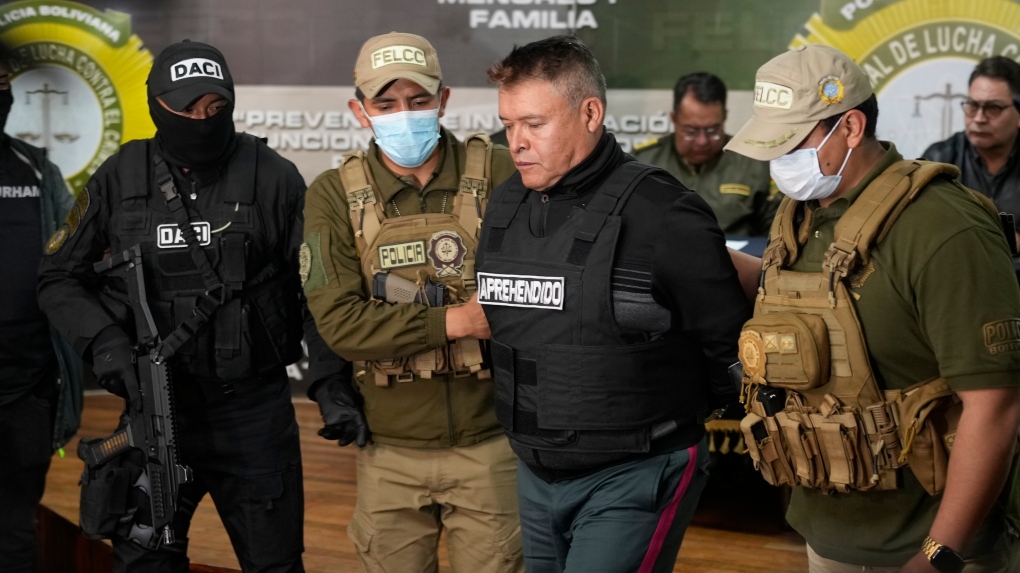
General Juan Jose Zúñiga, the army commander, emerged as the apparent leader of the rebellion. He justified the military’s actions by citing the country’s economic and political malaise and hinted at imminent changes within the government, suggesting a desire for a significant power shift. His presence and the forceful entry into the government palace suggested a well-coordinated attempt to seize power.
In a bold move, President Arce confronted General Zúñiga directly, demanding that the soldiers withdraw. Arce’s decisive action did not stop there; he swiftly replaced Zúñiga with a new army commander, Jose Wilson Sanchez, who then ordered the troops to return to their barracks. This quick replacement of military leadership played a crucial role in de-escalating the situation.
Following Sanchez’s orders, the soldiers and armored vehicles retreated from the presidential palace. This marked the beginning of the de-escalation process, but the events had already set the stage for further political drama and public reaction.
Bolivia’s Public and Civic Response
Arce’s supporters quickly mobilized, rallying in a central square while waving Bolivian flags. The demonstration of support was significant, underscoring the public’s backing of the democratic government amidst the turmoil. Additionally, the country’s largest labor union announced an indefinite strike in solidarity with Arce’s government, further highlighting the polarized political landscape. This mass response demonstrated Bolivia’s strong civil society and its commitment to democratic principles. Even figures on the right, who had previously supported coups, denounced the military’s actions. This unity, albeit temporary, underscores a growing exhaustion with political instability and a desire for democratic governance.
In the aftermath of the coup attempt, General Zúñiga and 18 others were apprehended, facing charges related to the rebellion. These arrests were a critical step in restoring order and addressing the immediate threat posed by the coup plotters.
Conflicting Narratives and Conspiracy Theories
The coup attempt did not end with the military’s retreat. General Zúñiga later claimed that the incident was orchestrated by President Arce himself to boost his popularity. This assertion added a layer of confusion and complexity to an already tumultuous situation. The notion of a “self-coup” has become a topic of intense debate, with some suggesting that Arce might have staged the coup to unify his supporters and divert attention from his administration’s challenges.
Supporters of former President Evo Morales, who have been critical of Arce, have found this theory particularly compelling. They argue that Arce, struggling with declining popularity and economic difficulties, could have engineered the coup to portray himself as a strong and decisive leader. However, many political analysts, including experts like Brett Gustafson, express skepticism. Gustafson highlighted the unlikelihood of Zúñiga participating in such a plot willingly, given the severe consequences he now faces.
Political Fragmentation and the Road to 2025
The coup attempt and ensuing conspiracy theories are set against the backdrop of a deeply fragmented political landscape in Bolivia. The Movement to Socialism (MAS), the party founded by Evo Morales, is currently experiencing significant internal divisions. The split between Morales and Arce, once allies, has escalated into a full-blown political rivalry.
This rivalry is exacerbated by a recent ruling from Bolivia’s constitutional court, which effectively bars Morales from running for president again. Morales’ supporters argue that this ruling is illegal, further intensifying tensions within the MAS. Gustafson highlighted this ongoing constitutional crisis: “You have a constitutional crisis about whether or not Evo Morales can be a candidate.”
The political fragmentation within the MAS poses a serious threat to the party’s future success. As Gustafson noted, “Arce can’t win by himself, and Morales, even if he could run, can’t win by himself.” This division could pave the way for conservative opposition candidates to exploit the situation and gain traction in the upcoming 2025 elections.
The coup attempt has brought Bolivia’s economic and political challenges into sharp focus. President Arce’s administration has been criticized for its handling of the economy, which has been grappling with issues such as currency devaluation and declining natural gas revenues. These economic struggles have fueled discontent and contributed to the political divide within the MAS.
Additionally, the rivalry between Arce and Morales has paralyzed the government’s ability to address these pressing issues effectively. With the MAS split, legislative processes have stalled, further exacerbating the country’s challenges. The lack of cohesion within the ruling party raises questions about its ability to govern and implement necessary reforms.
As Bolivia approaches the 2025 elections, the political landscape remains uncertain. The question of who will be the MAS candidate looms large. Will it be Arce, despite his current challenges, or Morales, despite his legal hurdles? Alternatively, could both leaders run, further fracturing the party’s support?
Gustafson warned that this division within the MAS opens the door for conservative candidates. He speculated on the potential rise of a populist figure who could capitalize on the economic instability and political fragmentation, appealing to a broad base of disenchanted voters. This scenario mirrors trends seen in other countries, where populist leaders have gained power amid political crises.
Underlying the political turmoil in Bolivia is the pressing need for judicial reform. The controversy surrounding the constitutional court’s rulings, particularly its decision to extend its term and annul Morales’ candidacy, has raised concerns about the independence and integrity of Bolivia’s judiciary. As Gustafson noted, “The need for judicial reform in Bolivia is another story.” Without meaningful reforms, the judiciary’s legitimacy will continue to be questioned, further destabilizing the country’s political landscape.
Bolivia at a Crossroads in the Wake of Failed Coup
The recent apparent coup attempt and the conspiracy theories it has spawned highlight the fragility of Bolivia’s democracy. Whether the coup was a genuine attempt to seize power or a calculated political maneuver by Arce remains a subject of debate. However, what is clear is that Bolivia is at a critical juncture.
The mass response to the coup, with thousands of Bolivians taking to the streets, underscores the country’s commitment to democratic principles and the strength of its civil society. This show of unity, albeit temporary, is a beacon of hope amid the political chaos.
As Bolivia prepares for the 2025 elections, it faces a myriad of challenges, including economic instability, political fragmentation, and a crisis of confidence in its democratic institutions. The international community must monitor these developments closely, as the outcome will have far-reaching implications for the region.
Ultimately, Bolivia’s path forward will depend on its ability to navigate these challenges, unite its fractured political landscape, and uphold its democratic values. The stakes are high, and the future remains uncertain, but the resilience and commitment of Bolivian civil society offer a glimmer of hope in these turbulent times.

 Spark Solidarity