
Labour As Protest: Volunteers Shovel Out Snow to Highlight Toronto’s Systemic Failures
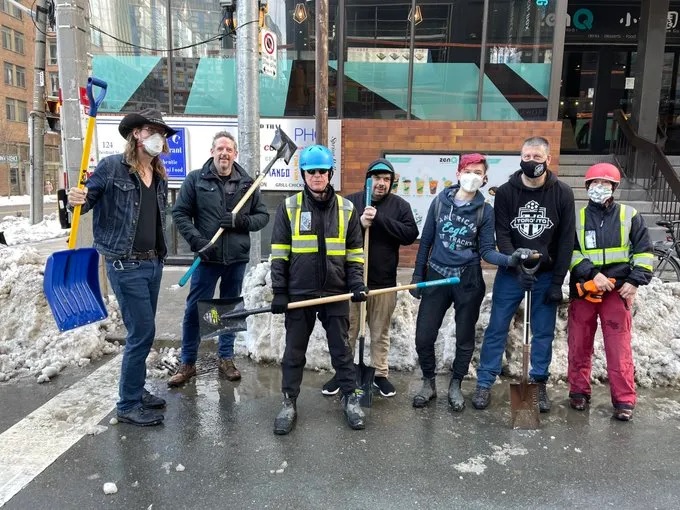
Toronto volunteers displayed Labour as Protest by clearing 30 streetcar stops to protest the city’s insufficient response to snow removal.

As snow blanketed the streets of Toronto on Sunday, March 5th, a group of volunteers took up shovels to clear 30 streetcar stops across the city. This seemingly simple act of labour was, in fact, a potent form of protest against the city’s lackluster response to the ongoing snow removal crisis.
The volunteers called for the city to prioritize essential services, such as snow removal, to ensure the safety and accessibility of public transportation. This grassroots initiative underscored the need for increased investment in public infrastructure and for officials to be held accountable to the needs of the community.
Through their efforts, the volunteers drew attention to the systemic issues that plague public services and infrastructure and the far-reaching consequences of neglecting these critical services. Their small-scale activism emphasized the necessity for a paradigm shift in city funding and the prioritization of essential services that are crucial to the well-being of the community.
Although heavy snowfall may pose significant obstacles, the volunteers’ actions demonstrated the potent force of community-led labour in demanding change. Through collective action, they demanded the appropriate allocation of city resources to create a more equitable, just, and accessible city for all.
CTV Toronto: ‘Why isn’t the city doing this?
Toronto volunteers labour as protest against the city’s snow removal crisis by shoveling 30 streetcar stops. Their initiative emphasizes public infrastructure investment and the need for accountability. Witness the power of community-led activism to create a safer and more accessible city.
Biking in a Big City: Snow clearance and accessibility
Sidewalk and public space clearance is key for accessibility, yet it’s often ignored. Laws exist, but enforcement is lacking. This poses issues for people with disabilities, seniors, and families with strollers. Expensive equipment and its availability also contribute to the problem. However, solutions such as innovative snow-clearing technologies and stricter enforcement can help. Prioritizing accessibility for all is crucial in snow clearance efforts.
What is Labour as Protest?
Labour as protest can serve as a means for workers to put pressure on elected officials by using direct action and autonomy to challenge the traditional hierarchy of unions and political parties. Workers can employ strategies such as wildcat strikes, workplace occupations to demand fair labour practices and push for social change. Though this approach may be controversial and carry risks, it can be effective in bringing attention to workers’ grievances and highlighting the importance of political action in ensuring fair labour practices. By disrupting normal operations and drawing attention to their cause, workers can leverage their collective power to put pressure on elected officials and effect change.
In addition to advocating for fair labour practices, Labour as Protest can also play a critical role in the decolonization of labour practices. This can involve challenging the ways in which colonialism has shaped labour relations, including the exploitation of workers and the marginalization of certain communities. By highlighting the ways in which labour practices have been shaped by historical and ongoing forms of colonization, workers can use their collective power to demand a more equitable and just labour system that serves the needs of all workers, particularly those who have historically been marginalized or excluded. Through decolonization efforts, Labour as Protest can contribute to broader social justice movements and create lasting change in the workplace and beyond.
Special thanks to the Toronto Bike Brigade organizers and Jun Nogami for their activism and photography.






 Spark Solidarity